
Planting
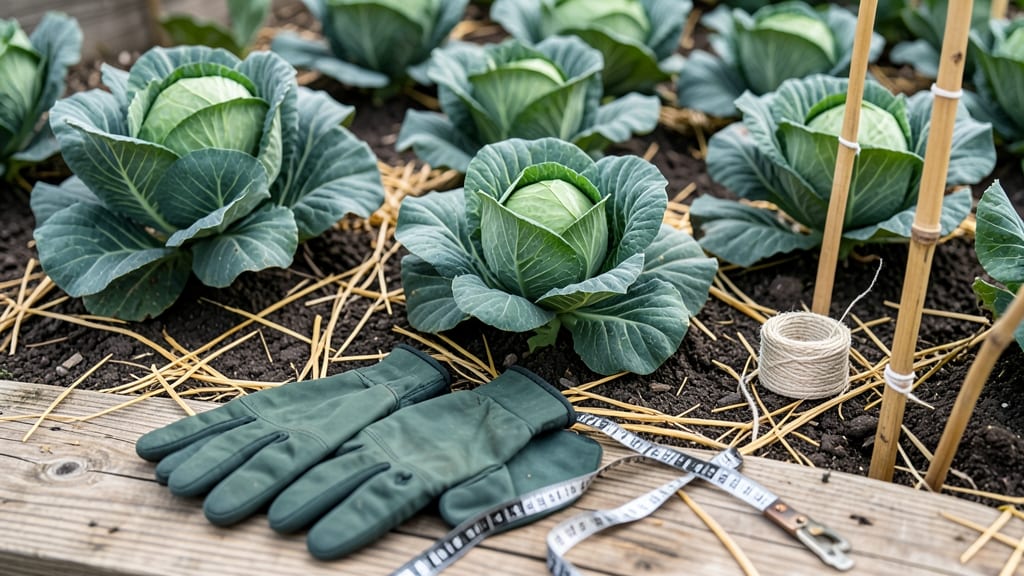
Proper cabbage garden spacing is the difference between sturdy, market-worthy heads and stunted, scraggly plants that barely fill your basket.
Struggling with stunted cabbage growth? Proper spacing isn't just about fitting more plants—it's the secret to harvesting dense, heavy heads that rival your favorite market finds. 🥬
Cabbage thrives when it has room to stretch its roots and soak up sunlight, but too much space wastes your garden bed. The right distance keeps air circulating, cuts down on pests, and ensures each plant gets the nutrients it needs to grow big and bold.
In this guide, I’ll break down the exact spacing you need for your variety—whether you’re growing head cabbage, savoy, or Chinese types—and how to adjust for your soil, climate, and garden size. No more guessing, just proven distances for a bountiful harvest.
Optimal cabbage spacing by variety: row distances for maximum yield
Getting the cabbage spacing right can transform your harvest from puny heads to market-quality giants. I’ve learned the hard way that cramming plants too close leads to competition for nutrients and sunlight, while giving them too much room wastes precious garden space.
The key lies in matching your cabbage variety with the right plant-to-plant and row-to-row distances—whether you’re growing head cabbage, savoy cabbage, or Chinese cabbage.
Different cabbage types have unique growth habits, so a one-size-fits-all approach won’t work. For example, savoy cabbage with its crinkled leaves needs slightly more elbow room than tight-headed green cabbage.
And if you’re planting for both spring and fall harvests, seasonal adjustments to spacing can mean the difference between a bountiful yield and disappointment. Let’s break down the science-backed spacing guidelines that will give you the biggest, healthiest heads.
For head cabbage varieties like green or red cabbage, the 18–24 inch plant-to-plant spacing is non-negotiable. These varieties need room to develop those dense, compact heads we all crave.
I once planted green cabbage just 12 inches apart, and while I got more plants, the heads were half the size and prone to splitting. The row-to-row distance of 24–36 inches ensures airflow, reducing disease pressure from fungal issues like clubroot or downy mildew.
When it comes to savoy cabbage, the 20–24 inch spacing reflects its bushier growth habit. The crinkled leaves need extra room to photosynthesize efficiently, which translates to better flavor and texture.
I’ve noticed that savoy cabbage planted too closely develops yellowing leaves at the base—clear signs of nutrient theft from neighboring plants. For fall planting, give savoy cabbage an extra inch of space to account for slower growth in cooler temperatures.
If you’re growing Chinese cabbage like bok choy or napa cabbage, you can play a little closer with 12–18 inch spacing. These varieties mature faster and don’t need as much room to bulk up.
However, don’t mistake this for a free pass to overcrowd—even these smaller cabbages will bolt prematurely if they’re fighting for light. The 18–24 inch row spacing still applies to maintain airflow and prevent soil-borne diseases.
Seasonal timing also impacts spacing. For spring planting, aim to get seeds or transplants in the ground 4–6 weeks before your last frost. This gives cabbage enough time to establish roots before the bolting rush of warm weather.
In my Zone 6a garden, that means early March for head cabbage. For fall planting, start 8–10 weeks before your first frost—typically mid-July in my climate—to ensure a harvest before winter sets in.
One mistake I see often is assuming that transplants need the same spacing as seeds. Transplants already have a head start, so you can reduce plant-to-plant spacing by 2–3 inches compared to direct-seeded cabbage.
For example, head cabbage transplants can go in at 16–20 inches apart while still yielding well. Just be prepared to thin seedlings if you direct-sow—it’s heartbreaking to pull out those tiny greens, but it’s
How spacing affects cabbage growth: why crowding kills your harvest
When I first planted cabbage in tight rows, I expected bigger yields—but ended up with small, misshapen heads and more pests. Proper cabbage spacing isn't just about fitting more plants; it's about creating an environment where each plant can thrive.
Without enough room, cabbage plants compete for sunlight, nutrients, and air circulation, leading to stunted growth and disease vulnerability. Understanding the science behind spacing helps transform your harvest from disappointing to downright impressive.
Cabbage plants need space to develop strong root systems and dense heads. When crowded, roots become tangled, limiting nutrient uptake and water absorption.
This competition forces plants to divert energy away from head formation toward survival, resulting in smaller, looser heads that lack the crisp texture and dense structure of properly spaced cabbage.
Additionally, poor air circulation in crowded beds creates the perfect conditions for fungal diseases like downy mildew and clubroot, which can devastate your entire crop.
⚠️ WARNING: Common Spacing Mistakes That Ruin Your Cabbage ⚠️
- Planting too close (less than 18 inches apart) leads to stunted growth and disease spread.
- Ignoring row spacing (keeping rows 2 feet apart) causes shade competition and poor air flow.
- Overcrowding in containers forces roots to compete, resulting in small, loose heads.
- Skipping thinning after germination allows weak seedlings to steal nutrients from stronger plants.
Sunlight exposure is another critical factor affected by spacing. Cabbage plants require full sun (6+ hours daily) to develop their signature dense heads. When plants are crowded, the inner leaves receive less than 4 hours of direct sunlight, leading to leggy growth and poor head formation.
The outer leaves may look healthy, but the core remains loose and underdeveloped. To maximize sunlight, maintain 2-foot row spacing and 18-24 inches between plants, allowing light to penetrate to the center of each row.
Root development suffers dramatically in crowded conditions. Cabbage plants need 12-18 inches of root space to establish a strong, fibrous root system that anchors the plant and absorbs nutrients efficiently.
When roots are cramped, they become shallow and weak, making plants more susceptible to wind damage and nutrient deficiencies. Additionally, crowded roots create a moist, humid environment that encourages rot and fungal infections.
To prevent these issues, always follow variety-specific spacing guidelines and avoid planting more than 4-6 plants per square yard.
Even if you follow spacing guidelines, common mistakes can sabotage your harvest. One frequent error is skipping the thinning process after germination. When seedlings are too close, the strongest plants simply outcompete the weaker ones, leaving you with gaps and stunted growth.
Another mistake is adjusting spacing too late—once cabbage plants are established, moving them risks damaging roots and stressing the plant. Plan your spacing from the start, and if you're using transplants, ensure they're already spaced correctly before planting.
Proper spacing also plays a role in pest and disease prevention. Crowded cabbage plants create microclimates with high humidity and poor air circulation, inviting pests like cabbage worms and aphids to thrive.
By providing adequate space, you reduce hiding spots for pests and improve air flow, which helps prevent fungal diseases like black rot. Additionally, well-spaced plants are easier to monitor and treat, allowing you to catch issues early before they spread.
For example, 18-inch spacing between plants makes it simple to inspect leaves for early signs of pest damage or disease.
To achieve the best results, tailor your spacing to the cabbage variety and growing conditions. Head cabbage varieties like 'Golden Acre' need 24 inches between plants, while smaller varieties like 'Miniature Drumhead' can tolerate 18 inches.
In cooler climates, you can plant slightly closer, but in hotter regions, extra space helps prevent bolting and heat stress. Always prioritize air circulation and sunlight access—these two factors alone can transform a mediocre harvest into a bountiful one.