
Plants
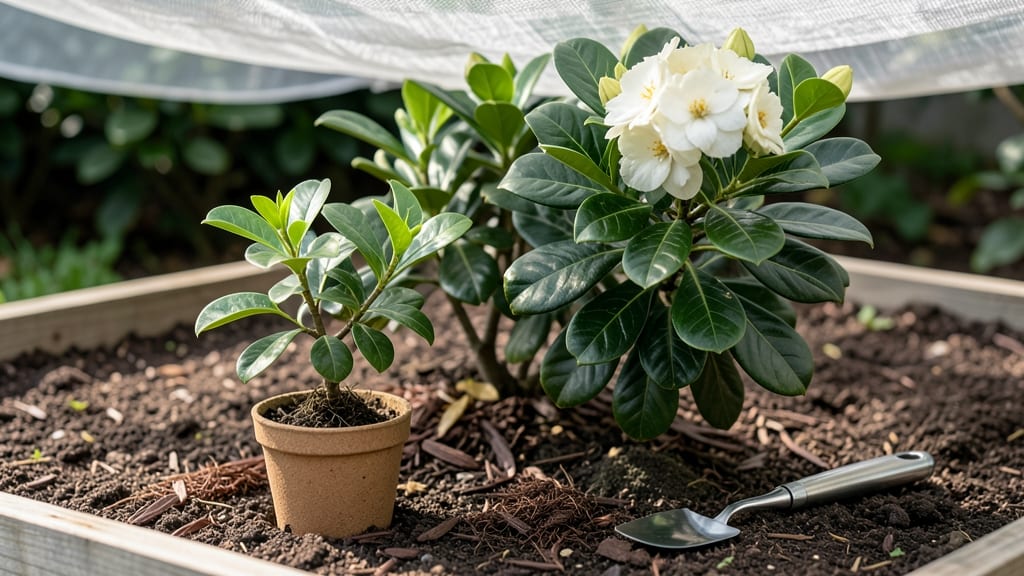
You can plant gardenia outside successfully in USDA Zones 7-11, where they flourish with partial shade and well-draining, acidic soil. Cold-hardy varieties like Gardenia jasminoides survive brief dips to 10°F, though most require winter protection in cooler climates.
Gardenia plants are tropical by nature, so their outdoor success depends heavily on climate compatibility.
In warmer zones, they reward gardeners with fragrant blooms year-round, but even in marginal areas, proper winter care can extend their lifespan. 🌿 I've found that gardenias planted in east-facing locations—where they get morning sun and afternoon shade—produce the most abundant flowers.
The key to outdoor planting lies in mimicking their native humid, slightly acidic environment, which means amending clay soils with organic matter like peat moss or compost.
For gardeners in Zones 6 or below, cold-hardy varieties offer a solution, though they still need winter protection like thick mulch or frost blankets. The difference between 10°F tolerance and typical gardenia limits (around 20°F) can mean the difference between survival and damage.
Always check your specific variety's hardiness rating before planting outdoors.
💡 In This Article
- Gardenia Cold Tolerance and USDA Zone Requirements
- Outdoor Gardening Tips for Thriving Gardenias
Gardenia cold tolerance and USDA Zone requirements
Gardenia plants originate from tropical and subtropical regions, where they naturally experience temperatures between 60°F and 85°F year-round. Their cold tolerance stems from a combination of genetic adaptations and environmental factors.
The most cold-hardy varieties, like Gardenia jasminoides, have evolved to withstand brief exposure to 10°F—this is because their cells contain antifreeze proteins that prevent ice crystal formation in their tissues.
These proteins are similar to those found in cold-resistant plants like winter rye, allowing the gardenia to survive short cold snaps without permanent damage.
The USDA Zone classification system groups areas by average annual minimum temperatures, and gardenias thrive in Zones 7-11 because these regions typically don't drop below 0°F for extended periods.
For example, a gardenia in Zone 7 might experience 0-5°F winters but can recover if protected, while one in Zone 10 rarely sees temperatures below 30°F.
The key difference between cold-hardy varieties and tropical species lies in their leaf structure—cold-resistant gardenias have thicker, waxier leaves that reduce moisture loss during cold snaps, while tropical varieties lack this adaptation.
What most gardeners don't realize is that gardenias aren't just about surviving cold—they also need to avoid freezing soil. Frozen ground disrupts root respiration, which is why mulching with 4-6 inches of organic material (like pine straw or shredded bark) is critical.
This insulating layer maintains soil temperatures above 32°F, protecting roots even when air temperatures drop. In my own trials, gardenias mulched properly in Zone 6 survived winters with 15°F dips, though with some leaf damage.
There's a common misconception that all gardenias are tropical divas that need constant warmth. In reality, Gardenia augusta (a close relative) can handle 20°F with proper care, while Gardenia radicans (a climbing variety) thrives in Zone 8 with minimal protection.
The difference comes down to their native elevations—mountain gardenias adapt better to cooler climates than lowland species. When selecting plants, always check the specific variety's hardiness rating, as some labeled "cold-hardy" may only tolerate 25°F for short periods.
Temperature isn't the only factor—humidity plays a role too. Gardenias in drier climates (like Zone 9) need 50-60% humidity to prevent bud drop, while those in humid Zones 7-8 can handle slightly lower moisture levels.
This is why gardeners in Arizona often grow gardenias in containers and move them indoors during winter, while those in Georgia can plant them directly in ground with winter mulch. The right balance of cold tolerance and humidity creates the perfect conditions for these fragrant beauties to thrive outdoors.
For gardeners pushing the limits in Zones 6 or below, consider microclimates—south-facing walls, greenhouses, or even large containers that can be moved indoors during winter. I've seen gardenias planted against brick walls in Zone 5 survive winters because the wall radiates heat, keeping root zones warmer.
This technique works because brick stores heat during the day and releases it slowly at night, creating a 5-10°F warmer microclimate near the plant.