
Fertilization
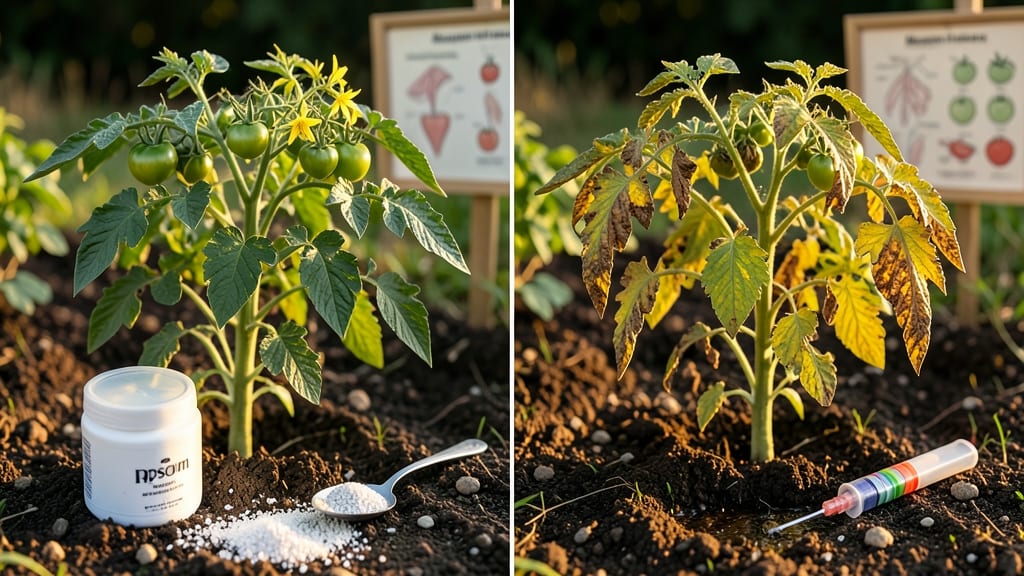
The myth that Epsom salt magically boosts garden growth is exactly that—a myth. While magnesium sulfate provides essential minerals like magnesium and sulfur, its benefits are limited to correcting deficiencies, not enhancing overall plant health. Overuse can actually harm your soil and plants by disrupting nutrient balance or increasing salt levels.
Most gardeners assume Epsom salt is a universal growth enhancer, but its real value lies in targeted use. Magnesium helps plants produce chlorophyll, which is critical for photosynthesis, but only when there's a deficiency. 🌱 Sulfur supports protein synthesis, yet most soils already contain enough magnesium for healthy plants.
The problem? Many gardeners apply it as a blanket fertilizer, which can lead to soil salinity and nutrient imbalances over time.
Instead of relying on Epsom salt, focus on soil testing to identify actual deficiencies. For example, tomatoes and peppers often show magnesium deficiency symptoms like yellowing leaves between veins. In those cases, a diluted solution (1 tablespoon per gallon of water) can help—but only as a temporary fix.
For long-term solutions, consider organic alternatives like dolomitic lime or compost, which provide magnesium without the risk of over-salination.
💡 In This Article
- How Epsom Salt Affects Plant Nutrition and Soil Chemistry
- When and How to Use Epsom Salt Safely in Gardens
How Epsom salt affects plant nutrition and soil chemistry
Epsom salt, or magnesium sulfate, plays a specific role in plant biology by supplying two critical nutrients: magnesium and sulfur. Magnesium sits at the center of the chlorophyll molecule, which is why it's essential for photosynthesis—the process that converts sunlight into energy.
When plants lack magnesium, they can't produce enough chlorophyll, leading to that classic interveinal yellowing (chlorosis) you might spot on older leaves. 🌿 But here's the catch: most healthy soils already contain sufficient magnesium for plant needs, typically ranging from 500 to 5,000 parts per million (ppm).
The sulfur component of Epsom salt supports protein synthesis and enzyme activation, but its contribution is often overshadowed by the magnesium hype. Sulfur deficiencies are rarer and usually occur in highly alkaline soils where sulfur becomes less available. What's more concerning is how Epsom salt affects soil chemistry when overused.
Magnesium sulfate dissolves quickly, raising soil salinity and potentially disrupting the balance of other essential nutrients like calcium and potassium. This can lead to nutrient lockout, where plants struggle to absorb other minerals despite their presence in the soil.
Soil pH also takes a hit with excessive Epsom salt applications. While magnesium itself is slightly alkaline, the sulfate component can acidify the soil over time, especially in sandy soils that drain quickly. This shift can harm beneficial soil microbes that thrive in neutral pH ranges (6.0-7.0).
For example, mycorrhizal fungi—critical for nutrient exchange—can become less active in soils that are too acidic or saline. The result? Plants may show signs of stress even when magnesium levels appear adequate.
Let's talk about the numbers: a typical application rate of 1 tablespoon per gallon of water (about 1,200 ppm magnesium) can provide a quick fix for deficient plants, but repeated applications can build up to harmful levels.
Soil tests typically recommend magnesium levels between 100-300 ppm for most plants, with some exceptions like blueberries that prefer slightly higher levels. The key is understanding that Epsom salt isn't a miracle fertilizer—it's a targeted supplement for specific deficiencies, not a general growth booster.
Consider this comparison: while Epsom salt provides magnesium in a highly soluble form, dolomitic lime offers magnesium in a slower-release format that also helps buffer soil pH. The lime approach is often more sustainable for long-term soil health.
What most gardeners don't realize is that the magnesium in Epsom salt doesn't stay in the soil long-term—it's either taken up by plants or leached away with water, leaving you to potentially repeat applications more frequently than you'd expect.
For visual learners, imagine your soil as a complex ecosystem where each nutrient plays a specific role in the orchestra. Magnesium is like the conductor—essential for keeping things in harmony, but adding too much of it can drown out the other instruments.
The goal should be balance, not domination of any single nutrient. 🎻