
Diseases
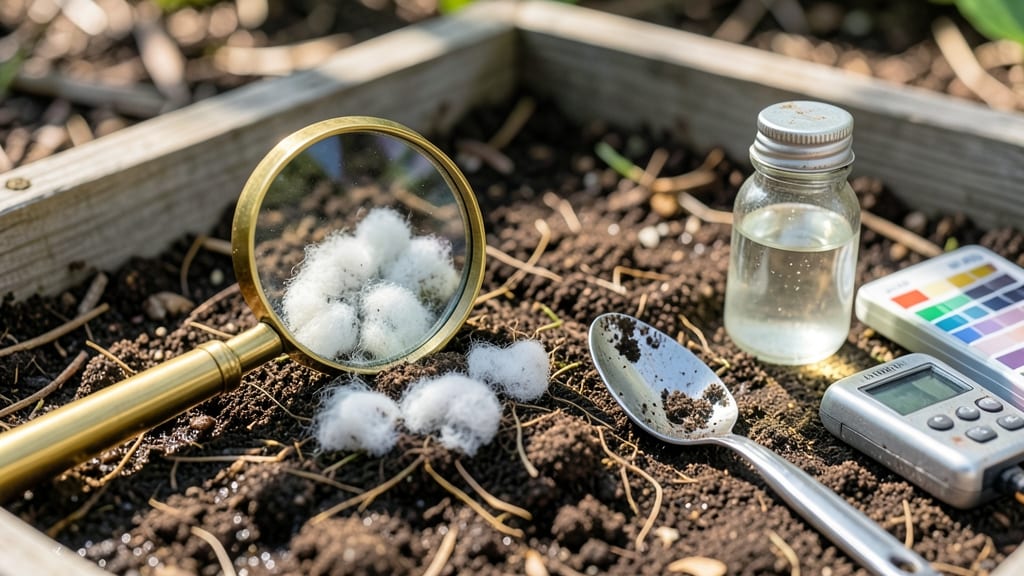
When your garden soil has white fungus, it’s usually harmless mold or beneficial mycelium, but it can also indicate overwatering, poor drainage, or harmful pathogens like powdery mildew. Always identify the type before deciding how to address it.
White fungus in garden soil isn’t always a cause for alarm—it could be beneficial mycelium from decomposing organic matter or harmless molds like Penicillium, which actually help break down nutrients. 🌱 However, if it’s a fuzzy, powdery growth (like powdery mildew) or hard, sclerotia-like structures, it could harm your plants by blocking roots or spreading disease.
The key is observing whether the fungus is spreading rapidly or affecting plant health before taking action.
To confirm what you’re dealing with, check the texture and growth pattern: fluffy and white usually means mold, while dense and cobwebby might signal mildew. If you’re unsure, a simple soil test from your local extension office can provide clarity. Remember, not all fungus is bad—some even support plant growth!
💡 In This Article
- Types of White Fungus in Garden Soil and Their Effects
- How to Safely Remove White Fungus from Garden Soil
Types of white fungus in garden soil and their effects
White fungus in garden soil typically falls into three categories: harmless molds, beneficial mycelium, or pathogenic organisms. The most common harmless type is Penicillium, a mold that thrives in moist, organic-rich soil.
This fuzzy, cotton-like growth appears white or greenish and helps decompose organic matter, releasing nutrients back into the soil. Another beneficial form is mycelium, the thread-like network of fungi that breaks down complex organic compounds into plant-accessible forms.
These beneficial fungi often appear as white, web-like structures and are essential for healthy soil ecosystems.
The texture and appearance of the fungus provide critical clues about its nature. Harmless molds like Penicillium usually grow in patches with a powdery or fluffy texture, while beneficial mycelium forms dense, interconnected strands that resemble fine white cotton.
In contrast, harmful pathogens such as powdery mildew appear as white, powdery coatings on soil surfaces or plant leaves, often spreading rapidly under humid conditions.
Another dangerous type is sclerotia, which are hard, white, and resemble small pellets—they can survive in soil for years and infect plants when conditions are favorable.
Understanding the growth conditions helps differentiate these types. Harmless molds and mycelium thrive in well-drained soil with adequate organic matter, while pathogens like powdery mildew flourish in overwatered, poorly ventilated environments. For example, Penicillium grows best at temperatures between 77-86°F and high humidity, whereas mycelium prefers cooler, moister conditions.
Pathogens, however, often indicate an imbalance—such as excessive moisture or poor air circulation—that needs correction to restore plant health.
If the white fungus is spreading aggressively or appears on plant foliage, it’s likely a harmful pathogen. Powdery mildew, for instance, can weaken plants by blocking sunlight and clogging stomata, reducing photosynthesis by up to 50% in severe cases.
Sclerotia, on the other hand, can lie dormant in soil for years, germinating when conditions are right, which makes them particularly persistent and difficult to eradicate. 🌱 The key is to monitor the fungus’s behavior—if it’s growing rapidly or affecting plant health, it’s time to take action.
Soil pH also plays a role in determining which fungi dominate. Most beneficial mycelium thrives in slightly acidic to neutral soil (pH 6.0-7.0), while pathogenic fungi often prefer alkaline conditions (pH 7.5+
Testing your soil’s pH can help identify whether the white fungus is a sign of an imbalance that needs correction. For example, adding sulfur to lower pH can discourage harmful pathogens while promoting beneficial fungi. In some cases, white fungus can even be a sign of composting activity. If you’ve recently added fresh organic matter, the white growth might be actinobacteria or other decomposers breaking down materials. These are generally harmless and indicate active soil biology. However, if the fungus appears alongside yellowing leaves or stunted growth, it’s a sign the soil environment has shifted toward pathogen dominance. To summarize, not all white fungus is bad—many types are essential for soil health. The critical factors are its growth rate, texture, and whether it’s affecting your plants. Slow-growing, fluffy patches are likely harmless, while rapid spread or plant damage signals a problem that needs addressing. 💫