
Light Requirements
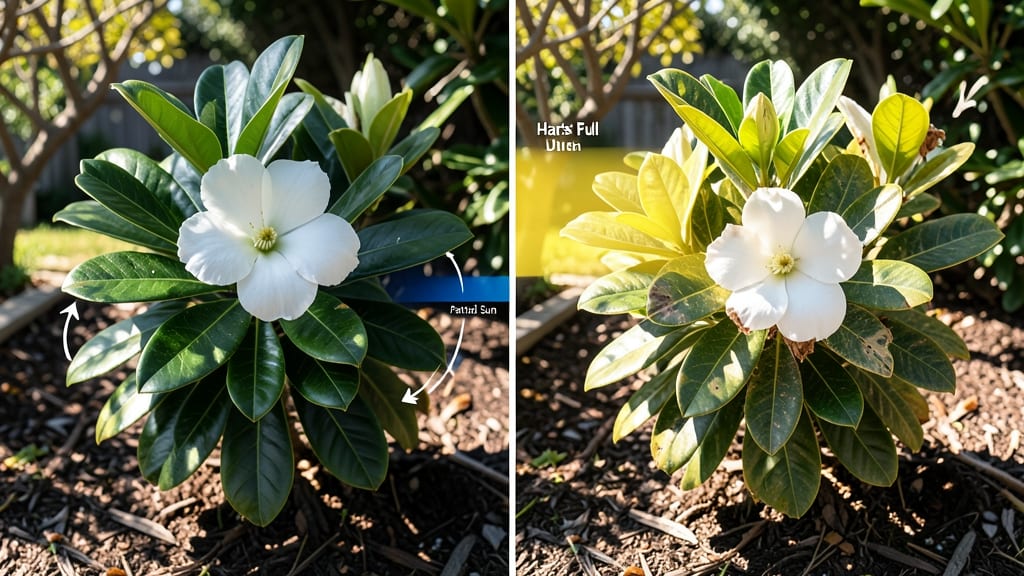
The gardenia sunlight requirements are all about striking the right balance—bright, indirect light with 4-6 hours of sunlight daily to keep those fragrant blooms thriving 🌸.
Struggling to keep your gardenia blooming despite your best efforts? The secret might lie in its sunlight needs—too much sun scorches leaves, while too little shade stunts flowers.
These tropical beauties love morning sun but need afternoon shade to prevent stress, especially in hotter climates like USDA Zone 6a.
In this guide, I’ll break down the perfect sunlight balance, how to adjust for partial shade, and telltale signs your gardenia is getting it just right.

Optimal sunlight exposure for gardenia plants: morning sun vs. afternoon shade
Gardenia plants thrive in bright, indirect sunlight with a delicate balance that mimics their natural tropical habitat. While they need 4-6 hours of sunlight daily, the timing and intensity of that light make all the difference.
Too much direct afternoon sun can cause leaf burn and bud drop, while insufficient light leads to sparse blooms and leggy growth.
Understanding the difference between morning sun and afternoon shade is key to cultivating healthy gardenias. Morning sunlight provides gentle, low-intensity light that kickstarts photosynthesis without overheating leaves. Afternoon shade protects them from intense UV rays and heat stress, especially in hotter climates like USDA zones 8-11.
Here’s how to optimize sunlight exposure for your gardenias based on your climate zone and growing conditions:
In hot climates, gardenias perform best with minimal morning sun and heavy afternoon shade. The intense heat of midday and afternoon can cause photosynthesis to shut down due to excessive transpiration, leading to leaf burn and bud drop.
Using shade cloth rated 30-50% during peak hours (12 PM - 4 PM) can prevent this while still allowing enough light for blooming.
For temperate climates, a balance of morning sun and filtered afternoon light works best. Position your gardenias near a west-facing window or under high trees to naturally diffuse harsh afternoon rays. If growing outdoors, a lattice or sheer fabric can create the perfect dappled shade effect.
Scientifically, gardenias have thick, waxy leaves that reflect sunlight to prevent overheating, but they still need protection. Studies show that afternoon light intensity above 2,000 foot-candles can stress gardenias, causing chlorophyll breakdown. By limiting direct exposure to morning hours only, you mimic their native understory habitat in tropical forests.
If you notice brown edges on leaves or dropping buds, it’s a clear sign of too much sun. Move your plant to a spot with indirect light or increase shade coverage immediately.
Conversely, if leaves appear pale and stems stretch, it’s time to provide more light—gradually increase exposure over 1-2 weeks to avoid shocking the plant.
For container gardenias, choose east-facing patios or balconies where they’ll receive morning sun and afternoon shade naturally. If your space only offers full sun, use a lightweight shade umbrella to protect them during peak hours.
Remember, gardenias are not drought-tolerant, so consistent moisture is just as critical as proper sunlight.
Pro tip: Rotate your gardenia pots quarter-turns every few weeks to ensure even light exposure on all sides. This prevents one-sided growth and encourages a fuller, bushier plant with more blooms. Pair this with regular pruning after flowering to maintain an open canopy that allows light to penetrate lower leaves.
🌸
Signs your gardenia isn’t getting the right sunlight (and how to fix it)
If your gardenia plant is struggling to bloom or its leaves look unhealthy, sunlight might be the culprit. Gardenias thrive in partial shade but suffer when exposed to too much direct sun or insufficient light.
Watch for yellowing leaves, leaf scorch, or dropping buds—these are classic signs your plant isn’t getting the right balance.
Gardenias need 4-6 hours of sunlight daily, but the timing matters. Morning sun is ideal, while harsh afternoon rays can damage delicate foliage. Without the right light, your plant may produce fewer blooms or develop weak stems.
Let’s diagnose the issue and fix it before your gardenia’s health declines further.
⚠️ Gardenia Sunlight Warning Signs
Too Much Sun: Brown, crispy leaf edges or sunburnt patches on leaves.
Too Little Sun: Pale, leggy growth with fewer blooms or yellowing leaves.
Fix: Move to morning sun + afternoon shade or use shade cloth (30-50%).
Start by examining your gardenia’s leaf color. If leaves are bright yellow or pale green, it’s likely not getting enough light. This often happens in indoor gardenias placed too far from windows or in shady garden spots.
Relocate your plant to a brighter spot but avoid direct afternoon sun, which can cause stress.
For gardenias in containers, rotate the pot every few weeks to ensure even light exposure. If your plant is in ground soil, prune nearby trees or shrubs that might be blocking sunlight. Thin foliage can also improve airflow and light penetration, helping your gardenia recover faster.
If your gardenia’s leaves show brown, crispy patches, it’s suffering from leaf scorch due to too much sun. Move it to a shadier location immediately and provide afternoon shade using a lightweight shade cloth. Water deeply in the morning to help the plant recover and reduce stress.
Finally, pay attention to bloom production. A healthy gardenia should produce fragrant white flowers in summer and fall. If blooms are sparse or buds drop before opening, adjust the light exposure. Morning sun + filtered afternoon light is the golden rule for keeping your gardenia thriving and blooming beautifully.