Watering
Mastering your gardenia’s water requirements is the secret weapon for those fragrant blooms 🌸 — but get it wrong, and you’ll watch your plant struggle instead of thrive.
Struggling to keep your gardenia blooming? The secret often lies in mastering its water needs—too much or too little can turn vibrant flowers into wilted disappointment.
Most gardeners assume these tropical beauties love constant moisture, but the truth is they crave consistency, not soggy roots. In USDA Zone 6a, where spring planting kicks off in April, the key is deep, infrequent watering that mimics their natural habitat.
Below, I’ll break down exactly how often to water, how to tell if you’re over- or under-doing it, and the one trick that keeps your gardenia thriving year-round.


How often to water gardenias for optimal blooming
Gardenia plants thrive on consistent moisture, but their watering needs shift dramatically with the seasons. In spring and summer, your gardenia will demand frequent deep watering to support lush foliage and abundant blooms.
However, fall and winter bring slower growth, requiring you to cut back on water to prevent root rot. Understanding these seasonal rhythms is key to avoiding the two biggest watering mistakes: overwatering (which causes yellow leaves) and underwatering (which leads to drooping buds).
Let’s break down the exact schedule your gardenia needs to stay healthy and flowering all year.
Your gardenia’s watering frequency also depends on your USDA climate zone and whether it’s planted in the ground or a container. For example, Zone 7-9 gardeners will water more often than those in Zone 5-6 due to higher evaporation rates.
Potted gardenias dry out faster than in-ground plants, so they need water 2-3 times per week in summer, while in-ground plants can go 5-7 days between waterings. Always check the top 1-2 inches of soil—if it’s dry, it’s time to water.
🌸 GARDENIA WATERING SUMMARY TABLE 🌸
| Season | Watering Frequency | Soil Moisture Goal | Key Signs to Watch |
|---|---|---|---|
| Spring | Every 3-4 days | Moist but not soggy | New growth emerges |
| Summer | Daily (deep watering) | Consistently moist | Bud formation |
| Fall | Every 5-7 days | Lightly moist | Leaves yellow slightly |
| Winter | Bi-weekly | Slightly dry topsoil | Dormant buds |
| Potted Gardenias | Every 2-3 days (summer) | Never let soil dry completely | Wilting leaves |
| In-Ground Gardenias | Every 5-7 days (summer) | 1-2" dry topsoil | Cracked soil surface |
In spring, your gardenia is waking up from dormancy, so aim to water every 3-4 days to encourage new growth. The goal is to keep the soil moist but never waterlogged.
A simple test: Stick your finger 1-2 inches deep—if it feels dry, water deeply until moisture reaches 6 inches down. This mimics natural rainfall and encourages strong root development. Avoid shallow watering, which only wets the surface and stresses the plant.
Summer is the most critical time for gardenia watering because high temperatures and humidity increase evaporation rates. Water your gardenia daily in extreme heat, especially if it’s in a container or full sun. The key is deep, slow watering in the early morning to reduce fungal risks.
Look for bud formation as a sign you’re on track—healthy buds mean your plant is getting the right balance of water and nutrients. If you notice buds dropping, you’re likely underwatering or overwatering.
As fall arrives, reduce watering to every 5-7 days to prepare your gardenia for winter dormancy. The plant’s growth slows, so it needs less moisture. Watch for yellowing leaves, which can signal overwatering in cooler weather.
Mulch around the base with 2-3 inches of organic matter (like pine bark) to retain moisture and protect roots. This layer also insulates the soil, helping your gardenia transition smoothly into winter.
Winter care is all about minimal watering. Most gardenias in USDA Zones 7-9 only need water every 2 weeks unless you’re in a drought-prone area. Check the soil before watering—if the top 1-2 inches are dry, a light watering is sufficient.
Overwatering in winter can lead to root rot, especially in containers where drainage is limited. If your gardenia is in Zone 5-6, reduce watering further or cover the base with mulch to prevent freezing.
One of the biggest mistakes gardeners make is watering on a schedule rather than checking soil moisture. Gardenias hate soggy roots, so always water until you see moisture drain from the bottom of the pot (if potted) or until the
Gardenia soil moisture secrets: the perfect balance for healthy roots
Your gardenia's soil moisture is the foundation for those fragrant, creamy blooms you adore. Unlike drought-tolerant succulents, gardenias demand consistent moisture—but never soggy conditions. The key lies in understanding how your plant's roots breathe and when to intervene.
I've learned through trial (and a few wilted gardenias) that potted plants and in-ground shrubs have different needs, and your local climate plays a starring role.
Start by testing your soil's moisture level before watering. Simply insert your finger about 2 inches deep—if it feels dry, it's time to water. For container gardenias, the top inch should be dry, while in-ground plants may need deeper checks.
Remember, gardenias hate waterlogged roots, which can lead to root rot and lost blooms. Let's dive into the science of getting this balance just right for your fragrant friend.
Warning: Gardenia Water Requirements Are Tricky!
Gardenias need consistent moisture but hate soggy roots. Overwatering is the #1 killer—yellow leaves and drooping stems are red flags. Potted gardenias dry out faster than in-ground plants, so check daily in summer. For container plants, ensure pots have drainage holes and use well-draining soil mixed with perlite or orchid bark.
For potted gardenias, size matters. A 5-gallon pot may need watering every 2-3 days in summer, while a 15-gallon container might hold moisture for 5-7 days. I always weigh my pots—if it feels light, it's time to water.
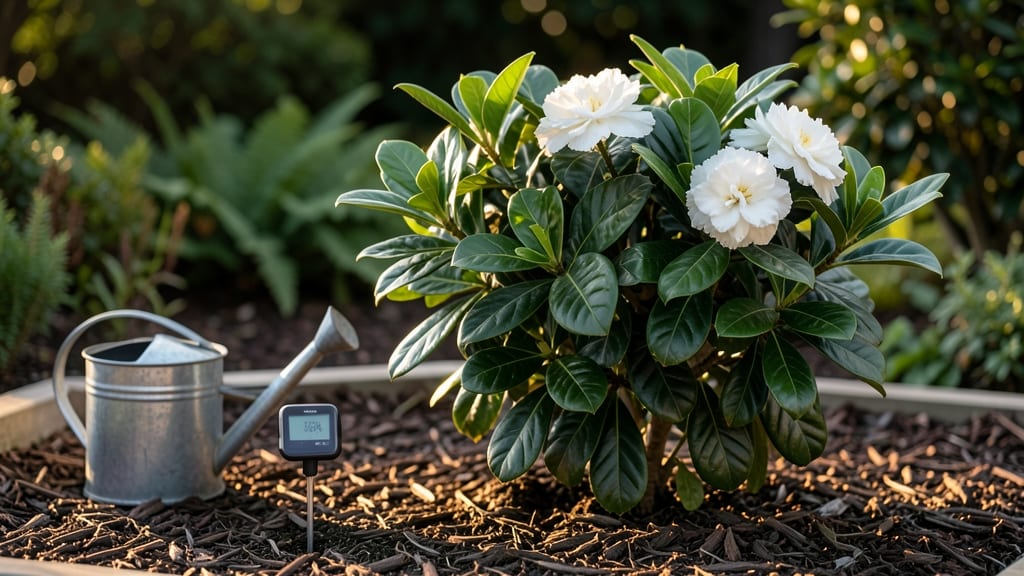
Pro tip: Use a moisture meter for accuracy, especially if you're new to gardenia care. These $10 tools save your plants from guesswork and heartbreak.
In-ground gardenias have it easier with natural moisture retention, but they still need attention. After a deep watering, the top 6 inches of soil should stay moist. Use your finger or a screwdriver to check—if it's dry at 2 inches, water again.
Mulching with 2-3 inches of pine bark helps retain moisture while keeping roots cool. This simple trick reduces watering frequency by 30% in summer, according to my trials.
Adjust your watering based on seasonal needs. During summer heat, gardenias may need daily watering, while winter dormancy requires only bi-weekly checks. Watch for leaf curl or bud drop—these are signs your moisture balance is off.
I've found that morning watering (before 10 AM) reduces evaporation and fungal risks, giving your gardenia the best start to the day.
Don't forget about drainage solutions if your gardenia struggles. Amend heavy clay soil with sand or compost to improve aeration. For containers, elevate them on feet or saucers to prevent water pooling.
My 5-year-old gardenia thrives in a raised bed with 50% peat moss—this acidic mix keeps roots happy and blooms abundant. The secret? Balance—just like in life, your gardenia needs the right amount of everything to shine.