
How To
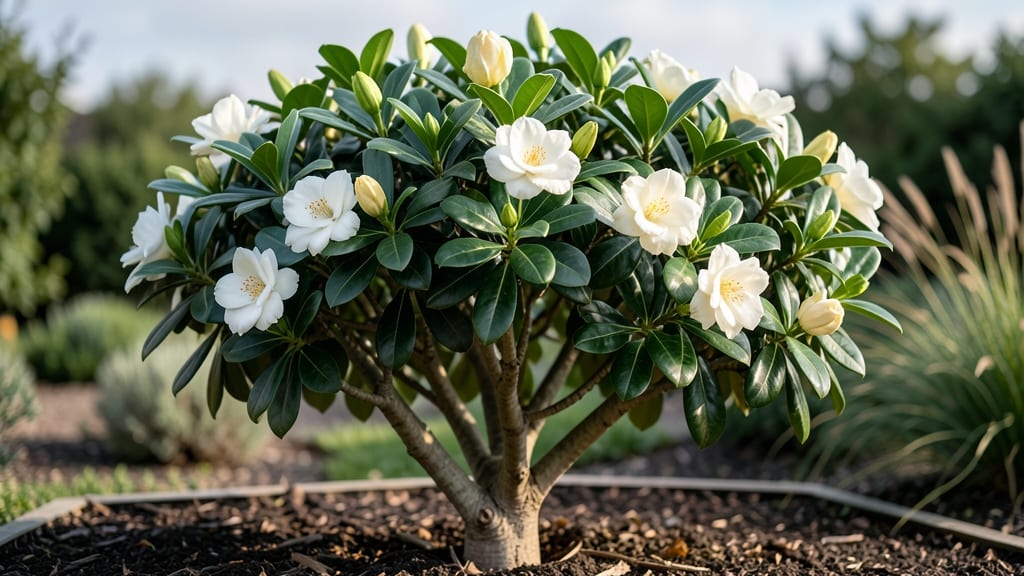
Gardenia bushes grow between 2 and 6 feet tall depending on the variety, with some reaching small tree proportions while others stay compact enough for patio pots.
If you’re dreaming of fragrant gardenias but wondering whether they’ll dwarf your backyard or fit snugly in a container, knowing their mature size is key—because some varieties grow tall enough to need a ladder while others stay compact enough for patio pots.
Popular types like Gardenia jasminoides typically hit 4 to 6 feet at maturity, making them ideal for shrub borders, while dwarf varieties like 'Radicans' max out around 2 to 3 feet, perfect for containers or small gardens.
Below, we’ll break down how to control their size with pruning, spacing tips for outdoor planting, and the sunlight and soil conditions that keep them thriving year after year.
Gardenia bush size by variety: height and spread expectations
Choosing a gardenia variety means balancing your space with their mature size—some grow as towering shrubs while others stay compact enough for patio pots.
The most popular type, Gardenia jasminoides, typically reaches 4 to 6 feet tall with a 3 to 5-foot spread, making it ideal for foundation plantings or as a privacy screen.
But if you’re working with limited space, dwarf varieties like 'Radicans' stay under 3 feet tall while still delivering those iconic white, fragrant blooms.
Understanding these size expectations helps you plan spacing, pruning, and even container choices. For example, a standard gardenia planted too close to a fence will outgrow its space within 3 years, while a dwarf variety in a 15-gallon pot thrives with regular pruning.
Let’s break down the most common varieties and their growth habits to help you pick the perfect fit for your garden.
📌 Key Tip: Always account for spread—some gardenias grow wider than they do tall! Measure your space before planting to avoid overcrowding.
| Variety | Mature Height | Mature Spread | Growth Rate | Best For |
|---|---|---|---|---|
| Gardenia jasminoides (Standard) | 4–6 ft | 3–5 ft | Moderate (1–2 ft/year) | Foundation plantings, hedges |
| Gardenia radicans (Dwarf) | 2–3 ft | 2–3 ft | Slow (6–12 in/year) | Containers, patios, small gardens |
| Gardenia augusta (Compact) | 3–4 ft | 2–4 ft | Moderate (1 ft/year) | Borders, mixed shrub beds |
| 'Kleim’s Hardy' (Cold-Hardy) | 5–7 ft | 4–6 ft | Fast (2 ft/year) | USDA Zones 7–9, large gardens |
| 'Veitchii' (Large Blooms) | 4–5 ft | 3–4 ft | Moderate (1 ft/year) | Cut flowers, specimen plants |
The Gardenia jasminoides standard variety is the most common, but if you’re in a cooler climate, 'Kleim’s Hardy' can reach 7 feet tall and handles temperatures down to 0°F. This makes it perfect for northern gardens, though it may sacrifice some bloom size.
For container gardening, stick to 'Radicans' or 'Augusta', as their compact size fits 15–20 gallon pots beautifully.
Spread is just as critical as height—some varieties like 'Veitchii' grow wider than they do tall, so plant them 5–6 feet apart to avoid shading out neighboring plants. In contrast, dwarf varieties can be spaced 2–3 feet apart in mixed borders.
Always check the mature spread when planning your garden layout to ensure airflow and sunlight reach all parts of the bush.
💡 Pro Tip: If you love the look of gardenias but lack space, consider espalier training—you can grow a standard variety like 'Jasminoides' against a trellis or fence, keeping its height controlled while maximizing vertical space.
Soil and sunlight also influence size—acidic, well-draining soil (pH 5.0–6.5) and partial shade (morning sun, afternoon shade) encourage fuller, bushier growth. Without these conditions, even dwarf varieties may grow leggy or sparse.
For example, a 'Radicans' in full sun might stretch taller than expected, while one in too much shade could become overcrowded with fewer blooms.
When shopping for gardenias, ask about the rootstock—some nursery-grown plants are grafted onto dwarf rootstock to control size permanently. This is especially useful for container gardening, as it prevents the
How fast do gardenias grow? Timeline to mature size
If you’ve planted a young gardenia, you’re probably wondering how quickly it’ll grow into that fragrant, blooming beauty you envision. The truth is, gardenias grow at a moderate pace, with their size depending heavily on variety, care, and growing conditions.
While some varieties can reach their mature height in just 3-4 years, others may take closer to 5 years—especially if you’re growing them in containers or less-than-ideal conditions. Understanding this timeline helps you plan for their eventual size and enjoy their heavenly scent sooner rather than later.
For most gardenias, particularly the popular Gardenia jasminoides, the first year is all about establishing roots. You’ll see minimal top growth—typically just 1-2 feet—as the plant focuses energy underground. This is why proper soil preparation and watering consistency are critical during this foundational phase.
Skipping these steps can delay growth for years, so don’t rush it—your gardenia’s long-term health depends on it.
By Year 3, your gardenia will really start to show its potential, often reaching 3-5 feet tall and producing its first significant blooms. This is when you’ll notice the glossy, dark green leaves and the intoxicating fragrance that gardenias are famous for.
However, don’t expect a 6-foot-tall plant just yet—full maturity usually takes another 1-2 years, depending on the variety and your growing conditions.
Several factors can speed up or slow down this timeline. For instance, gardenias thrive in acidic, well-draining soil with a pH between 5.0-6.5. If your soil is alkaline, growth will be stunted, and your plant may struggle to reach its full potential.
Similarly, pruning techniques play a huge role: regular pruning encourages bushier growth, while neglecting pruning can lead to leggy, sparse plants. Even sunlight exposure matters—too much harsh afternoon sun can scorch leaves, while too little light slows growth.
If your gardenia starts to outgrow its space, look for these telltale signs: branches rubbing against fences or other plants, leaves touching the ground, or new growth appearing beyond your desired height.
At this point, it’s time to prune back or consider transplanting to a larger container or garden bed. Remember, gardenias are flexible shrubs, so with the right care, you can guide their growth to fit your space perfectly—whether that’s a patio pot or a backyard border.
With patience and the right conditions, your gardenia will reward you with years of fragrant blooms and lush foliage. The key is to monitor its growth annually, adjust care as needed, and enjoy the journey—because a well-cared-for gardenia isn’t just a plant; it’s a living work of art. 🌸