
Blooming
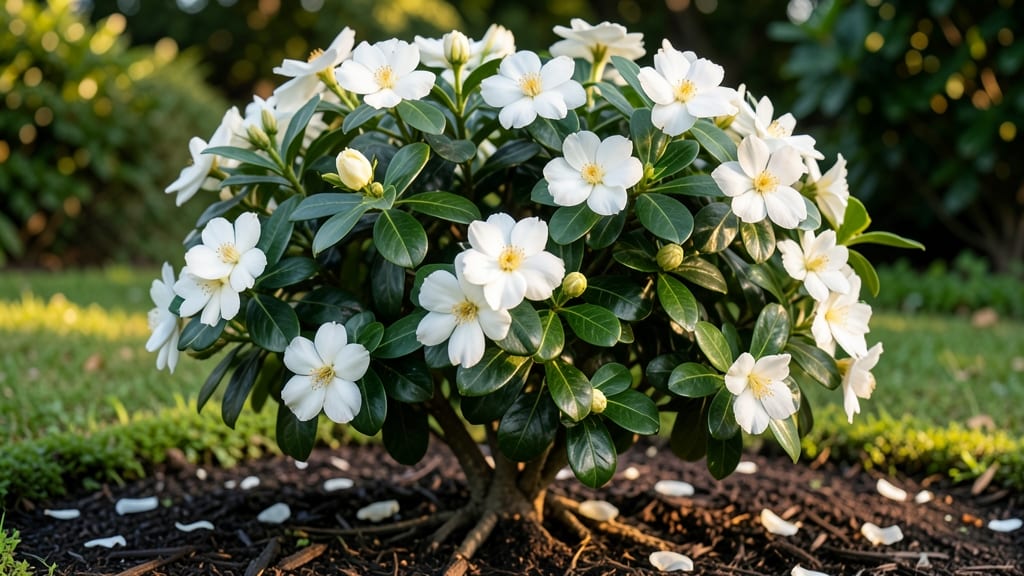
Gardenias bloom for 2 to 6 weeks depending on the variety, climate, and care—longer in tropical zones and shorter in cooler regions.
Picture this: your gardenia 🌸 bursts into fragrant white blooms, only to fade faster than you’d hoped. That’s often because most gardeners don’t realize how much variety and environment play into bloom length.
Some types, like G. jasminoides, can stretch their show to 8 weeks with the right conditions, while others barely last 3 weeks.
Climate makes all the difference. In humid, warm zones (like Florida or California), gardenias often rebloom seasonally, giving you multiple 4-to-6-week displays. But in cooler areas—say, USDA Zone 6a—you might only get a single 2-to-4-week burst in summer.
Even the same plant can bloom twice as long in a greenhouse versus your backyard.
Here’s the good news: with the right pruning, fertilizing, and light tweaks, you can coax your gardenia to hold onto its blooms 2 weeks longer—or even trigger a second flush.
I’ll walk you through the exact care tricks that work, plus how to spot the signs of a plant that’s ready to bloom for months.
Gardenia bloom duration by popular variety: what to expect
If you’ve ever wondered why your gardenia blooms seem to vanish overnight—or why some varieties seem to flower endlessly—you’re not alone. Gardenias (Gardenia jasminoides and relatives) are famous for their intense fragrance and creamy white blooms, but their flowering duration varies dramatically by variety and care.
Some gardenias burst into bloom for just 2–3 weeks, while others reward patient gardeners with year-round displays in the right climate. Let’s break down what to expect from your favorite types.
Understanding bloom duration helps you plan your garden’s seasonal highlights. For example, the ‘Radicans’ gardenia might give you 6–8 weeks of flowers in spring, while the ‘Kleim’s Hardy’ variety can rebloom sporadically throughout summer.
Climate plays a huge role too—gardenias in USDA Zone 10+ often bloom continuously, while those in Zone 7 or cooler may only flower once per year. Let’s dive into the specifics so you can set realistic expectations for your garden.
Here’s a quick reference for peak bloom length, reblooming tendencies, and seasonal patterns across popular gardenia varieties. This summary-table will help you compare types at a glance and choose the best fit for your garden’s aesthetic and maintenance level.
| Variety | Peak Bloom Duration | Reblooming Tendency | Seasonal Pattern | Best For |
|---|---|---|---|---|
| G. jasminoides ‘Radicans’ | 6–8 weeks | Moderate (spring + sporadic summer) | Spring (April–June) | Containers, small gardens |
| G. jasminoides ‘Veitchii’ | 4–6 weeks | Minimal (single flush) | Late spring (May–June) | Cut flowers, formal gardens |
| G. augusta ‘Fortuniana’ | 8–12 weeks | Frequent (year-round in tropics) | Spring–fall (continuous in warm climates) | Tropical landscapes, hedges |
| G. jasminoides ‘Kleim’s Hardy’ | 3–5 weeks | Occasional (late summer) | Spring + sporadic summer blooms | Cold-hardy gardens (Zone 7) |
| G. fortuniana ‘Prolificans’ | 10–14 weeks | Heavy (multiple flushes) | Spring–early fall | Fragrance gardens, borders |
The ‘Radicans’ gardenia is a top pick for gardeners in cooler climates (Zones 7–9) because it reliably blooms for 6–8 weeks in spring, often with a few reblooms in summer. Its compact size makes it perfect for containers on patios or as a hedge accent.
If you’re dreaming of a year-round display, look to G. augusta ‘Fortuniana’, which thrives in Zones 10–11 and can flower continuously with proper care. This variety is a game-changer for tropical gardens or greenhouses.
For those in transition zones (Zones 8–9), the ‘Prolificans’ gardenia is a standout—it can produce blooms for up to 14 weeks with multiple flushes throughout the growing season.
The key to unlocking its potential? Consistent moisture and acidic soil (pH 5.0–6.0). I’ve seen this variety in my own garden rebloom after deadheading
Climate zones and their impact on gardenia flowering length
Gardenias thrive in warm, humid climates, but their blooming duration varies dramatically across USDA zones 7–11. In tropical zones like 10–11, you can enjoy year-round blooms, while gardeners in zone 7 face shorter, seasonal displays.
Understanding these differences helps you set realistic expectations and tailor care for longer-lasting flowers.
Temperature and humidity are the biggest factors. Gardenias need consistent warmth (70–90°F) and 60–80% humidity to produce abundant blooms. In cooler zones, blooms appear later in the season and last 4–6 weeks, while tropical climates can extend flowering to 8–12 weeks or more with proper care.
In zone 7, gardenias often bloom just once in late spring, lasting 4–6 weeks. To extend this, I recommend planting them near southeast-facing walls or using black plastic mulch to absorb heat.
In zone 8, you’ll see two bloom cycles—spring and fall—if you prune lightly after the first flush.
For zones 9–11, the key is maintaining consistent moisture and humidity. I’ve found that mist systems or grouping plants together can create a microclimate that mimics their tropical origins. Even in cooler zones, container gardening lets you move plants to warmer microclimates during winter for extended blooming.
If you’re in a cooler zone, don’t be discouraged—gardenias still reward patience! Focus on soil acidity (pH 5.0–6.0), partial shade, and regular feeding with low-nitrogen fertilizer to encourage more blooms.
With the right care, you can push your gardenia’s season by 2–4 weeks in even the most challenging climates.
Remember, gardenias are tropical shrubs at heart. The closer you can mimic their natural environment—warmth, humidity, and protection from cold snaps—the longer and more abundant your blooms will be. Experiment with season extenders like row covers or even indoor overwintering for containers to see dramatic improvements!