
Light Requirements
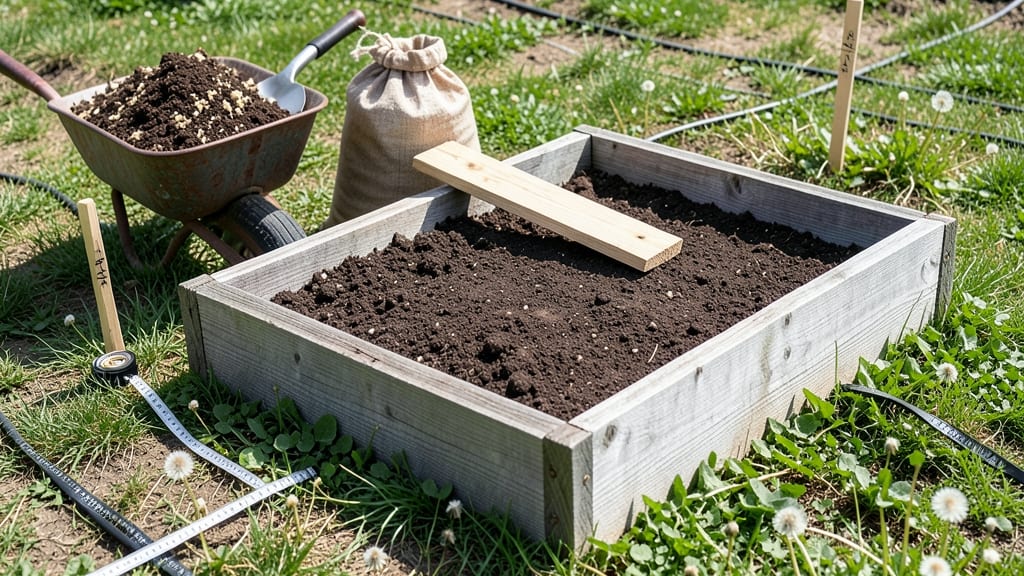
Filling a raised garden bed with the right amount of soil is the foundation of a thriving garden—but too little or too much can spell disaster for your plants.
Picture this: you’ve spent hours building your 🌱 raised garden bed, only to realize halfway through planting that you’ve either got a mountain of unused soil or a sad, shallow pit that won’t support your crops.
Avoiding this frustration starts with knowing exactly how much soil to use—and how to layer it for perfect drainage and nutrients.
Most gardeners assume "fill it to the top" is the answer, but the truth is more nuanced. Root depth varies wildly between crops—carrots need 12 inches of loose soil, while lettuce thrives in just 6 inches. A well-planned soil mix also prevents compaction and keeps plants healthy for years.
In this guide, I’ll break down the ideal soil depth for every plant type, how to calculate your bed’s volume, and the best layering techniques to save money and maximize growth. Let’s get your garden off to the right start!
Raised garden bed soil depth chart by plant type: essential requirements for healthy growth
Getting the soil depth right in your raised garden bed is like giving your plants the perfect foundation—they need room to stretch their roots without hitting hardpan or becoming waterlogged. Shallow-rooted herbs like basil thrive in just 6 inches, while deep-rooted asparagus demands 12+ inches to reach its full potential.
Let’s break down the science so you can tailor your bed to each plant’s needs.
Most gardeners assume a one-size-fits-all approach, but root depth requirements vary wildly between plant types.
For example, leafy greens like lettuce need only 6–8 inches, while fruiting plants like tomatoes or strawberries require 10–12 inches. Drainage layers at the bottom also play a critical role—skipping them can lead to soggy roots and stunted growth, even with the right soil depth.
Why depth matters: Roots need space to access nutrients, water, and oxygen. A 6-inch bed might work for radishes, but asparagus crowns buried too shallowly will struggle to establish. Let’s dive into the exact measurements your garden needs for a thriving harvest.
If you’re growing a mix of plants, prioritize deep-rooted varieties in one section of your bed and shallow-rooted ones in another. For example, dedicate one side to asparagus or rhubarb (18+ inches) and the opposite side to lettuce or radishes (6–8 inches).
This strategy maximizes space and avoids compromising growth for any plant.
Pro tip: Add a 3–4 inch drainage layer of gravel or coarse sand at the bottom before filling with soil. This prevents waterlogging, especially in clay-heavy soils. Test your soil’s drainage by filling a jar with soil and water—if it drains in under 30 minutes, you’re golden.
If not, amend with perlite or compost.
For container-grown plants like herbs or small vegetables, a 6–8 inch soil depth is often enough, but add a 2–3 inch layer of compost at the bottom to boost nutrients. This mimics natural soil layers and gives roots a nutrient-rich zone to explore right away.
One common mistake? Overestimating soil volume after accounting for compaction. Loose soil settles over time, so fill your bed to 2–3 inches above the recommended depth before planting.
For a 4x8 foot bed with 12 inches of soil, you’ll need roughly 1.3 cubic yards of soil mix—always buy extra for settling and amendments.
Remember, healthy roots equal healthy plants. Whether
How to calculate soil volume for your raised bed: step-by-step guide with common mistakes
Calculating the exact soil volume for your raised bed prevents wasted bags of soil and ensures your plants have the perfect growing environment. Even a small miscalculation can mean compacted roots or nutrient deficiencies.
Let’s break down the math and avoid three critical mistakes that trip up gardeners every season.
First, measure your raised bed’s length, width, and depth in feet. For example, a 4’ x 8’ bed with 12” of soil depth needs precise calculations. Multiply these dimensions to find the total cubic feet of soil required—this is where most gardeners stumble.
Let’s walk through the exact steps to avoid overbuying or running short.
- Measure dimensions: Length (L) × Width (W) × Depth (D) in feet. Example: 4’ × 8’ × 1’ = 32 cubic feet.
- Account for base materials: Subtract the height of landscape fabric or rocks (e.g., 2” = 0.17’). Adjust depth to 10.83” for accurate volume.
- Calculate compaction: Soil settles 10-20%. Multiply total by 1.2 to buy extra (e.g., 32 × 1.2 = 38.4 cubic feet).
- Convert to bags: Most bags hold 0.75–1.5 cubic feet. For 38.4 cu ft, buy 26–51 bags (depending on bag size).
One common mistake is ignoring the existing base layer of rocks or fabric. If your bed has a 2” gravel base, reduce the soil depth by 0.17 feet before calculating. Skipping this step often leads to overfilled beds that spill over the edges or underfilled beds with poor drainage.
Another error is assuming soil volume equals bed volume. Fresh soil compacts over time, reducing space for roots. To compensate, always add 10-20% extra soil to your total.
For a 32 cubic foot bed, this means buying enough for 38.4 cubic feet—not 32. This adjustment prevents root-bound plants and ensures long-term growth.
Finally, many gardeners forget to account for mulch or top dressing later in the season. If you plan to add 2” of mulch, subtract that depth from your initial soil calculation.
For example, a 12” soil depth with 2” mulch means filling to 10” initially and topping up later. This saves money and avoids overcrowding your bed.
Use these calculations to order the right amount of soil, whether you’re planting shallow-rooted herbs or deep-rooted vegetables. Happy gardening—your plants will thank you! 🌱