
Light Requirements
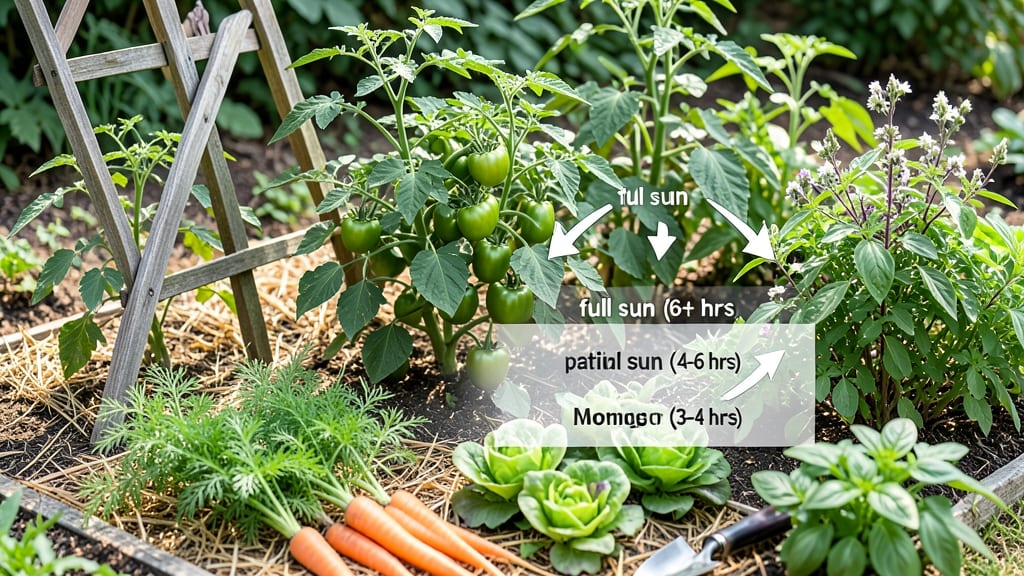
To grow a thriving vegetable garden, how much sun does your vegetable garden need?—the magic number is 6 to 8 hours of sunlight daily—the key to turning seedlings into bountiful harvests.
Struggling to decide where to plant your vegetables? Sunlight is the single most critical factor in determining which crops thrive—and which wither. Get it wrong, and even the hardiest plants will fail, while the right balance can turn your garden into a high-yield powerhouse.
Some veggies, like tomatoes and peppers, demand full sun, while leafy greens like spinach tolerate partial shade. Understanding these needs helps you design a garden that works with your space—not against it.
Below, I’ll break down the exact sunlight requirements by crop type, share tricks for measuring sunlight in your yard, and reveal the 5 mistakes that sabotage growth before you even notice.

Sunlight requirements for vegetable garden plants by type
Understanding sunlight requirements for your vegetable garden is like knowing the secret ingredient in a perfect recipe—get it right, and your plants will flourish. Most vegetables fall into three broad categories based on their sun needs: full sun, partial shade, and low-light tolerant.
Each category thrives under specific conditions, and placing them correctly can mean the difference between a bountiful harvest and disappointing results.
For example, tomatoes and peppers demand 6-8 hours of direct sunlight daily, while leafy greens like spinach or lettuce can handle just 3-4 hours of morning sun.
Even root vegetables like carrots and beets need careful placement—they prefer full sun but can tolerate partial shade in hot climates to prevent bolting.
Here’s a quick guide to help you map your garden layout. The summary-table below breaks down the sunlight needs of popular vegetables, along with ideal growing conditions to maximize yield and plant health.
Now that you’ve mapped out your garden’s sunlight zones, let’s dive deeper into how to optimize conditions for each type. Full-sun lovers like tomatoes and peppers need the hottest, most exposed spots in your garden.
If your space is limited, consider using reflective surfaces like white mulch or light-colored containers to bounce extra light onto plants.
For partial-shade crops, focus on areas that receive morning sun but are shielded from the intense afternoon rays. East-facing beds or spots under dappled trees work perfectly.
These plants often thrive in spring or fall when temperatures are cooler, so plan your planting schedule accordingly to avoid bolting or bitter flavors.
Even low-light tolerant vegetables like kale or arug
How to measure and adjust sunlight in your garden
Every vegetable garden needs the right amount of sunlight to thrive, but most gardeners don’t realize how much their space changes throughout the day and seasons.
I’ve learned the hard way that 6 hours of sun isn’t the same as 6 hours of direct light—and that difference can mean the difference between a bountiful harvest and struggling plants. The key is understanding how to measure your garden’s unique sunlight patterns.
Start by observing your garden from sunrise to sunset for at least one full week. Note when shadows appear, how they shift, and which areas receive dappled sunlight versus full sun.
This simple exercise will reveal hidden spots where tomatoes or peppers might struggle, even if they seem ideal at first glance. Don’t skip this step—it’s the foundation for everything else.
⚠️ WARNING: Common Sunlight Misjudgment Can Ruin Your Garden
⚠️ Ignoring seasonal sun shifts is another trap. A spot that gets full sun in summer might only receive partial shade in winter due to lower sun angles. Plan for the least sunny season when arranging your garden layout.
⚠️ Using nearby landmarks to judge sun (like a fence or tree) can be misleading. The actual sunlight hours in your garden might differ by 1-2 hours depending on obstructions. Always measure from the plant’s perspective.
For a more precise approach, use a sunlight calculator or app like SunSeeker. These tools map your garden’s sunlight exposure by tracking the sun’s path and predicting shadows.
I’ve used one to identify that my backyard’s south-facing raised bed gets 8 hours of sun in July but only 4 hours in December. This helped me rotate crops seasonally for optimal growth.
Adjust your garden layout by grouping plants with similar sunlight needs together. Place sun-lovers like tomatoes and peppers in the sunniest spots, while partial-shade crops like lettuce or radishes can go slightly farther north or under taller plants.
If your space is limited, consider vertical gardening with trellises for vining plants to maximize sunlight exposure.
Seasonal adjustments are just as critical. In spring and fall, when days are shorter, supplement natural light with reflective surfaces like white walls or mulch to bounce extra light onto plants.
For winter, extend the growing season with cold frames or row covers to protect sun-sensitive crops from early frost while maintaining light exposure.
Finally, don’t forget to monitor your garden’s sunlight year-round. What works in summer might fail in winter, and vice versa. By regularly checking and adjusting, you’ll create a dynamic space that supports healthy growth all season long. The effort pays off in bigger harvests and happier plants! ☀️🌱