
Watering
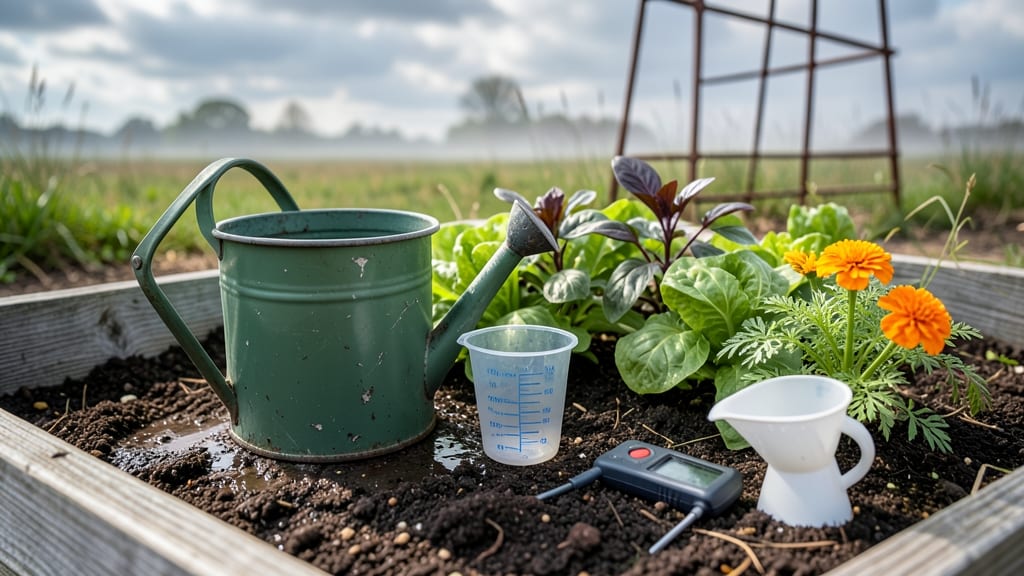
Your garden needs about 1 to 2 inches of water per week to thrive, but that number changes more than you think—depending on what you’re growing, the season, and even the time of day you water.
Picture this: You’re diligently watering your 🌱 every morning, only to watch your tomatoes wilt by afternoon. Or worse, your soil stays soggy for days, inviting pests and root rot. The truth? Most gardeners overestimate how much their plants really need—and that’s how mistakes happen.
This isn’t about guessing or following a one-size-fits-all rule. It’s about matching your watering to your garden’s unique needs: thirsty veggies like peppers demand deep, frequent drinks, while drought-tolerant lavender barely sips. Climate, soil type, and even the weather forecast play a role too.
Below, I’ll break down the exact science behind watering—so you can stop second-guessing and start growing with confidence. No more wilting disappointments, just lush, healthy plants that tell you exactly what they need.


Daily water requirements by plant type: the science-backed formula
Watering your garden isn't a one-size-fits-all task—each plant type has unique hydration needs. Understanding these daily water thresholds ensures your tomatoes thrive while your succulents don't drown. The key lies in soil moisture levels, evaporation rates, and plant biology.
For example, leafy greens like lettuce need 0.75–1 inch of water daily, while drought-resistant lavender survives on just 0.25 inches. Let’s break down the science so you can water with precision.
Most gardeners overestimate how much water plants absorb. A common mistake is assuming "a little water every day" is better than deep watering. In reality, deep, infrequent watering encourages stronger root systems.
For instance, tomatoes need 1–1.5 inches of water per week, delivered in 2–3 deep sessions rather than daily sprinkles. This mimics natural rainfall patterns and reduces fungal diseases like blight. Meanwhile, herbs like rosemary thrive on 0.5 inches weekly—overwatering turns their leaves yellow and mushy.
Soil type dramatically alters water needs. Sandy soil drains quickly, requiring frequent, shallow watering (e.g., 0.5 inches every 2–3 days), while clay soil holds moisture longer, needing 1 inch every 5–7 days. To test your soil’s moisture retention, dig 6 inches deep—if it’s dry, water thoroughly.
If damp, wait. This simple check saves 30% of water waste in most gardens. Mulch (2–3 inches of straw or wood chips) further regulates moisture by reducing evaporation.
🌱
| Plant Type | Daily Water Needs (inches) | Soil Preference | Best Watering Time | Notes |
|---|---|---|---|---|
| Vegetables (Tomatoes, Peppers, Cucumbers) | 1–1.5 inches/week | Well-draining | Morning (6–9 AM) | Deep water at base; avoid wetting leaves. |
| Leafy Greens (Lettuce, Spinach, Kale) | 0.75–1 inch/day | Moist, fertile | Evening (if no rain) | Keep soil consistently damp; mulch heavily. |
| Herbs (Basil, Mint, Parsley) | 0.5–1 inch/week | Well-draining | Morning | Drought-tolerant; reduce in winter. |
| Flowers (Roses, Lavender, Marigolds) | 0.5–1 inch/week | Moderate drainage | Early morning | Lavender needs less water; roses need consistent moisture. |
| Succulents/Cacti | 0.25 inches every 2 weeks | Gritty, fast-draining | Midday (avoid roots) | Overwatering kills them; let soil dry completely between waterings. |
| Lawns (Cool-Season Grasses) | 1–1.5 inches/week | Loamy, well-aerated | Early morning | Water deeply 2–3x/week; avoid light, frequent watering. |
Lawns often get the most water but don’t always need it daily. Cool-season grasses (like fescue) require 1–1.5 inches per week, while warm-season grasses (like Bermuda) prefer 0.5–1 inch every 5–
How to adjust watering for climate, soil, and seasonal changes
Your garden’s water needs aren’t one-size-fits-all—they shift dramatically based on where you live, what’s growing, and even the time of year.
In dry climates, like Arizona or California, you might need to water twice daily in summer, while in humid regions like Florida, morning watering once every 3–4 days may suffice. The key is understanding how to adjust for your specific conditions to avoid wasting water or drowning your plants.
Soil type plays a huge role too. Sandy soil drains water like a sieve, so you’ll need frequent, shallow watering to keep roots moist. Clay soil, on the other hand, holds onto water for days, meaning deep, infrequent watering is best.
Seasonal changes also demand flexibility—spring and fall often require less water, while summer heat can double or triple your garden’s thirst. Let’s break it down so you can tailor your watering like a pro.
💧 How Much Water Does a Garden Need Per Day?
- 1 Climate Zones: Arid (e.g., Desert) needs 1–1.5 inches/day in summer; Temperate (e.g., Midwest) requires 0.75–1 inch/day; Humid (e.g., Southeast) often needs 0.5–0.75 inch/day.
- 2 Soil Type: Sandy soil drains fast—water every 1–2 days; Clay soil holds moisture—water every 5–7 days; Loamy soil (ideal) needs every 3–4 days.
- 3 Seasonal Adjustments: Summer = double watering; Winter = reduce by 50%; Spring/Fall = moderate watering (1 inch/week).
- 4 Plant-Specific Needs: Vegetables (tomatoes, peppers) need 1.5–2 inches/week; Herbs (basil, parsley) thrive on 1 inch/week; Succulents only need 0.25 inch/week.
- 5 Watering Time: Always water in the early morning (6–9 AM) to reduce evaporation and prevent fungal diseases. Avoid evening watering—it keeps foliage wet overnight.
To put this into action, start by testing your soil’s moisture with a simple finger check: stick your finger 1–2 inches into the soil. If it’s dry, it’s time to water. For container gardens, check daily—potted plants dry out 3x faster than in-ground plants.
Pro tip: Use a moisture meter ($10–$20) for precision, especially in sandy or rocky soil where visual cues can be misleading.
Seasonal shifts are where many gardeners trip up. In summer’s peak heat, I’ve seen gardens go from lush to crispy in 48 hours if watering isn’t adjusted. A good rule of thumb: increase watering by 50% in July and August compared to spring or fall.
Conversely, in winter, most plants enter dormancy and only need 10–20% of their summer water. Even evergreens like boxwoods or holly can suffer from overwatering in cold, wet climates.
Don’t forget to mulch—a 2–3 inch layer of straw, wood chips, or shredded leaves locks in moisture, cutting your watering needs by 30–50%. For drought-prone areas, consider drip irrigation or soaker hoses, which deliver water directly to roots and reduce waste by up to 60%.
If you’re in a humid climate, focus on improving drainage to prevent root rot, even if you’re watering less frequently.
Here’s my go-to watering schedule template for different regions: Arid West = water deeply every 2 days; Pacific Northwest = water every 5–7 days; Southeast = water every 3–4 days.
Always adjust based on rainfall—skip watering if you’ve gotten 0.5 inches of rain in the past 24 hours. With these tweaks, your garden will stay hydrated without a drop of waste.