
Watering
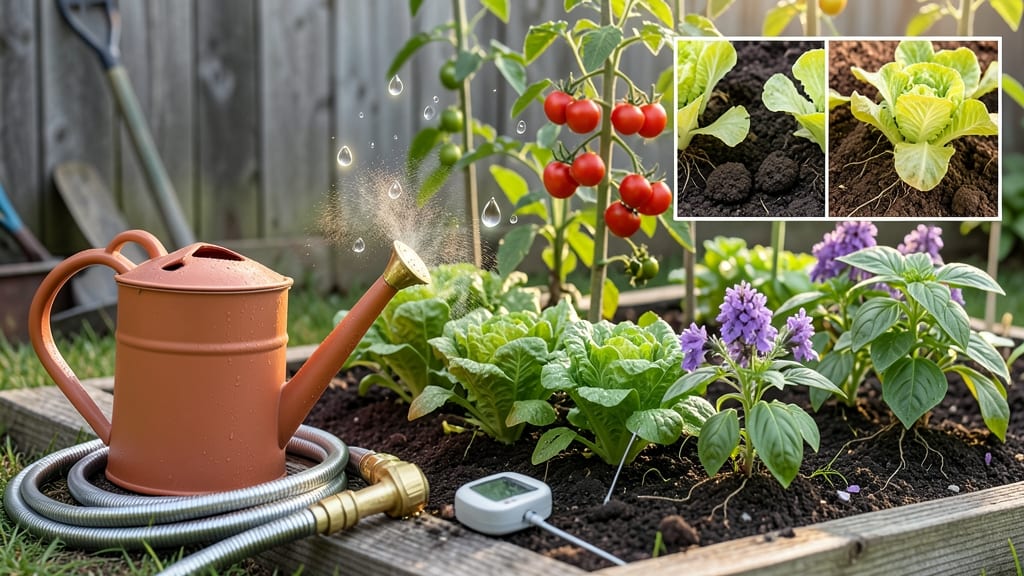
To determine how much water your garden needs, start with 1 inch per week for most plants in Zone 6a, then adjust for soil, season, and plant type.
Overwatering or underwatering your garden can mean the difference between lush, thriving plants and wilting disappointment—yet most gardeners guess rather than measure their watering needs.
Soil type plays a huge role: sandy soil drains fast and needs frequent deep watering, while clay holds moisture longer. Spring and summer demand more, while fall and winter can often rely on natural rainfall.
Below, I break down seasonal rules, plant-specific needs, and the best tools to check soil moisture—so you can water with confidence, not guesswork.


Seasonal water needs for gardens: how climate affects plant hydration
Understanding how much water your garden needs isn't about guessing—it's about reading your climate zone and seasonal shifts. In Zone 6a, where spring blooms arrive by March, your watering schedule should adjust like a thermostat turning up in summer.
Too much or too little can stress plants, inviting pests or root rot. The key? Deep watering that matches your region's rainfall patterns and plant types.
For example, my tomato plants in summer need 1-2 inches weekly, while drought-resistant lavender thrives on just ½ inch monthly. High humidity in fall means less watering, but winter's chill can trick you into overwatering dormant plants.
Let's break down how to hydrate your garden like a pro, season by season.
Spring is all about revival—your garden wakes up thirsty after winter's dormancy. I start with deep watering every 5-7 days, focusing on root zones.
A quick check: If the top 1-2 inches of soil feels dry, it's time to water. Mulch helps retain moisture, reducing the need for daily top-ups. For high-humidity regions, cut back by 30% to avoid fungal issues.
Summer demands the most attention—heat waves can double water needs overnight. My trick? Drip irrigation delivers water directly to roots, cutting evaporation loss by 40%.
Water before 10 AM to prevent fungal spores from thriving on wet leaves. Drought-resistant plants like yarrow or sedum need far less, while leafy greens wilt fast without daily checks.
Fall slows things down, but don't skip watering entirely. Cooler temps mean plants absorb moisture slower—think of it like sipping tea vs. chugging water. I reduce frequency by 40% but keep soil consistently moist. Perennials store water for winter, so deep soaks every 10-
Plant-specific watering rules: how much different gardens really need
Not all plants crave the same amount of water—what works for tomatoes can drown succulents. Understanding these differences saves time, water, and struggling plants. Each category has unique hydration needs based on root depth, leaf structure, and growth habits.
For example, vegetables like cucumbers need consistent moisture, while herbs such as rosemary thrive with minimal watering. Let’s break down the rules so you can water like a pro.
Your garden’s watering schedule should start with the plant type. Leafy greens, like lettuce, need frequent shallow watering to keep soil moist, while root crops, such as carrots, prefer deep but less frequent watering to encourage root growth.
Even flowers vary—petunias love moisture, but lavender despises it. Knowing these distinctions prevents guesswork and ensures every plant gets exactly what it needs to flourish.
For vegetables, focus on deep watering to encourage strong root systems. Tomatoes, for instance, need 1-2 inches per week but benefit from consistent moisture rather than frequent light sprinkles. Use a drip irrigation system or soaker hose to deliver water directly to the soil, reducing waste and disease risk.
Always water at the base of the plant to avoid wetting leaves, which can lead to fungal issues like blight.
Herbs often get overlooked because they’re small, but their water needs differ drastically. Basil and parsley prefer 1 inch of water per week and thrive with light misting rather than deep soaks. Overwatering herbs leads to root rot, so always check the soil moisture before watering.
A simple finger test—inserting your finger 1 inch into the soil—tells you if it’s time to water. If it feels dry, it’s time; if damp, wait a day or two.
When it comes to flowers, petunias and marigolds love moisture but hate soggy soil. Aim for 1 inch per week and use mulch to retain moisture and suppress weeds. For lawns, deep watering 2-3 times per week ensures grass roots grow deep and resilient.
Shallow watering encourages weak, shallow roots that struggle in dry spells. Always water early in the morning to minimize evaporation and fungal growth on grass blades.
Trees and shrubs need a different approach entirely. Young trees require deep, infrequent watering