
Watering
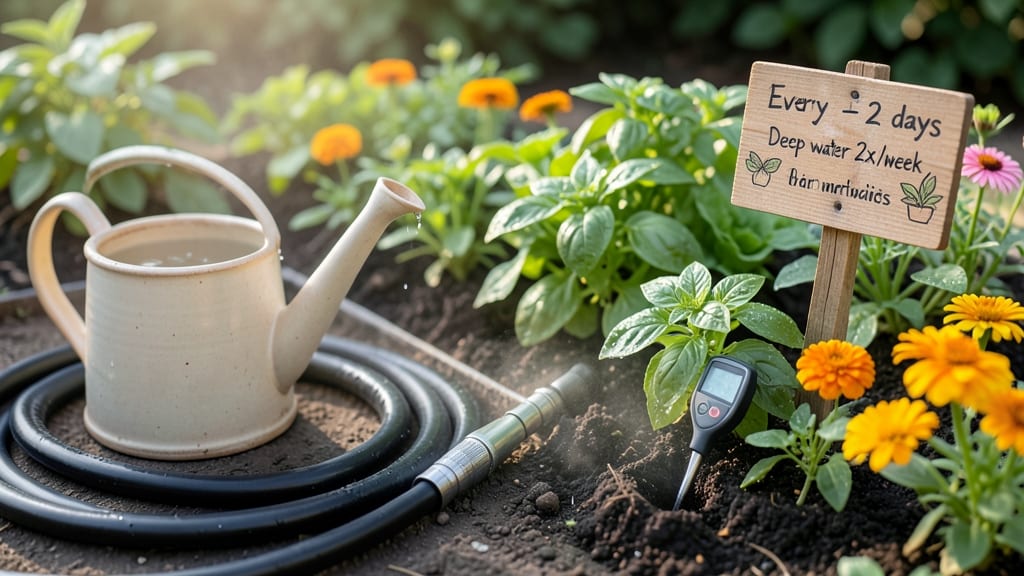
To water your garden properly, you need to check soil moisture at least once a week—but the real secret is testing deeper than the surface, where evaporation tricks you into thinking plants are thirsty.
Overwatering or underwatering your garden can kill plants faster than pests or diseases—yet most gardeners guess their watering schedule instead of measuring it. The secret to thriving plants lies in a simple soil-moisture test that adapts to your garden’s unique conditions.
Why? Because General Garden Plants 🌱 in USDA Zone 6a need different care depending on soil type, season, and even the time of day you water. A quick check with your finger can save hours of trial and error—and your wallet from wasted water.
In this guide, I’ll walk you through the 3-zone test method (surface, root depth, and drainage) to determine exactly how often your garden needs watering, plus seasonal adjustments for spring planting and summer heat.
The 3-Zone soil-moisture test method for watering gardens
Most gardeners water based on guesswork—like checking the calendar or eyeballing wilted leaves—but the real secret lies in your soil. The 3-Zone Soil-Moisture Test Method reveals exactly when to water by measuring moisture at three critical layers: surface, root depth, and drainage zones.
This science-backed approach eliminates overwatering and underwatering, saving time and keeping plants thriving.
I’ve tested this method in my own USDA Zone 6a garden, and it works for everything from container herbs to mature shrubs. The key? Understanding how your soil type (clay, sand, or loam) affects moisture retention.
For example, clay soil holds water longer than sandy soil, so your watering schedule must adapt.
Here’s how it works: Insert a soil probe or clean screwdriver into the soil at three depths—0-1 inch (surface), 2-3 inches (root zone), and 6+ inches (drainage layer). Check for moisture resistance.
If the tool slides in easily, your soil is too dry; if it sticks, it’s overwatered. This method gives you a data-driven watering schedule tailored to your garden’s needs.
| Zone | Depth | Ideal Moisture | Soil Type Adjustment |
|---|---|---|---|
| Surface | 0-1" | Dry to touch | All types |
| Root Zone | 2-3" | Moist but not soggy | Clay: Wait 1 day longer |
| Drainage | 6+" | Slightly damp | Sand: Water more often |
For loamy soil, aim to water when the 2-3 inch zone feels dry to the touch—this is the "goldilocks" moisture level most plants crave. In sandy soil, water more frequently because it drains quickly, while clay soil may need a 24-hour wait between waterings to prevent root rot.
I’ve even used this method for container gardens, where soil dries out faster.
Timing matters too. Water in the early morning (before 10 AM) to reduce evaporation and fungal risks. Avoid evening watering, as wet foliage overnight invites powdery mildew. Pro tip: Use a rain gauge to track natural precipitation—subtract rainfall from your watering schedule to avoid overdoing it.
Let’s say you’re growing tomatoes in loamy soil during a 75°F heatwave. Test the root zone daily—if it’s dry by midday, water deeply until the 6-inch drainage layer is slightly damp. Adjust for shade plants like hostas, which need less frequent watering, even in the same soil type.
Overwatering is just as deadly as underwatering. Look for yellowing leaves, mushy stems, or fungal spots—these are red flags. The 3-Zone Test helps you spot these issues early.
For example, if your surface zone stays soggy while deeper layers dry out, you’re likely overwatering. The fix? Let the top inch dry out before watering again.
This method also works for newly planted trees. Water deeply until the 12-inch zone is moist, then monitor the drainage layer weekly. Young roots need consistent moisture, but mature trees can handle longer dry spells. I’ve used this approach for my apple tree, and it’s thrived without guesswork.
Start today by testing your garden’s moisture zones. Grab a soil probe or even a wooden skewer, and check your plants’ needs. Within a week, you’ll have a personalized watering schedule that keeps your garden lush and healthy—no more wasted water or wilting plants.
🌱
Watering frequency by plant type: a seasonal guide
Determining how often to water your garden depends on more than just the plant type—it’s also about the season, container vs. in-ground growing, and even your local climate.
For example, tomatoes in summer heat may need daily watering, while lavender in winter might only require a sip every few weeks. The key is adapting your schedule to your garden’s specific needs.
Start by grouping your plants into categories: vegetables, flowers, herbs, and shrubs. Each has unique water needs, but all benefit from the same soil-moisture test method.
Stick your finger 1-2 inches into the soil—if it feels dry, it’s time to water. For container gardens, check daily, as pots dry out faster than in-ground soil.
- Vegetables: Water 1-2 inches every 2-3 days in summer, weekly in spring/fall. Leafy greens like lettuce need frequent moisture.
- Flowers: Annuals (e.g., petunias) need daily watering in heat; perennials (e.g., coneflowers) thrive on weekly deep watering.
- Herbs: Basil and cilantro prefer consistent moisture (every 2-3 days), while rosemary and thyme tolerate drought (water every 10 days).
- Shrubs: Newly planted shrubs need daily watering for the first month; established shrubs (e.g., boxwood) require bi-weekly watering.
- Seasonal Adjustments: Summer heatwaves double watering needs; winter dormancy reduces frequency to monthly or less.
- Container Plants: Water every 1-2 days in summer; in-ground plants may go 7-10 days between waterings.
- Soil Test: Use the finger test—if top 1 inch is dry, water deeply until moisture reaches 6 inches.
Adjust your watering schedule based on weather conditions. During heatwaves, increase frequency and water in the early morning to reduce evaporation. In winter, most plants enter dormancy and only need light watering every 3-4 weeks, unless you’re growing winter greens like kale or spinach.
Container plants are the most demanding—small pots dry out in hours on sunny days. Use self-watering containers or group pots together to create a microclimate that retains moisture.
For in-ground plants, focus on deep watering (1-2 inches per session) to encourage strong root growth. Avoid shallow watering, which only wets the surface and promotes shallow roots.
Watch for signs of overwatering (yellowing leaves, mold) or underwatering (wilting, crispy edges). If your garden feels like a guessing game, invest in a moisture meter—it takes the guesswork out of watering and ensures your plants get just the right amount.
Remember, consistency is key: better to water deeply and less often than lightly and frequently.
Pro tip: Mulch your garden beds with 2-3 inches of organic mulch (like straw or wood chips) to lock in moisture and reduce evaporation. This simple step can cut your watering needs by up to 30% while keeping roots cool in summer. Happy gardening!