
Watering
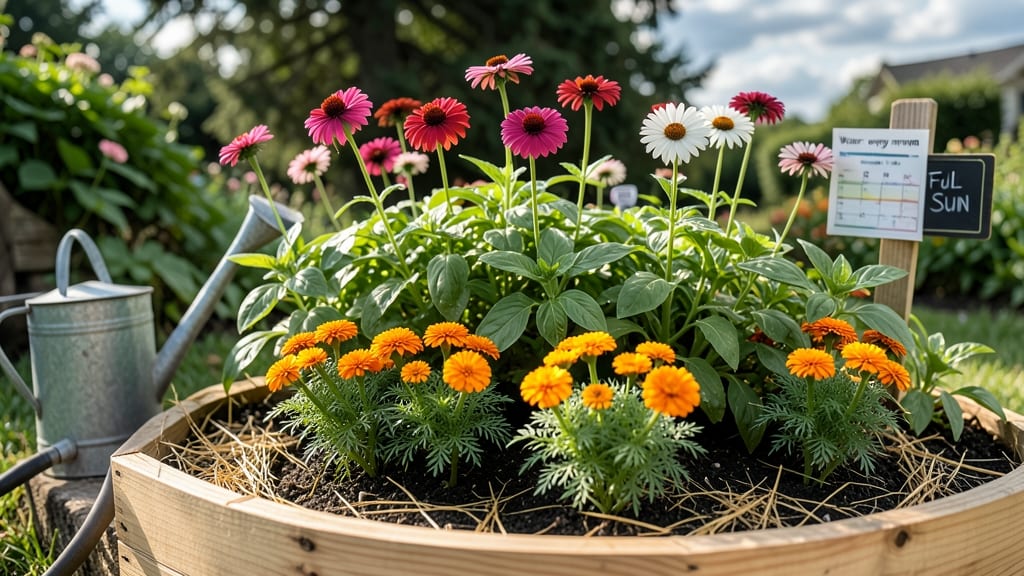
Watering your garden in summer the right way—how often and how deep—makes the difference between lush, thriving plants and crispy, sad ones.
Struggling to keep your summer garden thriving without drowning plants in water or leaving them parched? The key lies in understanding when—not just how much—to water, and a simple soil-moisture test can transform your gardening game.
Most garden plants 🌱 in Zone 6a need 1-2 inches of water per week during summer, but that changes fast with heatwaves, soil type, or mulch. Too much water suffocates roots; too little stresses plants into early dormancy.
Here’s how to nail the schedule—from the finger test to adjusting for vegetables, flowers, and lawns—so you water just enough without wasting a drop.
The perfect summer watering schedule based on plant types
Summer heat can turn your garden into a high-stakes watering game—too little and plants wilt, too much and roots drown. The secret? Tailoring your schedule to plant types and adjusting for heatwaves.
I’ve tested these frequencies in my Zone 6a garden and refined them for annuals, perennials, veggies, and drought-tolerant plants to keep everything thriving without waste.
Most gardeners overwater because they assume "more is better" during summer. But vegetables like tomatoes and herbs like basil need consistent moisture, while succulents and lavender thrive on neglect. The key is deep watering—soaking soil 6-8 inches deep—rather than light, frequent sprinkles that evaporate fast.
This method also encourages deeper root growth, which helps plants survive droughts.
Below is my plant-by-plant breakdown, including adjustments for peak heatwaves (temperatures above 90°F). I’ve also included soil-moisture targets (test with your finger—1-2 inches down for most plants) to avoid guesswork. Pro tip: Water early morning (before 10 AM) to cut evaporation and fungal risks.
How to perform the finger test: a step-by-step guide to avoid overwatering
Summer heat can turn your garden into a thirsty jungle if you're not careful. Overwatering is just as damaging as underwatering—both can stunt growth or invite pests. The finger test is my go-to method to check soil moisture without guessing.
It’s simple, free, and works for 90% of garden plants, from veggies to flowers.
Why rely on a finger when you could use fancy tools? Because the finger test gives you real-time data about your soil’s moisture level. For shallow-rooted plants like lettuce or herbs, I check the top 1-2 inches.
For deeper-rooted plants like tomatoes or shrubs, I dig down 3+ inches. This small adjustment makes a huge difference in how often you water.
Step-by-Step Finger Test Guide
-
Step 1: Choose the Right Time
Test soil in the early morning (6-9 AM) when moisture levels are stable. Avoid checking after rain or watering—wait 2-3 hours for accurate results. -
Step 2: Pick the Right Spot
Insert your finger 2 inches deep for shallow roots (e.g., basil, marigolds) or 3+ inches for deep roots (e.g., roses, peppers). Check multiple spots in the bed for consistency. -
Step 3: Assess Soil Texture
Sandy soil: Drains fast—if your finger comes out dry, water immediately. Clay soil: Holds moisture longer—wait until it feels slightly damp before watering. -
Step 4: Interpret the Feel
If soil feels dry and crumbly, it’s time to water. If it’s cool and slightly damp, hold off. For clay-heavy soil, press gently—if it sticks to your finger, it’s too wet. -
Step 5: Adjust for Heatwaves
During 90°F+ days, check soil daily and water early in the morning or late evening to reduce evaporation. Mulch helps retain moisture—apply 2-3 inches of organic mulch around plants.
Pro tip: Keep a gardening journal to track your finger test results. Note which plants need water most often and adjust your schedule accordingly. For example, my zucchini plants always signal thirst first—wilting by mid-morning—while my lavender thrives on neglect and rarely needs a drink.
Remember, the finger test isn’t just about moisture—it’s about understanding your soil. Over time, you’ll recognize the ideal texture for each plant type. For instance, succulents and cacti should feel bone-dry before watering, while leafy greens prefer consistently damp soil.
Trust your hands—they’re the best tool in your gardening toolkit!
Once you master the finger test, you’ll water with confidence, save water, and keep your garden lush without the guesswork. Happy testing—and may your soil always feel just right! 🌱