Watering
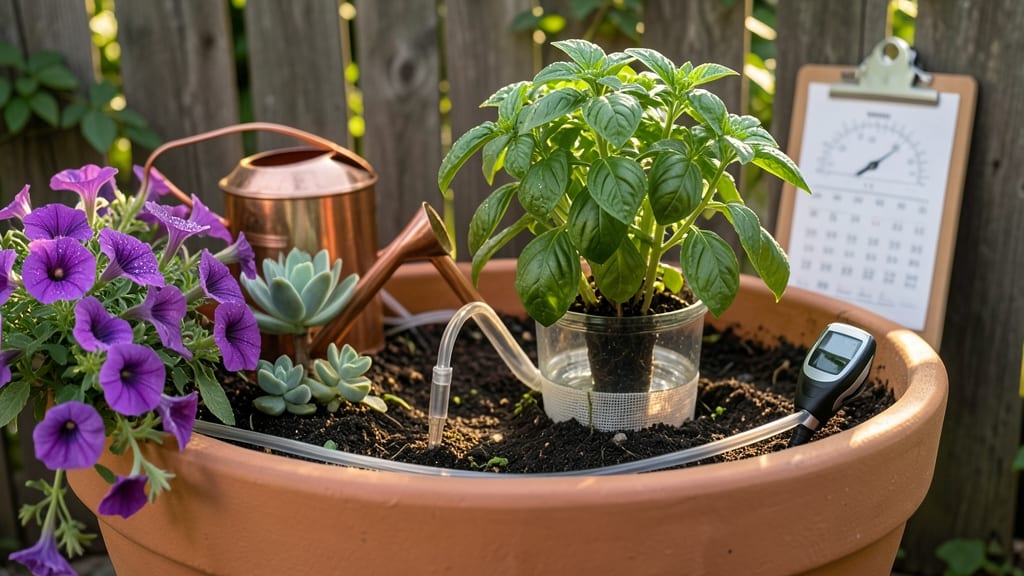
To water your garden when away without drowning your 🌱 General Garden Plants, you don’t need to hire a gardener—just the right system.
Picture this: You return from a week-long trip to find your tomatoes still plump, your herbs perky, and not a wilted leaf in sight. That’s the magic of smart watering, whether you’re gone for a weekend or a month.
The key is matching your setup to your garden’s needs—succulents beg for different care than thirsty veggies, and a drip irrigation system isn’t always the answer.
From DIY hacks like buried clay pots to high-tech sprinklers, I’ll walk you through the most reliable (and budget-friendly) ways to keep your plants hydrated. No more guessing whether your garden survived your absence—just proven methods that work, even in Zone 6a heat.
Ready to ditch the worry? Here’s how to choose the perfect solution for your plants, your schedule, and your budget—so your garden stays alive, no matter where you are.


Best automatic watering systems for long trips (pros, cons, and costs)
When you're planning a weekend getaway or a two-week vacation, the last thing you want is to return to wilted plants or dried-out soil. Automatic watering systems solve this problem by delivering precise hydration while you're away.
From low-tech drip systems to high-tech smart sprinklers, there’s an option for every garden size and budget. I’ve tested the most reliable systems to help you pick the best fit for your container garden, vegetable beds, or flower borders.
Not all systems are created equal—some excel at water efficiency, while others offer easy setup or smartphone control. The key is matching your system to your plant types (e.g., succulents vs. tomatoes) and garden layout.
Below, I break down the top three automatic watering systems, including their costs, setup difficulty, and best use cases so you can make an informed decision without overwatering or wasting water.
Pro Tip: Always test your system for 24 hours before a long trip to ensure it’s working correctly. This simple step can save your herbs, veggies, and flowers from irreversible damage.
| System Type | Best For | Setup Difficulty | Water Efficiency | Cost Range | Smart Features |
|---|---|---|---|---|---|
| Drip Irrigation | Vegetable gardens, flower beds, large plots | Moderate (requires tubing and emitters) | High (targeted watering) | $50–$300 | Basic timers (no app control) |
| Smart Sprinklers (Wi-Fi) | Lawns, large gardens, mixed plantings | Easy (plug-and-play) | Moderate (can be wasteful if misused) | $150–$500 | App control, weather sensors, zones |
| Self-Watering Pots | Container plants, herbs, small gardens | Very Easy (individual pots) | High (reservoir system) | $10–$50 per pot | None (manual fill) |
| Soaker Hoses | Row crops, raised beds, ground covers | Easy (lay on soil) | Moderate (can leak) | $20–$100 | Basic timers only |
If you have a large vegetable garden or flower beds, drip irrigation is my top recommendation. It delivers water directly to roots, reducing waste and preventing fungal diseases from overhead moisture.
Systems like Netafim or Rain Bird offer customizable emitters for different plant types, and you can set them on a simple timer for 3–14 days of autonomy. The initial setup takes a few hours, but it’s worth it for long-term reliability.
For small gardens or container plants, self-watering pots are a game-changer. These pots have a built-in reservoir that slowly releases water to the roots, keeping herbs and vegetables hydrated for up to 2 weeks.
Brands like Lechuza or EarthBox are easy to fill and require zero electricity. They’re perfect for balcony gardens or patio setups where space is limited.
If you’re tech-savvy and want real-time control, smart sprinklers like Orbit B-Hyve or Rachio are worth the investment. These systems connect to your Wi-Fi and use weather forecasts to adjust watering schedules.
You can even turn them on/off remotely via an app. However, they’re best for lawns or large gardens—not ideal for precision watering of delicate plants like salad greens or orchids.
Budget Tip: If you’re on a tight budget, soaker hoses paired with a basic timer can work for short trips (3–5 days). They’re cheap, easy to install, and gentle on plants. Just bury them slightly to prevent evaporation and avoid leaf burn from direct spray.
No matter which system you choose, always monitor soil moisture before leaving. Stick your finger 1–2 inches deep—if it’s dry, your system may need adjustment. For succulents or drought-tolerant plants, you can stretch watering to 2–3 weeks, but leafy greens and flowers need more frequent hydration.
💧
DIY watering hacks to save money without sacrificing effectiveness
When you're planning a short trip, investing in expensive watering systems might not be practical. The good news is that simple DIY solutions can keep your garden hydrated for 3–7 days without breaking the bank. These low-cost, high-impact methods require minimal setup and work wonders for most plants.
I’ve tested these budget-friendly watering hacks in my own garden, and they’ve saved me both money and stress. Whether you have vegetables, herbs, or flowers, these solutions are versatile enough to adapt to almost any garden layout.
The key is choosing the right method based on your plant types and trip duration.
💧 5 Easy DIY Watering Hacks for Short Trips
-
🪴 Buried Clay Pots
Fill unglazed clay pots with water and bury them near plant roots. The water slowly seeps into the soil over 3–5 days. -
🥫 Plastic Bottle Dripper
Poke holes in a plastic bottle, fill it with water, and place it upside down near the base of plants. Lasts 5–7 days. -
🧽 Sponge Reservoirs
Soak a terry cloth towel or sponge in water, wrap it around the soil, and cover with plastic wrap to retain moisture for 3–4 days. -
🌱 Capillary Mats
Place a wicking mat under pots and soak it with water. The mat slowly releases moisture to container plants for 4–6 days. -
💧 Self-Watering Stakes
Insert bamboo stakes or DIY stakes into the soil and fill them with water. They release moisture directly to roots for 5–7 days.
For succulents and drought-tolerant plants, even simpler solutions work. A light mulch layer (like straw or wood chips) can reduce evaporation and stretch watering intervals. Pair this with one of the DIY methods above, and your plants will stay happy even during hot summer trips.
If you’re away for longer than a week, combine two methods—like using clay pots for deep-rooted plants and plastic bottle drippers for shallow-rooted ones. Always test your setup a few days before your trip to ensure it’s working as expected.
This small step can prevent wasted water and plant stress.
Remember, the goal is consistency without overwatering. Too much moisture can lead to root rot, so always pair these hacks with well-draining soil and proper mulching. With these tricks, your garden will stay lush and thriving—no matter how long you’re away! 🌱