
Tools
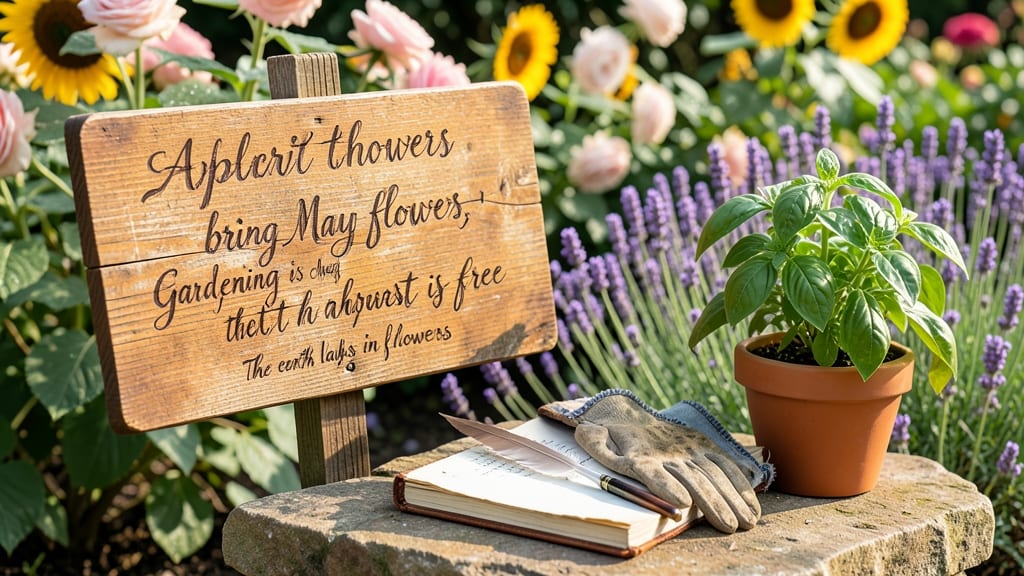
Quotes on gardening inspire plant lovers by blending wisdom, patience, and the beauty of growth, from classic poets like William Blake to modern gardeners like Alice Morse Earle. These sayings celebrate nature’s cycles and the joy of nurturing life.
Gardening quotes serve as more than just decorative phrases—they capture the essence of what makes this hobby so rewarding. 🌱 Many of the most beloved sayings, like "April showers bring May flowers," reflect the cyclical nature of gardening and how patience pays off over time.
I’ve found that framing these quotes near my garden path or in my journal helps me stay connected to the process, especially on tough days when weeds seem to win.
The best quotes often remind us that growth—both literal and personal—requires time, care, and a willingness to learn from the earth itself.
Beyond their aesthetic appeal, these quotes can transform a simple gardening task into a meaningful ritual. For example, pairing a quote like "The earth laughs in flowers" with a new planting session adds a layer of intention to the work.
Whether you're a seasoned green thumb or just starting, incorporating gardening quotes can make the experience feel richer and more intentional.
What’s fascinating is how these sayings adapt across cultures and eras. From ancient Chinese proverbs about nurturing the soil to modern social media gardeners sharing their progress, the themes remain timeless: resilience, beauty, and the simple joy of tending to life.
💡 In This Article
- Historical and Literary Roots of Famous Gardening Quotes
- How to Use Gardening Quotes for Motivation and Garden Journaling
Historical and literary roots of famous gardening quotes
Many gardening quotes we cherish today trace back to ancient civilizations where agriculture wasn't just survival—it was poetry. The Chinese philosopher Lao Tzu wrote in the 6th century BCE about "nurturing the soil," a concept that mirrors modern permaculture principles.
His words reflect an understanding of how plants thrive when treated with respect, not domination. This ancient wisdom shows how deeply humanity has always connected with gardening as both a practical skill and a spiritual practice.
Fast forward to the Victorian era, where gardening became a symbol of refinement. Alice Morse Earle, a historian and gardener, wrote in her 1890s essays about the "language of flowers," where each bloom carried meaning—like roses for love or forget-me-nots for remembrance.
These quotes weren't just decorative; they were cultural touchstones that tied gardening to romance, morality, and even social status. The famous line "April showers bring May flowers" actually originates from a 19th-century poem by Thomas Tusser, blending practical weather observation with poetic beauty.
What makes these quotes enduring is how they capture gardening's dual nature: both a science and an art. Take William Blake's "To see a World in a Grain of Sand," which reflects how close observation of plants reveals deeper truths about nature.
This perspective aligns with modern organic gardening, where every leaf and soil particle tells a story about ecosystem health. The quotes serve as reminders that gardening is never just about the harvest—it's about the journey of watching life unfold.
Even modern gardeners like Monty Don (Montgomery Hyde) have contributed to this legacy. His practical yet poetic advice—like "The best time to plant a tree was 20 years ago. The second-best time is now"—combines humor with wisdom.
These contemporary quotes often focus on sustainability and patience, values that resonate with today's eco-conscious gardeners. The evolution shows how gardening wisdom adapts while staying rooted in the same core principles of care and observation.
Consider how these quotes reflect cultural shifts. In medieval Europe, gardening was tied to monastic life, with sayings emphasizing humility and hard work.
By the 18th century, French gardeners like André Le Nôtre designed elaborate quotes into their landscapes, turning gardening into a form of art that could be "read" like a book.
This transformation mirrors how gardening quotes have moved from functional proverbs to decorative inspiration, yet always carry the same message: growth requires time, attention, and reverence for nature.
What's fascinating is how these quotes often contain hidden scientific truths. For example, the idea that "plants grow toward the light" (phototropism) was observed centuries before science named it. Many ancient agricultural proverbs—like "What you sow is what you reap"—encode basic ecological principles.
This blend of art and science is what makes gardening quotes so powerful: they remind us that every garden is both a laboratory and a sanctuary.