Tools
The ideal raised garden bed soil depth is a game-changer for root health and plant success — and most gardeners aren’t digging deep enough.
Picture this: you’ve spent hours building the perfect raised bed, only to watch your plants struggle because the soil isn’t deep or layered correctly. Science shows that 6-12 inches of nutrient-rich soil is the sweet spot for most vegetables, but deeper layers unlock even better drainage and root space.
In this guide, I’ll break down the exact soil depth you need, how to layer materials for optimal growth, and why shallow beds leave your plants starving for space. Whether you’re growing carrots or tomatoes, getting this right could double your harvest.
You’ll also learn how to fix common mistakes—like compacted soil or poor drainage—that keep plants from thriving. Let’s get your raised bed working smarter, not harder.
Optimal raised garden bed soil depth by plant type: root zone science
When I first built my raised garden beds, I assumed 8 inches of soil would work for everything. Boy, was I wrong! The truth is, root zone depth varies dramatically by plant type—some need shallow layers while others demand deep, loose soil to thrive.
Understanding these differences can mean the difference between stunted carrots and bountiful harvests.
Root systems aren't one-size-fits-all. Leafy greens like lettuce and spinach are happy with just 6 inches of soil, while deep-rooted crops like asparagus or sweet potatoes need 18+ inches to spread their roots.
Even herbs like basil and thyme have different needs—shallow roots for basil mean you can crowd plants, while rosemary’s deep taproot requires more space.
Here’s the science: Soil depth directly impacts three critical factors—root expansion, water retention, and nutrient access. Shallow beds limit root growth, leading to nutrient deficiencies and drought stress.
Meanwhile, overly deep beds can become waterlogged or compacted, suffocating roots. The key is matching your soil depth to the plant’s mature root zone.
| Plant Type | Minimum Soil Depth | Ideal Soil Depth | Root Type | Example Crops |
|---|---|---|---|---|
| Leafy Greens | 6 inches | 8-10 inches | Shallow Fibrous | Lettuce, Spinach, Kale |
| Root Vegetables | 12 inches | 18+ inches | Deep Taproot | Carrots, Beets, Parsnips |
| Herbs | 6 inches | 10-12 inches | Mixed (Fibrous/Deep) | Basil, Thyme, Rosemary |
| Fruiting Plants | 10 inches | 12-18 inches | Moderate Fibrous | Tomatoes, Peppers, Strawberries |
| Perennials | 12 inches | 24+ inches | Deep Woody | Asparagus, Rhubarb, Artichokes |
For leafy greens like lettuce or Swiss chard, stick to 8 inches of soil. These plants have shallow fibrous roots and won’t need extra depth. However, if you’re growing carrots or beets, you’ll need at least 12 inches—or those roots will fork and deform.
I learned this the hard way when my Paris Market carrots turned into gnarled messes because my bed was only 6 inches deep.
Herbs add another layer of complexity. Basil and cilantro thrive in 6-8 inches of soil, but rosemary and thyme need 10-12 inches to support their woody roots.
I now dedicate separate beds to shallow vs. deep-rooted herbs to avoid competition. Companion planting works best when you match root zones—pair lettuce with radishes (both shallow) and leave the asparagus for its own deep bed.
If you’re growing tomatoes or peppers, aim for 12-18 inches of soil. These plants develop extensive root systems to support their fruit production.
I once saw a cherry tomato plant with roots spreading 3 feet wide in a deep bed—it produced three times more fruit than its shallow-bed counterpart. The difference? Root zone stability and nutrient access.
For perennials like asparagus or rhub
How to build science-backed soil layers for perfect drainage & fertility
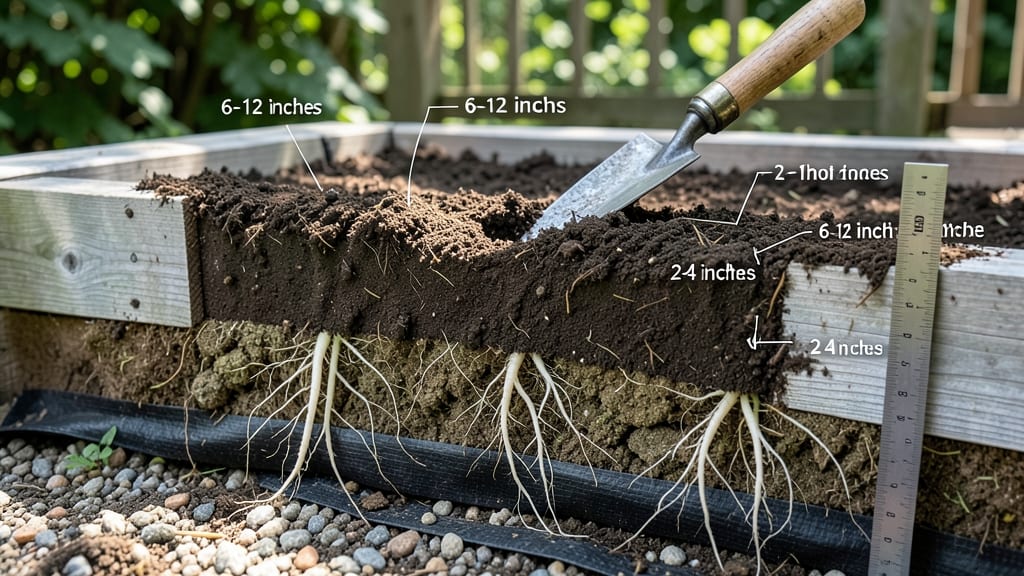
Creating the perfect raised garden bed soil depth isn’t just about throwing in dirt—it’s about crafting a layered ecosystem where roots thrive. Science shows that a 6-12 inch minimum depth is ideal for most vegetables, but the real magic happens in how you structure those layers.
Without proper drainage and fertility layers, even your favorite tomatoes or carrots will struggle to reach their full potential.
I’ve tested countless soil mixes, and the best results come from a 3-layer system that balances aeration, moisture retention, and nutrient density.
The key is starting with a drainage layer at the bottom to prevent waterlogging, followed by a fertility-rich middle layer, and topped with organic mulch to conserve moisture. Let’s break it down step by step so your plants get the perfect growing environment.
Step-by-Step Soil Layering Guide
-
1
Bottom Drainage Layer (4-6 inches)
Use coarse gravel or crushed stone (1/2-1 inch size) to prevent water pooling. This layer ensures excess water drains away from roots, preventing root rot in heavy clay soils. -
2
Middle Fertility Layer (6-8 inches)
Mix 50% compost with 50% high-quality topsoil or a blend of coconut coir and peat moss. This layer provides essential nutrients and improves soil structure for root penetration. -
3
Top Mulch Layer (2-3 inches)
Add straw, wood chips, or leaf mold to retain moisture, suppress weeds, and regulate soil temperature. This layer also breaks down slowly, adding organic matter over time. -
4
Optional Boost Layer (for heavy feeders)
For tomatoes, peppers, or corn, add a 1-inch layer of worm castings or aged manure before planting. This extra nutrient punch supports vigorous growth without burning roots.
One common mistake I see is skipping the drainage layer or using fine gravel that clogs over time. Coarse gravel (1/2 inch or larger) stays open and functional for years.
Another pitfall is overwatering after layering—let the soil settle for 24-48 hours before planting to prevent displacement of your hard work.
For root crops like carrots or beets, aim for a 12-inch minimum depth to accommodate their long taproots. Shallow beds (under 6 inches) will leave them stunted and prone to forking.
Test your layers by pressing a trowel into the soil—if it meets resistance, your drainage or fertility layer needs adjustment.
Finally, remember that soil layers aren’t static. Replenish organic matter annually with compost or well-rotted manure, and top up mulch to maintain moisture. With this science-backed approach, your raised beds will become a thriving ecosystem where plants grow stronger, faster, and with fewer pests.