
Planting
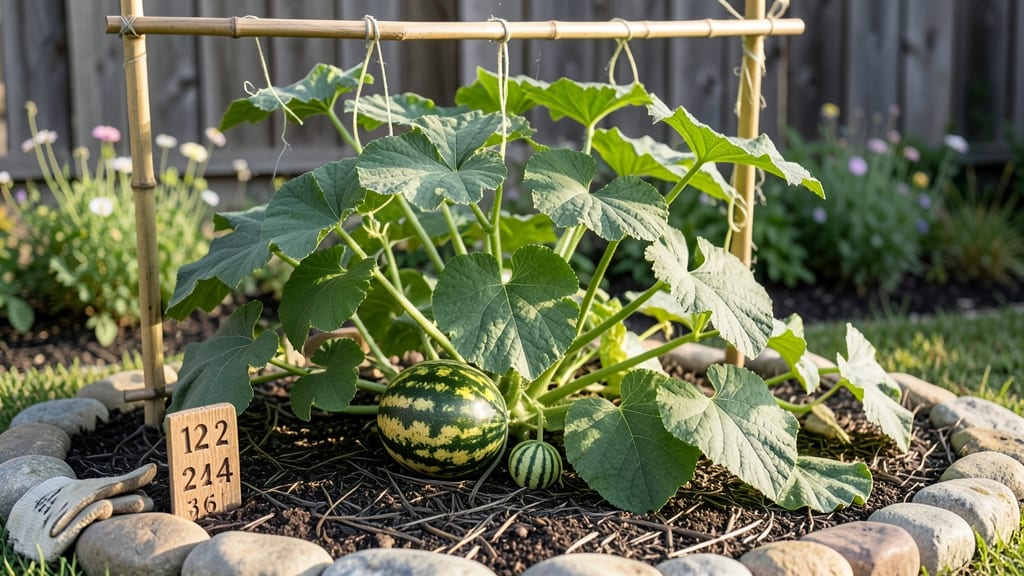
Growing a watermelon garden with the right spacing is the difference between tiny, bitter slices and 20-pound monsters that split your cutting board.
Struggling with tiny, underdeveloped watermelons? The secret to harvesting those juicy, 20-pound giants lies in your garden’s spacing strategy—get it wrong, and even the best seeds will disappoint.
Too close, and your vines compete for nutrients, leaving you with smaller fruits and more disease. Too far apart, and you waste space that could grow bigger melons.
I’ll break down the exact plant-to-plant and row-to-row distances that work for USDA Zone 6a, plus how to adjust for trellising or ground planting.
You’ll also learn how spacing impacts sunlight exposure, pest control, and even flavor—because the right layout isn’t just about room to grow, it’s about maximizing every bite of that first slice.
Optimal watermelon garden spacing: rows, vines, and soil depth secrets
Watermelons need space to thrive—crowd them, and you’ll end up with small, seedy fruits instead of the juicy giants you crave. The right spacing strategy ensures strong vines, better airflow, and room for those massive fruits to develop.
Whether you’re planting in rows or using trellises, science-backed spacing makes all the difference.
Your watermelon’s vine length (6–20 feet) and fruit size (2–4 feet tall) demand careful planning. Skimp on space, and vines compete for nutrients, leading to stunted growth.
Give them room, and you’ll maximize sunlight exposure, root development, and fruit quality. Let’s break down the secrets to spacing like a pro.
Plant-to-plant spacing is the first rule: standard varieties need 3–6 feet between plants, while dwarf varieties can squeeze into 2–3 feet. Row spacing matters just as much—aim for 6–8 feet between rows to prevent shading and improve airflow. These numbers aren’t arbitrary; they’re based on how watermelon vines spread and how much soil volume their roots need.
| Spacing Type | Standard Varieties | Dwarf Varieties | Trellised Vines |
|---|---|---|---|
| Plant-to-Plant | 3–6 feet | 2–3 feet | 2–3 feet (vertical) |
| Row-to-Row | 6–8 feet | 4–6 feet | 4–5 feet (horizontal) |
| Soil Depth | 12–18 inches | 10–12 inches | 12–15 inches (container) |
| Vine Support | Ground or minimal trellis | Low trellis or cages | Strong trellis (6–8 ft tall) |
For ground-planted watermelons, focus on soil depth—roots need 12–18 inches of loose, fertile soil to spread. Amend your soil with compost to improve drainage and nutrient availability. If your garden has heavy clay or sandy soil, consider raised beds to give roots the space they crave.
Trellising changes the game. By training vines vertically, you save space and reduce disease risk from ground contact. Use a 6–8-foot trellis and space plants 2–3 feet apart vertically.
This method works best for smaller varieties like 'Sugar Baby' or 'Tiny Tim,' but even standard types benefit from partial trellis support for heavier fruits.
Don’t overlook companion planting—watermelons pair well with bush beans or corn, which act as living trellises. Avoid planting near potatoes or squash, as they compete for the same nutrients. Strategic spacing and companions can boost your yield by up to 30%.
Pro tip: If you’re short on space, try container growing. Use large pots (at least 15-gallon size) with dwarf varieties and ensure the container has drainage holes. Place pots in full sun and water deeply every 2–3 days during hot weather.
Watch for overcrowding signs: yellowing leaves, stunted vines, or fruits that never ripen. These are red flags that your spacing is too tight. Adjust next season by widening rows or thinning plants early. With the right spacing, you’ll go from frustrating failures to bountiful harvests in no time.
Remember, watermelons reward patience. Give them the space they need, and they’ll repay you with sweet, sun-ripened fruits that put store-bought to shame. Happy planting! 🌱🍉
How to adjust spacing for different watermelon varieties and climates
Not all watermelons need the same space to thrive. Dwarf varieties like 'Sugar Baby' can squeeze into tight urban gardens, while giant heirlooms like 'Moon and Stars' demand room to sprawl.
Your climate zone also dictates spacing—humid Southern gardens need wider rows to prevent fungal diseases, while arid Southwest plots benefit from closer spacing to conserve moisture. Let’s break down the adjustments for your growing conditions.
For compact gardens, consider vertical trellising or container growing to save space while still accommodating sprawling vines. Dwarf varieties (3-6 ft vines) can thrive in 2-3 ft spacing, while standard varieties (10-20 ft vines) require 4-6 ft between plants.
In hot, dry climates, reduce spacing slightly to encourage faster vine growth and shade the soil, retaining moisture.
Here’s a quick reference for adjusting spacing based on variety type and climate zone to maximize your yield:
In humid Southern climates, increase row spacing to 6-8 ft to improve airflow and reduce powdery mildew risk. Use black plastic mulch to warm the soil faster and deter weeds.
For arid Southwest gardens, reduce spacing to 3-5 ft between plants and 5-6 ft between rows to create a microclimate that retains moisture. Pair this with drip irrigation to avoid wetting the foliage.
If you’re growing in containers, opt for dwarf or semi-dwarf varieties in 15-gallon pots with 2-3 plants per container. Place pots on elevated stands to improve drainage and prevent rot.
For ground planting, always amend the soil with compost to ensure 6-8 inches of loose, fertile soil for root development. This is especially critical for heavy-fruiting varieties like 'Crimson Sweet'.
Pro tip: Thin your seedlings early to avoid overcrowding. If you see yellowing leaves or stunted growth, it’s a sign your plants are competing for nutrients.
Adjust spacing immediately to give each vine room to sprawl and thrive. With the right layout, you’ll be feasting on juicy, vine-ripened watermelons in no time!