
Planting
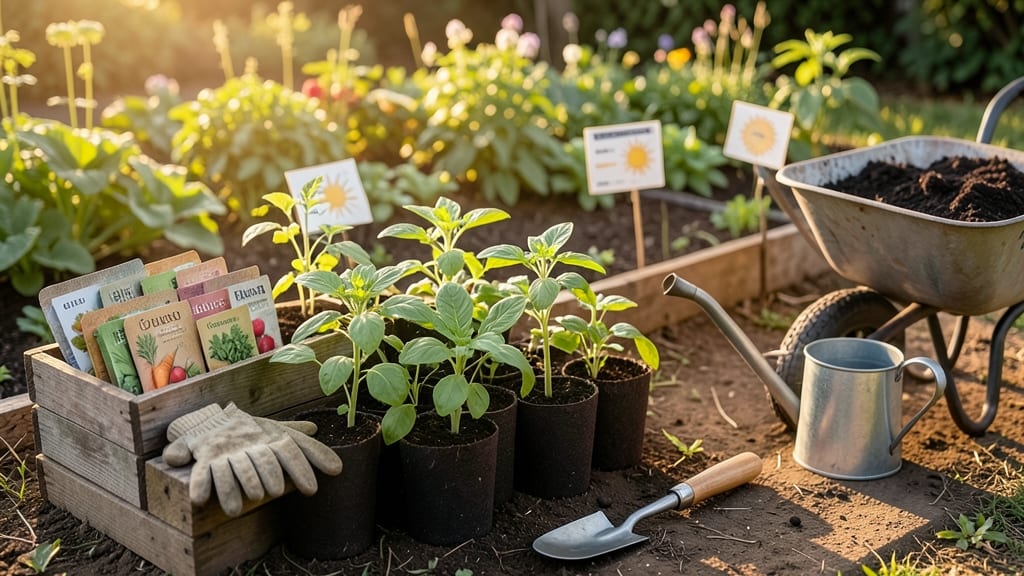
What you can plant in your garden now depends on your hardiness zone, but cool-season crops like leafy greens (kale, spinach), root vegetables (carrots, beets), and herbs (cilantro, parsley) thrive in spring or fall. Warm-season plants (tomatoes, peppers) need soil above 60°F. Check your zone’s last frost date for precise timing.
Your planting choices should align with your local climate and seasonal shifts. 🌱 Cool-season vegetables like broccoli and peas often grow best in early spring or late summer, while warm-season favorites such as cucumbers and basil prefer the heat of summer.
Many gardeners in Zone 5 start cool crops in April, while those in Zone 9 can plant warm crops as early as February. The key is understanding your frost dates and soil temperatures.
For example, if you're in a transitional zone, consider staggered planting—sow cool crops early and warm crops later. Microclimates (like sunny south-facing beds) can also extend your growing season. Always test your soil's temperature before planting warm-season crops to ensure optimal growth conditions.
💡 In This Article
- How to Determine Your Planting Timeline by Hardiness Zone
- Top Cool- and Warm-Season Vegetables for Spring Planting
How to determine your planting timeline by hardiness Zone
Your planting schedule starts with the USDA hardiness zone map, which divides North America into 13 zones based on average annual minimum temperatures.
For example, Zone 5 (average lows of -20°F to -10°F) has a shorter growing season than Zone 9 (20°F to 30°F), where warm crops can thrive year-round in some areas. The key is finding your zone and then calculating 2-4 weeks before your average last frost date for cool-season crops.
Frost dates are critical because most cool-season vegetables (like lettuce or peas) can't survive freezing temperatures. The USDA provides average frost dates, but your actual last frost might vary by 1-2 weeks—check local weather records or ask your county extension office for precise data.
For warm-season plants (tomatoes, peppers), soil temperature matters more: they need 60°F+ for 2-3 weeks before planting. Use a soil thermometer to verify.
Microclimates can shift your timeline by 2-4 weeks. A south-facing wall or raised bed absorbs heat, allowing you to plant warm crops 10-14 days earlier than the average.
Conversely, low-lying areas with poor drainage may frost later. Observe your garden's behavior: note when nearby trees bloom or when frost forms in winter to refine your timing. 🌡️
Spring vs. fall planting requires different calculations. For spring, count backward from your last frost date (e.g., 60 days for broccoli). For fall, count forward from your first frost date (e.g., 45 days for spinach).
Some crops, like kale, tolerate light frosts and can be planted 4-6 weeks before your first expected frost. Always factor in your crop's maturity time—this is the #1 mistake beginners make!
Pro tip: Use a planting calendar tailored to your zone (available from extension services). These often include month-by-month guides for direct sowing vs. transplanting. For instance, in Zone 7, you might direct-sow beans in early April but transplant peppers in late May after soil warms.
Adjust for your specific elevation too—higher altitudes often have 1-2 weeks earlier frost dates.
Don't forget succession planting! For continuous harvests, sow fast-growing crops like radishes every 2 weeks through spring. This extends your growing season without requiring extra space. The goal is to maximize your garden's productivity by working with—not against—your local climate patterns. 🌱