
Tools
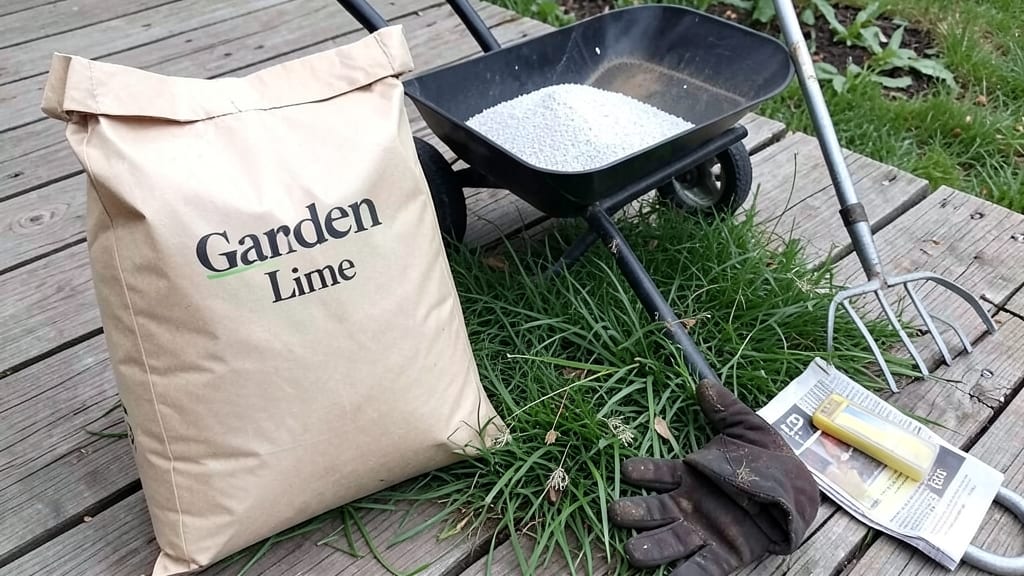
To apply lime to garden soil, do it in early fall or late winter when plants are dormant, allowing them to absorb the pH adjustment without stress. Always test your soil first—most vegetables and flowers thrive at a pH between 6.0 and 7.0, while acid-loving plants like blueberries (4.5–5.5) or azaleas (5.0–6.0) need different targets. Spread lime evenly and water thoroughly to activate the amendment.
Timing matters because lime works best when plants aren't actively growing. 🌱 During dormant seasons, roots aren't competing for nutrients, so the pH adjustment happens more efficiently.
I've seen gardeners skip this step and end up with stressed plants that struggle to recover—especially if they apply lime right before planting season. The key is patience: let the soil settle for at least 2-3 months before introducing new plants to give the pH time to stabilize properly.
Another critical factor is how you apply it. Pelletized lime dissolves slower but spreads more evenly, while powdered lime works faster but requires more precise measurement.
For example, sandy soils need about 50 pounds per 1,000 square feet for a 1.0 pH increase, while clay soils might need 100 pounds for the same effect.
Always double-check your soil test results—over-liming can be just as harmful as under-liming, creating an alkaline environment that locks out essential nutrients like iron and manganese.
💡 In This Article
- How Soil pH Affects Plant Health and Lime Timing
- Step-by-Step Guide to Testing and Applying Lime
How soil pH affects plant health and lime timing
Soil pH measures how acidic or alkaline your garden soil is on a scale from 0 (most acidic) to 14 (most alkaline), with 7 being neutral. Lime—typically made from crushed limestone (calcium carbonate)—works by neutralizing acidic soils through a chemical reaction called neutralization.
When lime dissolves in water, it releases calcium and magnesium ions that bind with hydrogen ions in acidic soil, raising the pH. This process is gradual, which is why timing matters so much.
For example, a soil with a pH of 5.5 might need 2-3 months to adjust to 6.5 after application, depending on your climate and soil type.
The dormant season (early fall or late winter) is ideal because plants aren’t actively growing, so their roots aren’t competing for nutrients or absorbing lime too quickly. 🌱 This gives the soil time to stabilize without shocking plants.
For instance, if you apply lime in spring, fast-growing plants might uptake too much calcium before the pH fully adjusts, leading to nutrient imbalances. Organic lime (like pelletized forms) releases slower than powdered lime, which is why it’s often recommended for long-term soil health—it mimics natural mineral breakdown over time.
Different plants have unique pH preferences. Most vegetables and flowers thrive in slightly acidic to neutral soil (6.0–7.0), but acid-loving plants like blueberries or hydrangeas need much lower pH levels (4.5–5.5).
The key is testing first—soil test kits (around $20–$50) reveal your current pH and guide how much lime to use.
For example, raising a pH from 5.0 to 6.0 in clay soil might require 20–30 pounds of lime per 100 square feet, while sandy soil—with faster drainage—could need 50% more for the same effect.
Over-liming is a common mistake that can harm plants by creating alkaline conditions (pH >7.5), which locks out essential nutrients like iron and manganese. Symptoms include yellowing leaves (chlorosis) even when soil appears fertile. To avoid this, split applications into smaller doses over multiple seasons.
For example, if your soil is extremely acidic (pH <5.0), apply lime in two stages: half in fall and half in late winter, with soil testing in between to monitor progress.
Climate also plays a role. In warmer regions, lime dissolves faster due to higher soil temperatures and microbial activity, so less may be needed. In cooler climates, the process slows down, requiring more lime for the same pH shift.
For instance, a garden in Florida might need 10–15% less lime than one in Minnesota for identical soil conditions. Always account for rainfall too—heavy rains can wash lime deeper into the soil, reducing its effectiveness near the root zone where plants need it most.
One often-overlooked detail is how lime interacts with other soil amendments. For example, applying compost or manure right after liming can temporarily lower pH again because organic matter breaks down into acids.
To prevent this, wait 4–6 weeks after liming before adding fresh organic material. This gives the soil time to stabilize and ensures the pH adjustment lasts longer.