
How To
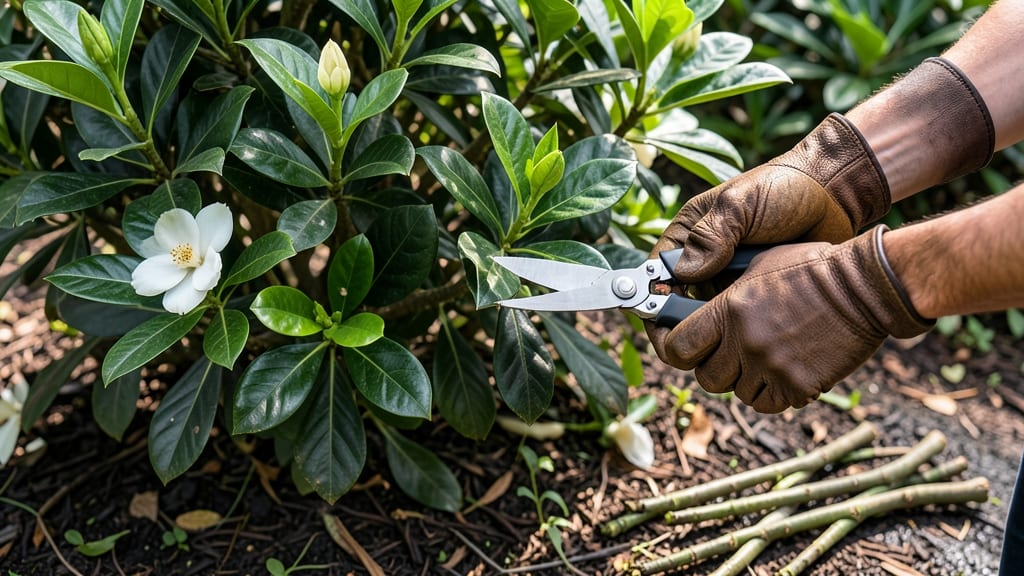
Cutting back your gardenia bush at the right time ensures fragrant blooms all season—late winter is the key to avoiding frost damage and jumpstarting spring growth.
Your gardenia thrives on precision timing—cut it back too early, and frost ruins its delicate blooms; too late, and you stifle its spring glory.
The secret lies in a late-winter window that balances dormancy and new growth, ensuring lush, fragrant flowers all season. For gardeners in zones 9-11, aim for February to early March—just before buds swell but after the last frost risk.
Below, I’ll walk you through the exact steps to prune your 🌸 gardenia for healthier blooms, the tools you’ll need, and how to protect new growth from common mistakes.
Ideal late-winter timing for cutting back gardenia bushes
Timing your gardenia bush pruning in late winter is like hitting a moving target—miss the window, and you risk frost damage or stunted blooms. The key is waiting until buds swell but before leaves emerge, signaling the plant’s readiness to burst into growth.
This delicate balance ensures your gardenia’s fragrant white flowers return in full force.
Gardenia bushes thrive in USDA hardiness zones 7-11, where frost-free conditions dominate. In colder microclimates within zone 7, aim for February’s last week when daytime temps consistently stay above 50°F (10°C).
Warmer zones (8-11) can safely prune into early March, aligning with the lunar calendar’s waxing moon for optimal root growth.
Here’s the science: Pruning too early exposes new growth to frost, while waiting too long delays the plant’s energy shift from dormancy to flowering. The ideal window is when buds are visible but stems remain dormant—typically 4-6 weeks before last frost in your zone.
🌱 GARDENIA PRUNING TIMELINE
Local climate patterns matter just as much as zones. In coastal areas, milder winters may push pruning to early April, while inland zones might need to prune by mid-February.
Check your local frost-free date—a quick online search for your ZIP code reveals the average last frost, which is your hard cutoff for pruning.
Watch for these timing cues: Look for plump, green buds along stems but avoid cutting when leaves have unfurled. If you see yellowing leaves or dropping buds, you’ve waited too long. The goal is to shape the bush while it’s still dormant but primed to bloom.
Pro tip: If your gardenia is potted, move it to a sheltered location (like a garage or under a porch) for 24-48 hours post-pruning to protect new cuts from unexpected cold snaps. This extra step prevents bacterial infections from entering through fresh wounds.
Aligning your pruning with local climate patterns and lunar phases isn’t just old wives’ tales—it’s rooted in plant physiology. The waxing moon’s gravitational pull encourages cell elongation, helping your gardenia’s cuts heal faster and promoting vigorous new growth.
For best results, prune during the waxing moon’s first quarter in Taurus or Virgo signs for optimal root and leaf development.
Remember, gardenia bushes bloom on old wood, meaning their flowers form on last year’s growth. Pruning too aggressively removes next year’s blooms. Aim to remove only dead, diseased, or crossing branches, thinning out 10-20% of the bush’s volume to improve airflow and light penetration.
Once you’ve nailed the timing, the next step is sterilizing your tools and making clean cuts at a 45-degree angle just above a leaf node. But that’s a story for our next section—where we’ll dive into the step-by-step pruning techniques that keep your gardenia thriving for years to come. ✂️🌸
How to prune gardenia bushes for healthier blooms (step-by-step)
Pruning your gardenia bush isn’t just about shaping—it’s a health ritual that unlocks abundant blooms. The key? Precision cuts that stimulate growth while avoiding frost damage or disease. Start by gathering your tools: sharp bypass pruners, sterilized alcohol wipes, and a clean bucket for clippings.
Always work on a dry, sunny day to minimize stress on the plant.
Before you cut, inspect your gardenia bush for dead or diseased branches. These are your first targets—remove them completely at the base to prevent fungal spread. Next, look for crossing branches or those growing inward; these compete for sunlight and air flow.
Thin them out to open the canopy, ensuring every leaf gets its share of bright, indirect light.
⚠️ WARNING: When to Cut Back Gardenia Bush Never prune your gardenia bush during active bloom season (spring to early summer) or when buds are forming. Cutting too late risks removing next year’s flowers, while pruning too early exposes tender new growth to late-season frost.
The ideal window is late winter—after the last frost date in your USDA Zone 9-11 but before bud break. For colder zones, wait until early spring when soil temps reach 60°F (15°C).
If you miss this window, hold off until after flowering, but expect fewer blooms that season.
When making cuts, always use a 45-degree angle just above a leaf node or bud. This encourages upward growth and prevents water from pooling on the cut. For overgrown stems, never remove more than one-third of the plant’s foliage at once—this avoids shock and stunted growth.
If your gardenia is woody and mature, focus on light shaping rather than drastic cuts, as old wood rarely regrows.
Sterilizing your tools is non-negotiable. Wipe pruners with rubbing alcohol or a 10% bleach solution before and after each cut to prevent bacterial or fungal infections.
After pruning, mulch around the base with 2-3 inches of organic mulch (like pine bark) to retain moisture and regulate soil temperature. Avoid piling mulch against the stem, as this can cause rot.
One of the biggest mistakes gardeners make is over-pruning. If you end up with a bare skeleton of a bush, your gardenia may struggle to recover. Another common error is cutting into old wood—these cuts won’t heal and can invite pests or disease.
Always prune just above a bud or leaf node to encourage new growth. For potted gardenias, prune more aggressively in early spring to control size, but avoid heavy cuts in fall.
Finish by giving your gardenia bush a light fertilizer (like a 10-10-10 acid-loving blend) to support new growth. Water deeply but infrequently—aim for 1-2 gallons per plant every 2-3 days—and avoid wetting the leaves to prevent powdery mildew.
Within 4-6 weeks, you’ll see fresh green shoots and, eventually, fragrant blooms that’ll make your garden smell like a tropical paradise.