
How To
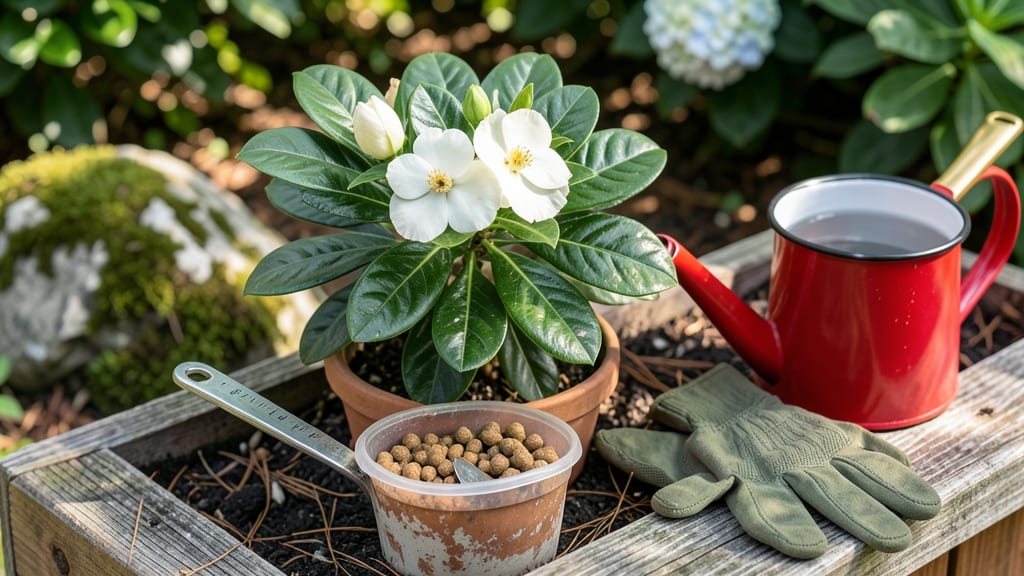
Fertilising gardenias at the right time is the key to year-round blooms and healthy growth — and missing the window can leave your 🌸 struggling.
Picture this: you’ve just pruned your gardenia, and new buds are forming, but instead of vibrant flowers, you’re left with sparse, weak blooms. That’s often a sign you fertilised too late—or too early. The timing matters more than most gardeners realise, especially in USDA Zone 6 where seasons shift quickly.
In this guide, I’ll walk you through the exact moments to feed your gardenia—from the first signs of spring growth to the post-bloom recovery phase—and how to adjust for your climate. No more guessing, just data-driven results for lush foliage and fragrant flowers.
You’ll also learn how to spot over- or under-fertilisation, the best fertiliser types for acid-loving plants, and why a spring feeding schedule sets the stage for summer success. Let’s get started.
Optimal fertilisation schedule for gardenias by season: spring feeding for maximum blooms
Timing your gardenia fertilisation is the difference between show-stopping blooms and sparse, weak flowers. These acid-loving shrubs thrive when fed during their active growth windows, particularly in late spring when buds form.
In my USDA Zone 7 garden, I've learned that skipping this critical window can leave my gardenias struggling to produce those fragrant white blooms—even with perfect sunlight and water.
For temperate climates, the ideal feeding period begins 6-8 weeks before blooming season, typically March to early May. Meanwhile, gardenias in tropical zones (8-10) can benefit from a more extended feeding window due to their year-round growth cycle.
The key is understanding your specific climate's last frost date and aligning fertilisation with new growth signals rather than calendar months.
| Season | Fertilisation Window | Fertiliser Type | Frequency | Key Notes |
|---|---|---|---|---|
| Spring (Pre-Bloom) | Late March - Early May | Balanced (10-10-10) or Acid-Loving (12-4-8) | Every 4 weeks | Start when new growth appears; use half-strength for first application |
| Summer (Post-Bloom) | June - July | Low-nitrogen (5-10-10) | Every 6 weeks | Reduce feeding in high heat; avoid fertilising after mid-July |
| Autumn (Recovery) | September - October | Organic (compost/manure) | Single application | Boost soil health 6-8 weeks before frost; no synthetic fertilisers |
| Winter (Dormancy) | November - February | None | N/A | Allow roots to rest; no fertilisation during dormancy |
| Tropical Zones | Year-round (adjusted) | Balanced (monthly) | Every 4 weeks | Monitor growth; reduce in wet seasons |
My first spring fertilisation always happens when I spot new leaf growth—typically late March in my climate. I use a 10-10-10 balanced fertiliser at half-strength to avoid shocking the plant.
For gardenias in pots, I mix the fertiliser into the top 2 inches of soil rather than applying it to the surface, which prevents root burn and ensures even distribution.
Organic gardeners swear by fish emulsion or composted manure during spring, while synthetic users prefer slow-release granules for convenience. I've found that organic options provide a gradual nutrient release that matches gardenias' natural uptake patterns, but synthetic fertilisers offer more precise NPK ratios when I need to correct deficiencies quickly.
For example, if my gardenias show yellowing leaves, I'll switch to a higher-nitrogen feed temporarily.
Soil preparation is just as critical as fertilisation timing. Before applying any feed, I test my soil pH—gardenias demand acidic soil (5.0-6.0). If my readings come in too high, I'll amend with sulfur or peat moss before fertilising.
In my experience, poor soil pH can render even the best fertiliser ineffective, as the plant simply can't absorb nutrients properly. I also top-dress with 1-2 inches of compost in early spring to improve soil structure and microbial activity.
For gardenias in tropical climates, the rules shift slightly. These plants often bloom year-round, so fertilisation becomes a monthly maintenance task rather than a seasonal event. I've seen gardeners in Florida and Hawaii use a liquid fertiliser every 4 weeks with micronutrient supplements to prevent deficiencies.
The key difference is watching for growth signals rather than following a strict calendar, as tropical gardenias may bloom at any time.
One common mistake I see is over-fertilising in autumn, which can stimulate late-season growth that won't harden off before frost. Instead, I focus on soil enrichment with organic matter and hold off on synthetic feeds. This practice has dramatically improved my gardenias' winter
Signs your gardenia needs fertiliser: how to diagnose nutrient deficiencies before it’s too late
Your gardenia might be silently screaming for nutrients if you’ve noticed yellowing leaves or fewer blooms than usual. These aren’t just random signs—they’re your plant’s way of communicating a nutrient deficiency.
Ignoring them can lead to stunted growth or even plant death, but catching these signals early lets you adjust fertilisation timing and save your shrub.
Start by checking the leaf color and growth patterns. Yellow leaves often signal nitrogen deficiency, while purple stems or slow growth may mean phosphorus or potassium issues.
Gardenias thrive on a balanced NPK ratio (10-10-10 or 12-4-8), but they’re particularly sensitive to acidic soil pH—if your soil isn’t between 5.0-6.0, nutrients won’t absorb properly.
🌱 Diagnose & Fix: Nutrient Deficiency Checklist
- Yellow leaves (especially older ones) → Nitrogen deficiency → Use high-nitrogen fertiliser (e.g., blood meal or fish emulsion).
- Purple stems or dark green leaves → Phosphorus deficiency → Apply bone meal or rock phosphate for root growth.
- Weak stems or sparse blooms → Potassium deficiency → Use potassium sulfate or wood ash (sparingly).
- Small, pale leaves → Magnesium deficiency → Add Epsom salt (1 tbsp per gallon of water).
- Slow growth or wilting → Overall nutrient imbalance → Test soil and use acid-loving fertiliser (e.g., azalea mix).
Timing your fertiliser application based on these signs is crucial. If you spot yellow leaves in spring, it’s time to feed with a high-nitrogen fertiliser to kickstart growth.
For sparse blooms in summer, switch to a phosphorus-rich option to encourage flowering. Always fertilise in the early morning to avoid leaf burn from heat stress.
Overlooking these signals can lead to permanent damage, but acting fast can revive your gardenia. For example, if your plant’s leaves are curling or crispy, it might be suffering from over-fertilisation—flush the soil with water immediately.
Meanwhile, soft stems or dropping buds often mean the plant needs potassium to strengthen its structure.
Remember, gardenias are heavy feeders but sensitive to salt buildup from fertilisers. Always water thoroughly after applying fertiliser to rinse excess salts from the root zone. If your gardenia is potted, flush the soil every 4-6 weeks to prevent toxicity.
For in-ground plants, mulch with pine bark to maintain soil acidity and retain moisture.
By tuning into your gardenia’s visual cues and adjusting your fertilisation strategy, you’ll keep it blooming abundantly and growing vigorously all season long. Start observing today—your gardenia’s health depends on it! 🌿