
Fertilization
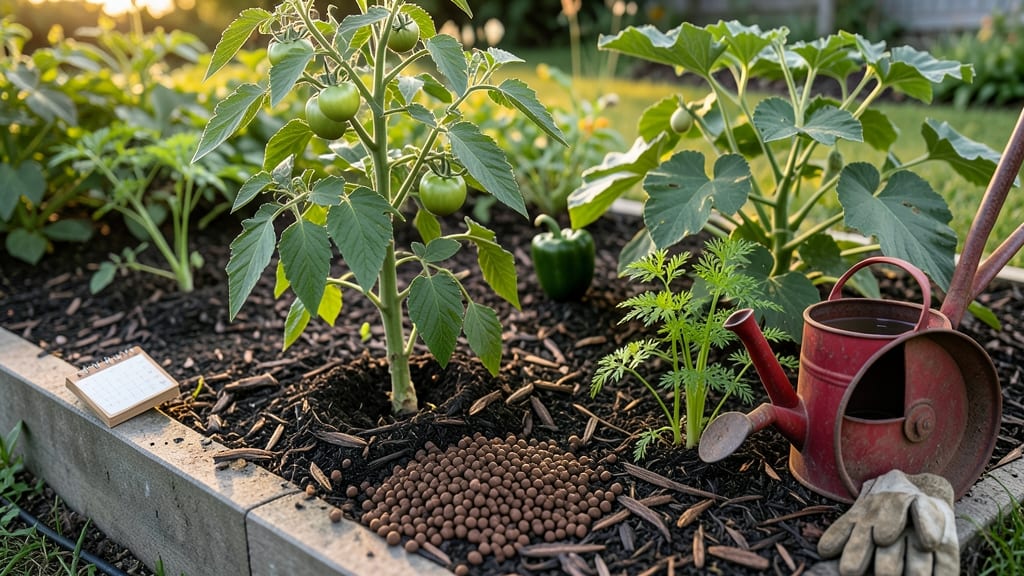
To fertilize your veg garden at the right times means the difference between lush, productive plants and struggling seedlings.
Timing your vegetable garden fertilization wrong can mean wasted nutrients—or stunted plants. But with a soil-test-based approach, you can unlock explosive growth and bountiful harvests year after year.
Most gardeners feed their 🥬 too early or too late, missing the critical windows when plants actually need nutrients. Leafy greens thrive with a spring boost, while fruiting crops like tomatoes demand phosphorus-rich fertilizer during flowering.
Here’s the exact schedule—broken down by season, soil results, and plant type—to keep your garden thriving without overdoing it.
Soil test results: when to fertilize based on your garden’s nutrient levels
Your soil test results are like a roadmap for your vegetable garden’s health. They reveal exactly what nutrients your plants are craving—and when to feed them. Nitrogen for leafy greens, phosphorus for root development, and potassium for fruiting all have precise timing windows based on your soil’s current levels.
Ignoring these can lead to wasted fertilizer or nutrient deficiencies that stunt growth.
For example, if your test shows low nitrogen (N), leafy greens like spinach and lettuce need a boost 2-3 weeks after transplanting to fuel rapid foliage growth.
But if phosphorus (P) is deficient, root crops like carrots and potatoes require phosphorus-rich fertilizer at planting time to establish strong roots before they emerge. Micronutrients like iron or zinc might need targeted applications during active growth stages to prevent yellowing leaves or stunted stems.
Here’s how to translate your soil test into a fertilization schedule tailored to your garden’s needs:
| Nutrient Level | Plant Type | Fertilization Window | Actionable Tip |
|---|---|---|---|
| Low Nitrogen (<50 ppm) | Leafy Greens (Lettuce, Spinach, Kale) | 2-3 weeks after transplanting | Apply balanced fertilizer (10-10-10) or compost tea for slow-release N. |
| Low Phosphorus (<20 ppm) | Root Crops (Carrots, Potatoes, Beets) | At planting + 6 weeks later | Use bone meal or rock phosphate for P boost. |
| Low Potassium (<150 ppm) | Fruiting Plants (Tomatoes, Peppers, Cucumbers) | Early flowering stage | Apply potassium sulfate or wood ash to prevent blossom-end rot. |
| Deficient Micronutrients (Iron, Zinc, Magnesium) | All Vegetables (Especially Fast-Growing) | During active growth (foliar spray) | Use chelated micronutrients or Epsom salt for magnesium. |
| Balanced Nutrients (Optimal Levels) | All Vegetables | Pre-planting + mid-season | Maintain with compost or slow-release granules. |
If your soil test shows high phosphorus or potassium, avoid fertilizers with those nutrients—your plants could suffer from nutrient lockout. Instead, focus on correcting the deficiency causing the imbalance, like low organic matter or high soil pH.
For instance, if phosphorus is elevated but nitrogen is low, prioritize nitrogen-rich amendments like alfalfa meal or fish emulsion.
For fruiting plants like tomatoes and peppers, timing is critical. Apply a phosphorus-heavy fertilizer at planting to encourage root growth, then switch to a potassium-rich feed when flowers appear.
This two-step approach ensures energy is directed toward fruit development rather than foliage. Leafy greens, on the other hand, thrive on consistent nitrogen applications every 3-4 weeks during their growing season.
Micronutrient deficiencies often appear as interveinal chlorosis (yellowing between leaf veins) or stunted growth. If your soil test reveals low iron or zinc, consider a foliar spray for immediate results.
For example, iron deficiency in spinach can be corrected with a spray of iron chelate applied in the evening to avoid leaf burn from sunlight.
Pro tip: Save your soil test report and re-test every 2-3 years to track changes. Amendments like compost or manure can alter nutrient levels over time, so your fertilization schedule should evolve with your soil’s health.
For example, adding composted manure increases nitrogen but may also raise phosphorus—adjust future fertilizers accordingly.
Remember, over-fertilizing is just as harmful as under-fertilizing. Always follow the recommended rates on fertilizer labels and water thoroughly after application to prevent root burn. For organic gardens, slow-release options like worm castings or aged compost are ideal—they feed plants steadily without risking nutrient overload.
By aligning your fertilization schedule with your soil test results, you’ll avoid guesswork and give your vegetable garden the precise nutrition it needs at every growth stage. The result? Healthier plants, bigger yields, and fewer wasted resources. 🌱
Seasonal fertilization calendar for vegetable gardens by climate zone
Your vegetable garden thrives when fertilization aligns with plant growth stages and climate zone. Cool-season crops like spinach need early-season feeding, while tomatoes and peppers demand phosphorus-rich boosts during flowering.
Below, I’ve mapped out a zone-specific schedule for organic and synthetic fertilizers, with adjustments for pre-planting, early growth, and fruiting phases.
For USDA zones 3–7, focus on spring and summer feeding, while zones 8–10 can extend fertilization into fall for warm-season crops. Always test your soil first—low organic matter? Amend with compost before applying synthetic blends. Pro tip: Slow-release fertilizers (like compost or pellets) reduce burn risks for sensitive crops.
In zones 3–6, I avoid fertilizing after August to prevent late-season growth that won’t harden off before frost. Instead, focus on compost top-dressing in fall to rebuild soil for next year. For zones 8–10, extend phosphorus-rich feeds into September to support winter squash and broccoli maturation.
Organic gardeners should prioritize compost teas or worm castings during early growth stages, while synthetic users can opt for controlled-release granules to minimize leaching. Always water deeply after fertilizing to activate nutrients and prevent root burn.
Pro tip: Side-dress heavy feeders like corn and peppers with nitrogen-rich amendments (e.g., alfalfa meal) mid-season. And remember—less is more! Over-fertilizing leads to blossom-end rot in tomatoes and bitter leaves in greens.
🌱