Picking
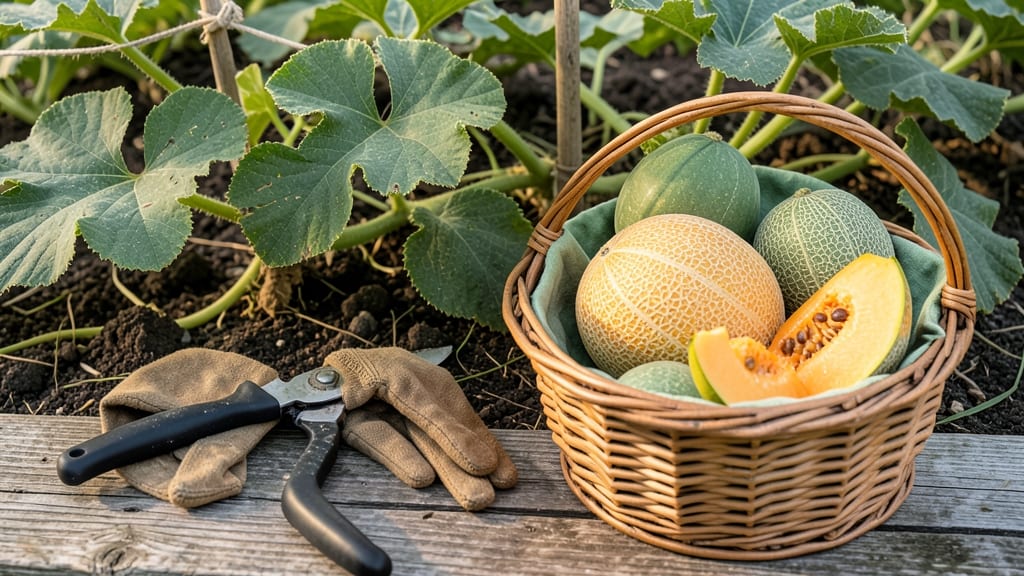
Harvesting cantaloupe from the garden at the right time means enjoying fruit that’s sweet, juicy, and packed with flavor—not one that’s still hard or bland.
There’s nothing worse than biting into a cantaloupe that’s still hard or bland—yet picking it too early can ruin your harvest. Timing is everything, and mastering the scent, sound, and slip test ensures you’ll enjoy cantaloupes at their sweetest, juiciest peak.
Whether you’re in Zone 6a or beyond, knowing these cues saves you from disappointment and wasted effort.
Most cantaloupes are ready to pick between July and August, but the real trick lies in the details: a creamy yellow rind, a musky aroma near the stem, and a slight give when pressed.
Skip these signs, and you might end up with fruit that’s either too firm or overripe. I’ll walk you through each method—plus what to do if your cantaloupe isn’t quite there yet.
By the end, you’ll confidently know when to pluck your 🍈 from the vine, how to store it for maximum freshness, and even how to salvage slightly underripe fruit. No more guesswork, just perfect melons every time.


How to tell when cantaloupe is ripe using the scent, sound, and slip test
Picking cantaloupe at the right moment transforms a good harvest into a delicious one. Unlike some fruits that ripen off the vine, cantaloupe must be harvested at peak ripeness for the best flavor.
The scent, sound, and slip test are my go-to methods for ensuring perfect timing every season. These techniques work together to confirm ripeness, even if the cantaloupe doesn’t look ready.
Many gardeners rely on color changes or size alone, but these cues can be misleading. For example, a cantaloupe might turn yellow prematurely if stressed by drought, while its scent remains weak.
The three tests I use—scent, sound, and slip—give me confidence that the fruit is ready to eat. Let’s break down each method and why they matter.
| Test Method | What to Look/Listen For | When It’s Ready | What It Means |
|---|---|---|---|
| Scent Test | Sweet, musky aroma near the stem end | Strong, pleasant smell | Fruit is fully ripe and sweet |
| Sound Test | Rattle or hollow sound when shaken | Deep, hollow thud | Seeds are loose, indicating ripeness |
| Slip Test | Gently twist the stem near the vine | Stem slips easily | Fruit is ready to harvest |
| Visual Cues | Creamy yellow rind, brown stem end | Rind softens slightly | Supports other tests for confirmation |
The scent test is my favorite because it’s the most reliable indicator of sweetness. A ripe cantaloupe releases a musky, sweet aroma near the stem end—almost like a mix of honey and fresh-cut grass.
If you’re standing near the vine and can’t smell it, the fruit likely needs more time. Pro tip: Sniff the blossom end (where the stem attaches) first; this is where the strongest scent develops.
Next, the sound test reveals what’s happening inside the fruit. Hold the cantaloupe in one hand and give it a firm shake near your ear. A ripe cantaloupe will produce a deep, hollow thud, almost like a drum.
This sound means the seeds are loose and the flesh is juicy. If it sounds dull or solid, it’s not ready yet. I’ve used this trick for years, and it never fails to confirm ripeness when combined with the scent test.
The slip test is a quick way to check if the cantaloupe is ready to pick. Gently grasp the stem near the vine and twist it slightly. If the stem slips easily from the vine, the fruit is ripe and ready for harvest.
Be careful not to pull too hard—you don’t want to damage the vine or leave the fruit hanging too long. This test works best in the morning when the fruit is cool and firm.
Environmental factors can also affect ripeness. For example, hot, dry weather speeds up the ripening process, while cool, cloudy days can slow it down. If your cantaloupes are ripening faster than usual, check them every 2-3 days to avoid overripeness.
Overripe cantaloupes develop a fermented smell and mushy flesh, so timing is key. I always harvest mine in the early morning to preserve their freshness.
One common mistake I see is relying too much on the color of the rind. While a creamy yellow hue is a good sign, some cantaloupes stay greenish even when ripe. That’s why I always combine the scent, sound, and slip tests for accuracy.
For instance, a cantaloupe might look ripe but fail the scent test—this usually means it needs more time on the vine.
If you’re growing cantaloupe in a cooler climate, like USDA Zone 5 or 6, the ripening process might take longer. In these areas, I’ve found that cantaloupes often need an extra 7-10 days to reach full ripeness compared to warmer zones.
Always adjust your harvesting schedule based on your local climate and the specific variety you’re growing.
Once you’ve confirmed ripeness using these tests, harvest your cantaloupe by cutting the stem with a clean, sharp knife or pruners. Leave about 1 inch of stem attached to the fruit—this helps extend its shelf life.
Store ripe cantaloupes at room temperature until fully ripe, then refrigerate to slow further ripening. With these methods, you’ll never miss the perfect moment to enjoy homegrown cantaloupe again.
Common mistakes that make you harvest cantaloupe too early (or too late)
Harvesting cantaloupe at the wrong time can turn your hard work into a bland, seedy disappointment. Many gardeners rely on color or size alone, but these clues often mislead. A cantaloupe might look ripe with a creamy yellow rind but still taste underripe and fibrous inside.
On the flip side, waiting too long risks overripe melons that turn mushy or attract pests. Let’s break down the costly mistakes and how to avoid them.
One of the biggest errors is detaching the fruit from the vine as your primary cue. While a slight twist should release a ripe cantaloupe, some varieties resist until they’re overripe or spoiled.
Others may detach too early, leaving you with hard, flavorless fruit. The vine’s connection isn’t always a reliable indicator—it’s just one piece of the puzzle. Combine it with other ripeness tests for accuracy.
⚠️ Warning: Don’t Rely on These 3 Red Flags
Mistake 1: Assuming green stem ends mean unripe fruit. Some cantaloupes naturally develop brown stem ends before full ripeness.
Mistake 2: Picking based on uniform color. Shade or uneven sunlight can create false ripening on one side.
Mistake 3: Ignoring the sound test. A hollow rattle means overripe; a dull thud means underripe.
Another trap is overestimating size. A cantaloupe doesn’t need to be large to be sweet. Some heirloom varieties stay small but pack intense flavor. Measure ripeness by aroma and texture, not diameter.
A cantaloupe that’s 3–4 inches in diameter but passes the scent and slip tests is often better than a 6-inch underripe one.
Regional climate also plays a role in harvest timing mistakes. In hot, dry climates, cantaloupes ripen faster and may overripen if left too long. In cooler regions, they can linger on the vine, developing off-flavors or soft spots.
Pay attention to your local frost dates and adjust your harvest window accordingly. If frost threatens, pick cantaloupes even if slightly underripe—they’ll ripen indoors.
Finally, storage confusion leads to wasted cantaloupes. Once picked, they won’t ripen further, so never leave them on the vine hoping they’ll improve. Store ripe cantaloupes at room temperature for 2–3 days max, or refrigerate cut pieces to preserve freshness.
Unripe cantaloupes? Place them in a paper bag with a banana to speed up ripening—but check daily to avoid spoilage.
Mastering cantaloupe harvest timing takes practice, but avoiding these common pitfalls will save you from bitter disappointments and ensure every bite is bursting with sweetness. Next time, trust the scent, sound, and slip test over guesswork—your taste buds will thank you! 🍈