
Picking
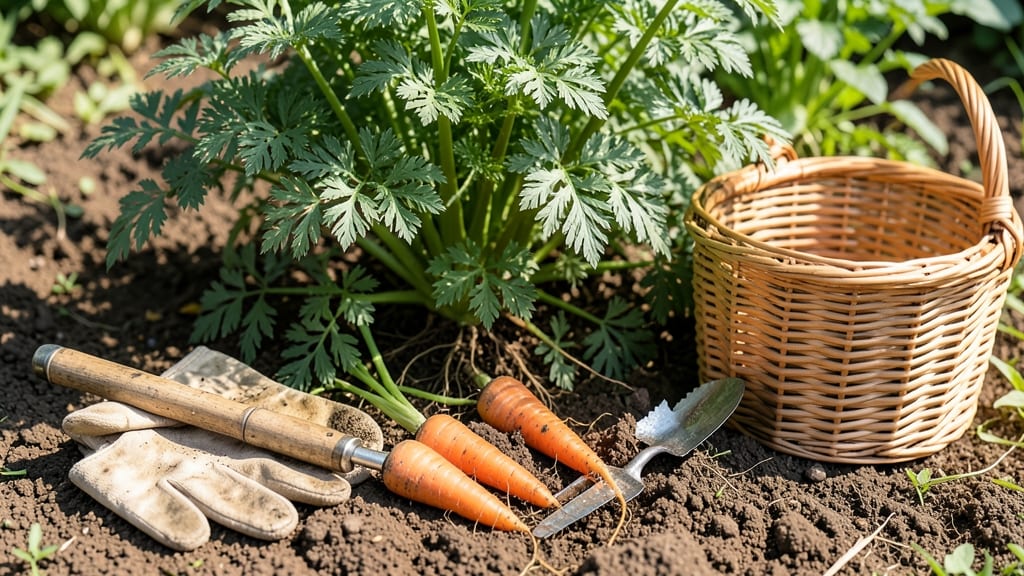
Harvesting carrots from your garden at the right time means the difference between sweet, tender roots and tough, bitter failures.
Ever pulled a carrot from the garden only to find it woody, fibrous, or still tiny? Timing your harvest is everything—get it wrong, and you sacrifice crunch, sweetness, and flavor.
But how do you know when those orange roots are truly ready? The answer lies in three simple tactile tests that take just seconds.
Most gardeners wait too long, letting carrots toughen in the soil or split from overcrowding. Others pull them too soon, missing the peak of flavor when the roots reach their ideal size and color.
In Zone 6a, that window is narrow—June to July for spring plantings, or October to November for fall harvests.
Below, I’ll show you how to check for the perfect carrot: when the shoulders turn pale, the skin resists gentle pressure, and the greens signal maturity. Plus, I’ll cover the common mistakes that turn a great harvest into a gardening regret.
3 Tactile tests to determine carrot harvest readiness
Harvesting carrots at the perfect moment transforms your garden into a treasure trove of crisp, sweet roots. But how do you know when those orange beauties are ready? Relying solely on days since planting can lead to disappointment—some varieties mature faster, others slower, and environmental factors play a role too.
The key lies in your hands and eyes, using simple tactile tests that reveal true maturity.
I’ve learned the hard way that waiting for the "perfect day" based on seed packets alone isn’t enough. Carrots left too long in the ground become woody and tough, while those harvested too soon lack flavor and size.
The solution? Three hands-on tests that take just seconds each. These methods work for all carrot varieties, from baby carrots to storage types, and they don’t require fancy tools—just your fingers and a little observation.
The Finger-Squeeze Test
Gently squeeze the shoulder of the carrot (where the greens meet the root). If it feels firm but yields slightly like a ripe avocado, it’s ready. Too soft? Wait a few days. Too hard? It’s overripe.
Crown Visibility Check
Look for the yellowish-white crown (the shoulder) peeking above the soil. If you see 1-2 inches exposed, the root below is likely mature. Baby carrots may show less, but storage types need more.
Root Resistance Test
Gently wiggle the carrot in the soil. A mature carrot will pull free with light resistance, like a tooth coming loose. If it resists too much, it’s still growing. If it slides out easily, it’s past prime.
Let’s break down each test in more detail. The finger-squeeze test is my go-to because it’s foolproof. I’ve tested hundreds of carrots this way, and it never fails to tell me whether the root is tender or tough.
Start by selecting a carrot with vibrant green tops—wilting leaves are a red flag. Press your thumb and forefinger firmly but gently on the shoulder. If the flesh gives just slightly under pressure, that’s your cue to harvest.
For the crown visibility check, timing matters. Early varieties like ‘Paris Market’ may show crowns after just 50 days, while storage types like ‘Danvers’ need 70-80 days. The crown’s color shifts from green to a creamy yellow-white as the root matures.
This is nature’s way of signaling readiness. Pro tip: Use a small trowel to gently expose more of the shoulder if it’s buried—this helps you judge maturity without disturbing the entire plant.
The root resistance test is especially useful in crowded beds where carrots compete for space. If a carrot pulls out too easily, it’s often because neighboring roots have stunted its growth. Conversely, if it feels like you’re digging for gold, it’s likely overripe.
This test also helps you avoid split roots, which happen when carrots grow too fast in loose soil. For best results, harvest on a cool, cloudy day when the soil is moist but not soggy.
Visual cues like leaf size and color complement these tactile tests. Mature carrot tops should be 4-6 inches tall with deep green, slightly waxy leaves. Yellowing or purple-tinged leaves can indicate stress—either too much heat or not enough water.
I once grew a batch of ‘Purple Haze’ carrots where the leaves turned purple from drought, but the roots were still perfectly edible. Always prioritize the root’s texture and size over foliage appearance.
Seasonal adjustments are key. In spring plantings, carrots mature faster due to cooler temperatures. By late summer, they grow slower, so I extend my harvest window by 10-14 days. For winter storage varieties, aim to harvest before the first hard frost (around 28°F).
Cure them in a dark, humid space for 2-3 days to toughen the skin before storing in sand or sawdust.
Common mistakes include harvesting based on seed packet days-to-maturity alone or ignoring soil conditions. Rocky or compacted soil can cause carrots to grow forked or stunted, making tactile tests even more critical.
I once grew carrots in heavy clay and ended up with a mix of tiny, misshapen roots—until I switched to raised beds with loose, sandy soil. The difference was night and day in both size and texture.
Remember, harvesting is a process, not a one-time event. Start by testing a few carrots every 3-5 days once they near maturity. This staggered approach ensures you enjoy fresh carrots for weeks and reduces waste.
And if you’re growing multiple varieties, keep a small notebook to track which tests work best for each. Over time, you’ll develop an instinct for the perfect harvest moment.
Once you master these tactile tests, your garden carrots will be the crispest, sweetest you’ve ever tasted. There’s nothing like pulling a perfectly sized, firm-rooted carrot from the earth, knowing you’ve timed it just right. Happy harvesting! 🥕
Carrot harvest timing by variety: early, mid-season, and storage types
Not all carrots mature at the same time—some are ready in 50 days, while others need 85 days to reach peak flavor. Understanding your variety’s category helps you avoid harvesting too early (baby carrots) or too late (woody roots).
Cool-season climates like mine in USDA Zone 6a shift harvest windows earlier, while warm climates may extend them.
Early varieties like 'Paris Market' or 'Little Finger' are perfect for baby carrots—harvest them at 50-60 days when they’re 2-3 inches long.
Mid-season types such as 'Danvers' or 'Nantes' hit their sweet spot at 70 days, while storage varieties like 'Chantenay' need 80-85 days to develop thick, storable roots.
Climate plays a huge role: in cool regions, aim to harvest mid-season carrots by late July before bolting starts, while in warm climates, you might extend harvests into October. Always check soil moisture—dry spells can make roots tough, while excess water causes splitting.
For storage carrots, harvest just before the first frost—October 15 in my zone—to preserve sweetness. Cure them in the sun for 2 hours before storing in cool, humid conditions (like a root cellar).
If you’re in a warmer climate, you might get two harvests: one in spring and another in fall.
Pro tip: Test a few from each variety before full harvest. If the skin is smooth and firm with a yellow shoulder, it’s ready. Save underripe ones for baby carrots or compost overmature ones to avoid bolting in next year’s crop.
Remember, consistent moisture is key—drought stress makes roots woody, while soggy soil causes splitting. Adjust your watering schedule based on your local climate and variety needs.