Picking
Harvest garden peas when pods are 1.5–2.5 inches long and bright green—this is the sweetest window, and missing it means tough, starchy peas instead.
Picture this: you’ve nurtured your 🌱 garden peas for weeks, only to pull a pod that’s either too small or leathery. That’s the difference between a crisp, snap-worthy bite and a sad, mealy disappointment. The key? Timing.
Peas mature fast—just 60–70 days from planting—and the harvest window is narrow. Too early, and the peas are underdeveloped; too late, and they’re overripe. But with the right cues—pod size, color, and firmness—you’ll know exactly when to pick for peak flavor.
Below, I’ll walk you through the visual and physical signs to harvest at the perfect moment, plus how to keep your plants producing for weeks. No guesswork, just sweet, tender peas every time.
How to check garden pea pod size for optimal harvest timing
Harvesting garden peas at the right time transforms your labor into sweet, tender pods bursting with flavor. The key lies in understanding pea pod size, which directly impacts taste and texture.
Most varieties reach peak sweetness when pods measure between 1.5 to 2.5 inches, but this window varies slightly by type—shelling peas need slightly larger pods than snap peas.
Visual cues matter just as much as measurements. Look for bright green, glossy pods that feel firm to the touch. Inside, you should see small, undeveloped seeds—if they're fully formed, the peas have passed their prime. This balance between size and seed development ensures maximum sweetness and tenderness.
| Pod Stage | Size Guide | Color & Texture | Seed Development | Harvest Readiness |
|---|---|---|---|---|
| Early | Under 1 inch | Pale green, soft | Not visible | Not ready |
| Ideal | 1.5–2.5 inches | Bright green, firm | Visible but small | Perfect harvest |
| Overripe | Over 3 inches | Dull green/yellow, tough | Fully developed | Tough, mealy |
🌱 Pro Tip: Use a ruler or your thumb to measure pods—most adults' thumbs span about 1.5 inches when closed.
For shelling peas, aim for the larger end of the size range—2 to 2.5 inches—since these varieties need more room for seed development. Snap peas, on the other hand, should be harvested at 1.5 to 2 inches to avoid fibrous textures.
Always check the variety's specific guidelines, as some dwarf or heirloom types may differ slightly.
Don't rely solely on size—pod texture is equally important. A ready-to-harvest pea pod should feel firm but slightly yielding when gently squeezed. If it's rock-hard, it's underripe; if it feels mushy or wrinkled, it's overripe.
The snap test works too: bend a pod gently—it should snap cleanly at the ideal stage.
Timing your harvests correctly prevents the plant from diverting energy into seed maturation too soon. I've found that checking pods every 2–3 days during peak production ensures I never miss the sweet spot.
In my Zone 6a garden, this means starting harvests in late May for spring plantings and again in September for fall crops.
Watch for flower development as another clue—most pea varieties should be harvested before the first flowers open. Once flowers appear, the plant shifts focus from pod production to seed maturation, and the peas quickly lose their sweetness.
This is especially true for sugar snap peas, which become fibrous almost immediately after flowering.
If you notice yellowing pods or pods that feel hollow when shaken, these are signs of overmaturity or pest damage. In my experience, aphids or pea weevils can accelerate spoilage, so inspect plants regularly. Removing damaged pods promptly keeps the rest of the crop healthy and productive.
For continuous harvests, I recommend picking peas in the morning after dew has dried. This ensures pods are at their freshest and firmest. Store harvested peas in the fridge for up to 5 days—though they're best enjoyed fresh within 24 hours of picking for maximum sweetness.
Remember, consistency is key. The more frequently you harvest mature pods, the more your pea plants will produce. I've seen yields triple when I stick to a regular 2–3 day harvest schedule compared to sporadic picking.
With these visual and size cues, you'll never miss the perfect moment to enjoy homegrown peas at their peak! 🌱
Best practices for harvesting peas without damaging plants
Harvesting peas at the right time isn’t just about pod size—it’s about preserving your plant’s health and future production. When you pick too early, you waste sweet peas; too late, and the pods turn tough and bitter.
The key is a gentle, frequent approach that keeps your plants thriving while giving you a steady supply of fresh, tender pods.
Start by understanding the difference between shelling peas and snap peas. Shelling peas (like 'Green Arrow') need harvesting when pods are 1.5–2.5 inches long and seeds are visible but still small.
Snap peas (like 'Sugar Snap') should be picked when pods are 2–3 inches long and crisp, before seeds bulge. Both types benefit from regular harvesting every 2–3 days—this prevents overcrowding and encourages more production.
- 🌱 Check pod size daily: Use your thumb and forefinger to measure pods—ideal size is 1.5–2.5 inches for shelling peas, 2–3 inches for snap peas.
- 🌿 Harvest in the morning: Peas taste sweetest and are firmest after a cool night. Pick when pods are bright green and glossy, not dull or yellowing.
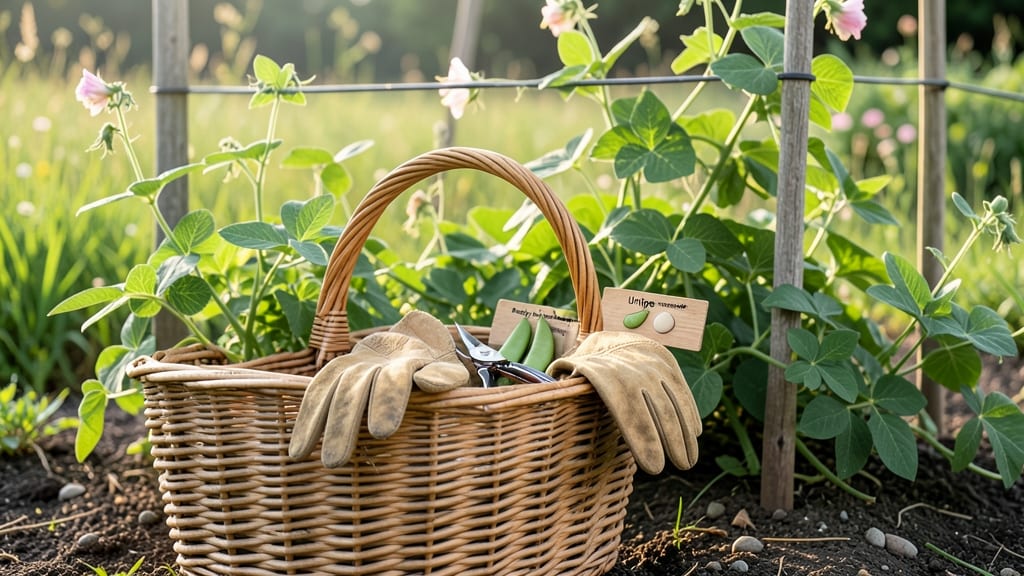
- ✂️ Use the right tools: For delicate vines, use clean pruning shears or your fingers to avoid damaging stems. Snap peas can be twisted gently from the vine.
- 🌱 Pick every 2–3 days: Frequent harvesting prevents pod overload, which stresses plants. Aim to harvest half the pods when they’re ready to keep production steady.
- 🌿 Prune lightly after harvest: Trim any yellowed or diseased leaves and remove spent flower stalks to redirect energy to new pods.
If you’re growing climbing varieties, support your plants with trellises or stakes to avoid breaking vines. Overripe pods left on the plant can reduce future yields, so don’t hesitate to harvest even small pods if they’re plump and sweet.
For storage, keep peas in the fridge for up to 5 days or blanch and freeze them for long-term use.
Pro tip: Harvest snap peas when pods are still flat—once they start bulging with seeds, they lose crispness. For shelling peas, wait until seeds are pebble-sized but not fully round.
This ensures maximum sweetness and texture. Over time, you’ll train your eye to spot the perfect moment to pick!
After harvesting, rinse peas gently and store them in a paper towel-lined container to absorb moisture. Avoid washing until ready to use, as excess water speeds up spoilage. For continuous production, side-dress with compost every 3–4 weeks to replenish nutrients.
Remember, peas are short-season crops, so every pod you harvest is precious. By following these steps, you’ll enjoy a bountiful harvest without sacrificing your plants’ health—just like a pro gardener! 🌱