Picking
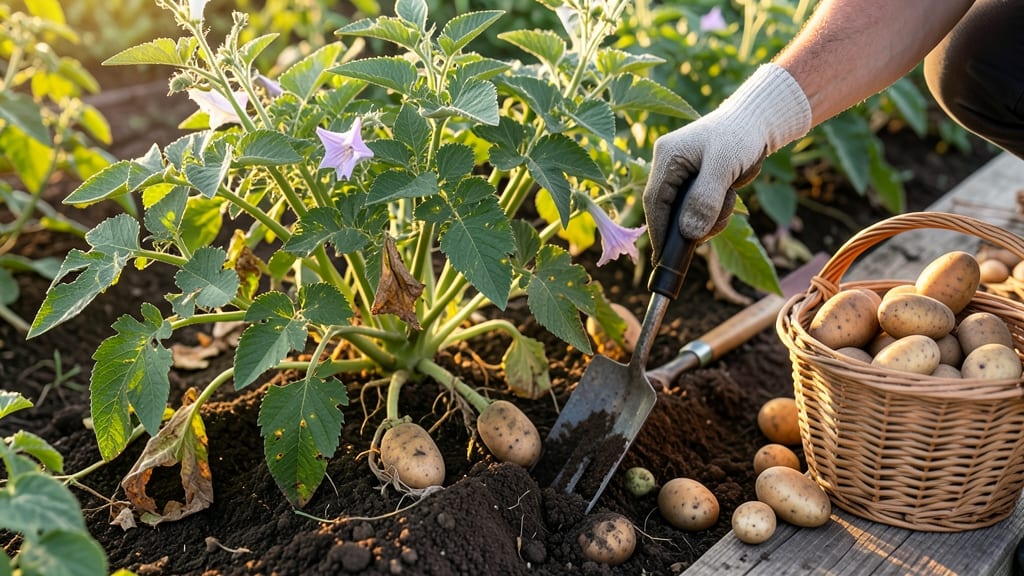
Harvesting potatoes from your garden at the right time ensures tender, storable tubers instead of tough, sprouted messes — and the secret lies in two simple cues.
Picture this: you’ve spent weeks tending to your 🥔 plants, only to dig up small, underdeveloped potatoes or find them shriveling in storage. The difference between a perfect harvest and a disappointment often comes down to timing.
Most gardeners miss the window because they rely on guesswork instead of clear signals from the soil and plants.
Below, I’ll show you exactly when to harvest based on foliage changes, soil conditions, and tuber size — plus how to adjust for your region’s frost dates. Whether you’re growing early varieties or waiting for full maturity, these methods will help you avoid the most common mistakes.
You’ll learn the foolproof soil scratch test, how to read your plant’s flowering and yellowing stages, and when to stop watering to signal harvest readiness. By the end, you’ll know exactly when to pull those spuds for the freshest taste or best storage.
How to test soil for perfect potato harvest timing
Harvesting potatoes at the wrong time can turn your hard work into a storage nightmare—think shriveled tubers or sprouted messes. The soil scratch test is my go-to method for pinpointing the perfect moment, and it only takes 2 minutes.
This simple technique reveals whether your potatoes are ready to dig or still need time in the ground.
Most gardeners wait for foliage to yellow, but soil conditions tell the real story. Dry soil signals mature tubers, while damp soil means they’re still growing.
I’ve learned the hard way that harvesting too early gives you small, underdeveloped potatoes that won’t store well, and digging too late risks sprouting and disease from rotting in wet ground.
Step-by-Step Soil Scratch Test
- Step 1: Choose a sunny, dry day (afternoon works best) when soil is warm but not baking.
- Step 2: Use your fingertip or small trowel to scratch a 2-inch-deep groove beside a potato plant’s stem.
- Step 3: Look for small potatoes (2-3 inches) clinging to the roots. If you see none or just a few, wait another 1-2 weeks.
- Step 4: If soil is dry and crumbly with multiple tubers, it’s time to harvest! Dig gently to avoid damaging the potatoes.
- Step 5: For new potatoes, harvest when tubers are 1-2 inches (soil will still feel slightly moist).
Pro Tip: Perform this test every 5-7 days in late summer to catch peak harvest windows.
Timing is everything—perform the scratch test when your potatoes are 70-120 days old, depending on the variety. Early varieties like ‘Yukon Gold’ may be ready in 70-90 days, while late varieties like ‘Russet’ need the full 100-120 days. I always mark planting dates to avoid guessing.
Don’t ignore the soil’s moisture level—wet soil means tubers are still growing, while dry soil signals maturity. If your scratch test reveals few or no potatoes, hold off digging. Rushing leads to underripe tubers that spoil faster and lack flavor.
The scratch test also helps you avoid green potatoes, which contain solanine—a toxin that develops when tubers are exposed to light. By digging when soil is dry, you ensure potatoes stay earth-covered and safe to eat.
For long-term storage, harvest when foliage is yellow and crispy (about 2 weeks after the scratch test confirms maturity). Cure potatoes in a dark, humid place (50-60°F) for 1-2 weeks to thicken their skins and improve shelf life.
Regional differences matter! In hot climates, soil dries faster—test earlier in the day. In cooler zones, wait until soil is thoroughly dry before digging. I’ve had the best luck harvesting before the first frost to prevent tuber damage.
Remember: The scratch test isn’t just about size—it’s about storage potential. Potatoes harvested at the right time keep for months, while early harvests may only last 2-3 weeks in the fridge. This simple method saves you from food waste and frustration.
Once you master the scratch test, you’ll never second-guess harvest timing again. It’s the secret weapon for gardeners who want perfectly timed, storage-friendly potatoes every season. 🥔
Flower and vine cues: when potatoes signal harvest readiness
Your potato plants don’t just grow tubers—they send clear visual signals when it’s time to dig. Ignoring these flower and vine cues can lead to underdeveloped potatoes or those that spoil quickly in storage. The key is combining above-ground observations with soil conditions for foolproof timing.
First, watch for flowering—this marks the start of tuber bulking. Most varieties bloom 4-6 weeks before harvest, but don’t rush to dig just because flowers appear. Instead, focus on the foliage’s health and vine color, which change dramatically as tubers mature.
Numbered-Highlights:
- 1
Flowers appear 4-6 weeks before harvest. Early varieties (like Yukon Gold) may bloom 2-3 weeks earlier than late varieties (like Russet).
- 2
Leaves turn yellow-brown and wilt as tubers mature. For new potatoes, harvest when 50% of foliage yellows; for storage potatoes, wait until 90%+.
- 3
When half the vines die back, scratch soil 2-3 inches deep. If tubers are 1-2 inches wide, harvest new potatoes. For mature storage, wait until tubers are 3+ inches.
- 4
❌ Harvesting when vines are still green (tubers won’t store). ❌ Waiting until frost kills foliage (tubers may sprout or rot). ❌ Digging in wet soil (damages skins).
One of the biggest mistakes I see is harvesting based solely on days after planting. While early varieties (like Red Pontiac) mature in 60-70 days, late varieties (like Idaho Russet) need 100-120 days
Instead, combine days with plant cues—for example, if your Yukon Gold flowers in 50 days but foliage isn’t yellowing, wait 10-14 more days. For new potatoes, you can harvest 2-3 weeks after flowering when tubers are golf-ball sized. But for storage potatoes, wait until full vine dieback and perform the soil scratch test to confirm size. Pro tip: Harvest on a dry, sunny day to let skins toughen before storage. Don’t forget regional adjustments! In hot climates, potatoes may mature faster due to accelerated growth, while cooler zones can delay harvest by 2-3 weeks. Always account for frost risk—if a hard frost is forecast, dig 2 weeks early to avoid tuber damage. By mastering these flower and vine cues, you’ll avoid the heartbreak of shriveled potatoes or poor storage quality. The secret? Patience and observation—your plants will tell you exactly when to dig! 🌱