Picking
Picking cantaloupe from your garden at the right time means the difference between sweet, juicy perfection and bland, seedy disappointment.
Imagine slicing into a melon that slips effortlessly from the vine, its rind creamy yellow with a delicate net pattern, and that unmistakable sweet fragrance filling the air. That’s the moment you’ve been waiting for—but how do you know when it’s truly ready?
The answer lies in a simple slip-and-snap test and a few other key signs that reveal whether your cantaloupe 🍈 is at its peak.
Most gardeners wait until late July or August, but timing isn’t just about the calendar—it’s about the vine’s cues. A dried, brown stem, a slightly yielding rind, and that intoxicating scent at the blossom end all signal it’s time to harvest.
Miss these clues, and you might end up with a melon that’s either too firm or overripe, losing that prized sweetness.
In this guide, you’ll learn how to use the slip-and-snap test, spot the 5 most reliable ripeness signs, and even salvage melons picked too early or late. Whether you’re a first-time grower or a seasoned gardener, these tips will help you pick cantaloupe at its absolute best every time.


How to use the slip-and-snap test for perfect cantaloupe ripeness
There's nothing worse than biting into a cantaloupe that's either underripe and bland or overripe and mushy. The slip-and-snap test is my foolproof method for determining when your cantaloupe is at its peak—sweet, fragrant, and perfectly textured.
This tactile approach combines visual cues with physical checks to give you an accurate read, every time.
Cantaloupes typically reach maturity between 75 to 90 days after planting, but relying solely on days-to-harvest can be misleading. Environmental factors like temperature, sunlight, and soil quality all influence ripening. The slip-and-snap test cuts through the guesswork by focusing on the vine's response and the fruit's physical characteristics.
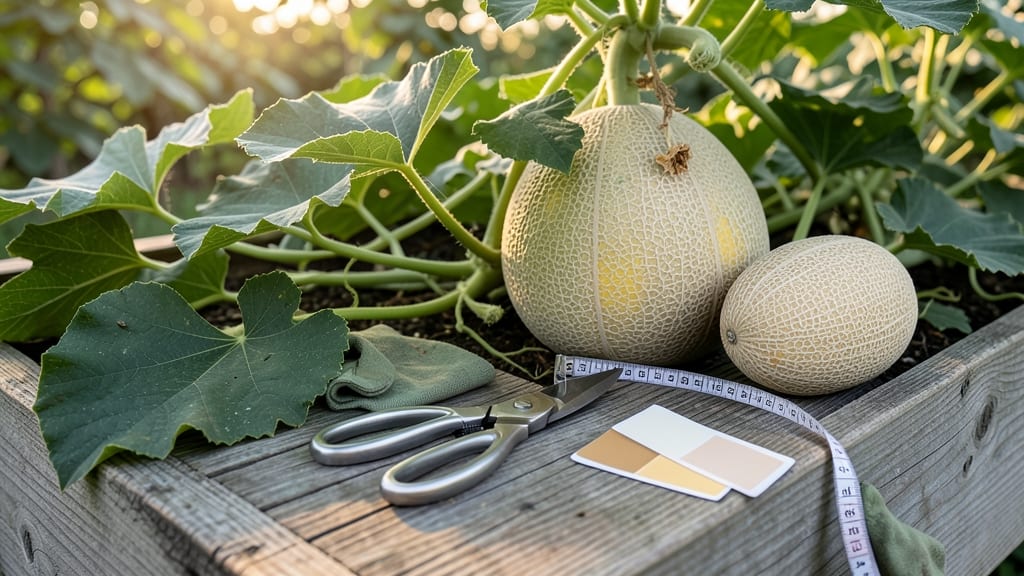
Before you begin, gather these tools: a sharp harvesting knife, a small notepad (to track progress), and a glove for grip. Work on a dry day when temperatures are mild—early morning or late afternoon is ideal.
The test itself takes just a few seconds per melon, so you can efficiently check multiple fruits in your patch.
Step-by-Step Slip-and-Snap Test
-
Step 1: Check the Stem Slip
Gently grasp the cantaloupe near the stem and lift it slightly. A ripe cantaloupe will slip easily from the vine—almost as if it's detaching on its own. If it resists, it needs more time.
-
Step 2: Inspect the Blossom End
Look at the end where the stem was attached. It should be brown and slightly dry, not green or firm. This indicates the sugars have fully developed.
-
Step 3: Perform the Snap Test
Find the small stem at the opposite end of the blossom end. Gently twist it—it should snap easily with minimal resistance. If it bends or tears, the melon isn't ready.
-
Step 4: Assess the Rind Color
The rind should transition from dull green to a creamy yellow with a distinct net pattern. Press your thumbnail into the skin—it should yield slightly but not dent deeply.
-
Step 5: Smell the Aroma
Hold the cantaloupe near your nose and take a deep sniff. A ripe cantaloupe emits a powerful, sweet fragrance near the blossom end. If there's little to no scent, it's not ready.
-
Step 6: Weigh the Fruit
Lift the cantaloupe—it should feel heavy for its size, indicating high water and sugar content. If it feels light, it lacks maturity.
If your cantaloupe passes all these checks, congratulations—you're ready to harvest! Use a sharp knife or pruners to cut the stem, leaving about 1 inch of stem attached to the fruit. This helps preserve freshness and prevents bruising during transport.
Timing is everything with cantaloupes. Harvest too early, and you'll miss out on the peak sweetness and flavor. Wait too long, and the fruit can become overripe, seedy, and watery.
The slip-and-snap test ensures you strike the perfect balance, giving you melons that are bursting with flavor and ideal for slicing, blending, or enjoying fresh.
Pro tip: Keep a harvest journal to track which cantaloupe varieties ripen fastest in your climate. Some, like 'Athena' or 'Hale's Best', tend to mature earlier, while others like 'Ambrosia' may take longer. Adjust your expectations based on your garden's microclimate.
Once harvested, store cantaloupes at room temperature for 2-3 days to let them fully ripen if needed, then refrigerate to extend shelf life. But with the slip-and-snap test, you'll likely enjoy them at their absolute best the moment they leave the vine.
5 Additional signs your cantaloupe is ready for harvest (beyond the slip-and-snap test)
Even after mastering the slip-and-snap test, some cantaloupes still surprise us with their ripeness. That’s why I always check these 5 extra signs to confirm my melons are ready for harvest. These subtle cues help me avoid picking too early or waiting too long—both of which ruin the flavor.
First, pay attention to the vine near the fruit. When cantaloupes are ripe, the vine connecting the melon to the plant will dry out and turn brown.
This is nature’s way of signaling it’s time to harvest. If the vine is still green and flexible, your melon needs more time on the vine.
Next, examine the rind color and texture. A ripe cantaloupe’s skin should transition from dull green to a creamy yellow with a distinct net pattern.
Press your thumbnail into the rind—if it leaves a slight indentation, that’s another sign of ripeness. Avoid picking melons with a hard, unyielding skin.
- 1. Vine Condition: The stem connecting the cantaloupe to the vine should be brown and dry—not green or flexible.
- 2. Rind Color: Look for a creamy yellow hue with a net pattern (not dull green or white).
- 3. Weight Check: A ripe cantaloupe feels heavy for its size—pick it up and compare to unripe ones.
- 4. Blossom End: The stem end should be slightly soft and emit a sweet, musky aroma (like a mix of honey and cucumber).
- 5. Sound Test: Tap the melon—ripe ones make a deep, hollow sound (like knocking on a drum).
Don’t overlook the weight of the cantaloupe. Ripe melons feel surprisingly heavy for their size. Lift a few candidates and compare—the heaviest one is usually the ripest. This trick works especially well when you’re harvesting multiple melons at once.
Finally, trust your nose. A ripe cantaloupe releases a sweet, musky fragrance near the blossom end (the stem side). If it smells like nothing—or worse, like nothing at all—wait a few days. Overripe melons can develop a fermented odor, so act quickly if you detect that.
Pro tip: Avoid harvesting cantaloupes in the heat of the day. Morning or late afternoon is ideal—cool temperatures help preserve their sweetness and texture after picking. Now you’ve got all the tools to pick cantaloupes at their peak! 🍈