Picking
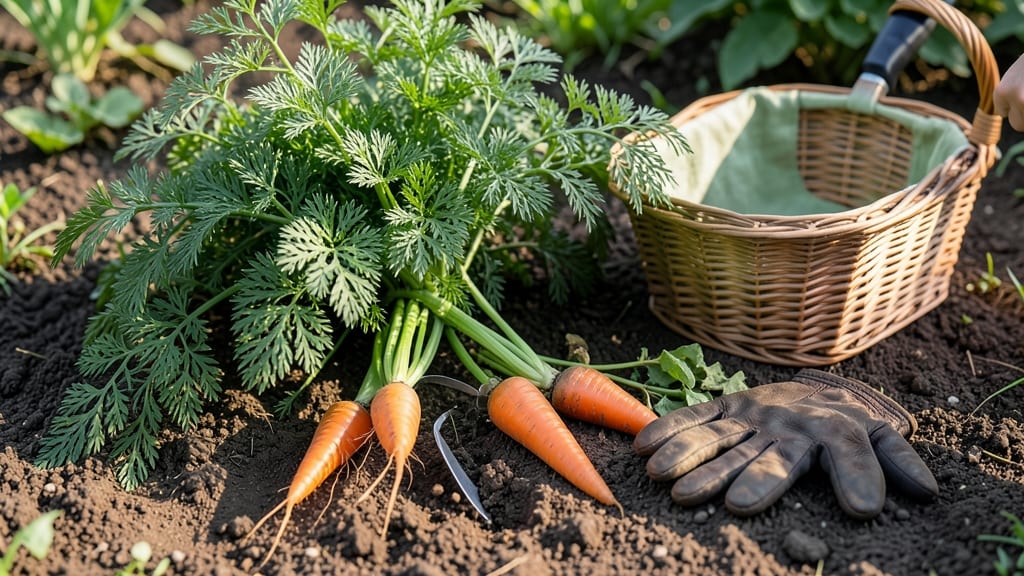
To pick carrots in your garden at the perfect moment means harvesting tender, sweet roots instead of tough, woody ones—something every gardener wants but few get right.
Picture this: you’ve nurtured your 🥕 plants for months, only to yank them too early and end up with undersized snacks, or wait too long and watch them turn bitter and split.
The difference between a flawless harvest and a disappointing one comes down to knowing the exact signals your carrots are sending.
Timing isn’t just about days since planting—it’s about size, soil resistance, and even leaf color. A carrot that’s 1-3 inches thick with smooth skin and a gentle tug from the soil is ready, while one that’s still rough or takes force to pull needs more time.
Miss these cues, and you’ll sacrifice flavor and texture.
In this guide, I’ll walk you through the soil tests, leaf checks, and seasonal timing that guarantee a harvest of crisp, vibrant carrots every time—no guesswork required.
How to check carrot size and soil depth for perfect harvest timing
Harvesting carrots at the right time ensures sweet, tender roots packed with flavor. The key lies in two simple checks: carrot size and soil depth. Most gardeners wait too long, ending up with tough, fibrous roots—so let’s fix that!
Start by measuring your carrots against their maturity guidelines, which vary by variety.
Short-season varieties like ‘Paris Market’ mature in just 50-60 days and reach 1-2 inches in diameter, while longer types such as ‘Danvers’ take 70-80 days and grow 2-3 inches wide. Always check your seed packet for exact timelines, as these can differ significantly.
Now, let’s talk soil depth. Carrots need loose, stone-free soil to grow straight and plump. If your soil is compacted or rocky, roots will fork or grow crooked.
Before planting, amend the soil with compost or sand to improve drainage and texture. This prep work pays off when harvest time arrives!
Here’s how to test soil depth for harvest readiness: Gently loosen the soil around a few plants and check how deep the roots have grown. Most carrots need 6-12 inches of loose soil to develop fully. If you hit resistance or stones, your carrots may be stunted or misshapen.
| Carrot Type | Days to Maturity | Ideal Size (Diameter) | Soil Depth Needed | Harvest Cue |
|---|---|---|---|---|
| Short-season (e.g., 'Paris Market') | 50-60 days | 1-2 inches | 6-8 inches | Tops 4-5 inches tall |
| Medium-season (e.g., 'Nantes') | 60-70 days | 2 inches | 8-10 inches | Leaves dark green, firm skin |
| Long-season (e.g., 'Danvers') | 70-85 days | 2-3 inches | 10-12 inches | Easily pulled with gentle tug |
For short-season varieties, start checking soil depth around 45 days after planting. Use a small trowel to gently dig near the base of the plant—if the root is half its final size and the soil is loose, it’s almost ready.
For long-season types, wait until 60-70 days before testing.
Timing your harvest also depends on your climate and planting window. In cooler regions, spring-planted carrots may be ready by early summer, while fall plantings often mature in late autumn. Always aim to harvest before the first hard frost, which can turn roots woody and inedible.
Pro tip: Test a few carrots before committing to a full harvest. Dig up one or two and check their size, color, and texture. If they’re smooth, firm, and bright orange, it’s time to pull the rest.
If they’re still small or rough, wait another 5-7 days before checking again.
One common mistake is assuming all carrots are ready at the same time. Succession planting—sowing seeds every 2-3 weeks—ensures a continuous harvest. This way, you’ll always have fresh carrots reaching maturity at different times, making your garden more productive.
Finally, never pull carrots by their leafy tops. Always grip the root and twist gently to avoid damaging nearby plants. If a carrot resists, it’s not ready—leave it in the ground for another week or two. Patience here prevents woody, bitter roots that ruin dishes.
With these size and soil checks, you’ll master the art of harvesting perfect carrots every time. Soon, your garden will be the talk of the neighborhood for its crisp, sweet roots!
Leaf and root visual signals that carrots are ready to harvest
Carrots send clear signals when they're ready to harvest—you just need to know what to look for. The leaf color and root size change dramatically as they mature, and ignoring these cues can lead to woody textures or split roots.
I’ve learned the hard way that waiting too long turns my sweet carrots into tough, bitter sticks!
Start by checking the top greens. When they reach 4-6 inches tall with a deep green hue, it’s a strong indicator your carrots are nearing harvest time.
The leaves should look lush, not yellowing or wilted. This is your first visual cue that the roots below are developing properly.
-
1Leaf Color Shift: Dark green tops (4-6" tall) signal maturity. Pale or yellowing leaves mean wait longer or check for pests.
-
2Root Exposure Test: Gently brush soil away from one carrot. A 1-3 inch diameter with smooth skin means it’s ready. Rough skin = needs more time.
-
3Soil Resistance: Pull a test carrot. If it slips out easily with minimal force, the rest are ready. Resistance = more time needed.
-
4 Avoid Overgrowth: Wait too long, and carrots become woody or split. Harvest before tops flower to prevent bitterness.
Don’t rely solely on days since planting—soil conditions and variety matter. For example, Danvers carrots mature faster than Chantenay types, so check their specific guidelines. I always test one carrot first by brushing away soil to expose the root without digging up the whole patch.
The skin texture is another key indicator. Ready carrots have smooth, taut skin. If the skin feels rough or hairy, they need more time. This texture change happens as the carrot’s outer layer thickens, protecting the sweet flesh inside from drying out.
Timing is everything—harvest too early, and you’ll get small, underdeveloped roots. Too late, and you’ll deal with split carrots or bolting tops. I’ve found that harvesting in the morning after watering makes the soil looser, so carrots pull out cleaner and with less effort.
Once you’ve confirmed readiness, harvest by gripping the greens firmly and giving a gentle tug. Most carrots will pop right out if the soil is loose. If you encounter resistance, use a fork to loosen the soil around the root before pulling.
Save the tops for compost or pest control—they’re packed with flavor and nutrients!