
Picking
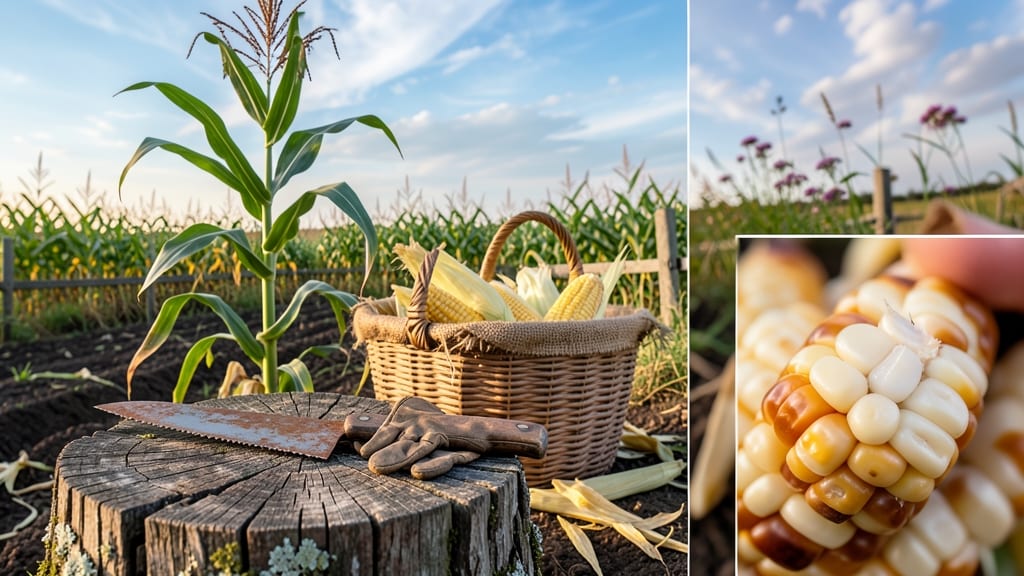
To pick corn from your garden at its peak sweetness, watch for silks turning brown and kernels that feel plump when squeezed—this is when flavor and tenderness are at their best.
Picture this: you’ve waited months for your 🌽 to mature, only to bite into an ear that’s either woody and dry or still chalky and underripe. That’s why timing is everything, and the right cues make all the difference.
Most gardeners miss the window because they rely on days-to-maturity charts alone, but heat waves, rain delays, and even soil type can shift that timeline. Below, I’ll show you three hands-on tests—no guesswork, just tactile checks—to nail the perfect harvest every time.
You’ll learn how to read your plants like a pro, avoid the most common mistakes, and even troubleshoot when weather throws off your schedule. Ready to turn your corn patch into a flavor factory?
3 Tactile tests to determine when corn is perfectly ripe
Harvesting corn at the perfect moment transforms your garden bounty into sweet, tender perfection. But how do you know when those ears are ready? The secret lies in three simple hands-on tests that reveal ripeness through touch, sight, and a little pressure.
These methods have helped me avoid both woody kernels and underdeveloped ears, ensuring every harvest delivers that peak garden-fresh flavor.
Mastering these tests means you’ll never again guess whether your corn is ready. Instead, you’ll use your fingers to feel, your eyes to observe, and your experience to decide. The best part?
These techniques work for sweet corn varieties like Silver Queen or Golden Bantam, as well as heirloom types that need extra attention. Let’s start with the first test—one that requires almost no tools at all.
🌽 3 Tactile Tests for Perfectly Ripe Corn
- 1. Silk Test: Silks should be dry and brown (not green or moist).
- 2. Kernel Test: Press a fingernail into a kernel—it should feel plump and milky, not hard or translucent.
- 3. Husk Test: Husk layers should be tight and slightly sticky when pulled apart gently.
Pro Tip: Combine all three tests for 100% accuracy—one test alone isn’t foolproof!
The first test focuses on the silk strands that emerge from the top of each ear. When corn is ready to harvest, these silks will have turned from bright green to dry brown. This change signals that pollination is complete and the kernels are filling out.
I always check this first because it’s the most obvious visual cue. If the silks are still green or damp, your corn needs more time—usually 3-5 days—to reach peak ripeness.
But here’s where many gardeners go wrong: they assume dry silks mean instant harvest readiness. That’s why you need the kernel test, the second tactile check. Gently press your fingernail into a kernel near the center of the ear.
If it feels soft and slightly creamy (like a ripe avocado pit), that’s your green light. If it’s hard or translucent, the corn needs more time. This test is especially critical for sweet corn varieties, which lose sweetness quickly once picked.
Next, give the husk a gentle tug to perform the third test. The husk layers should pull apart slightly but stay tight around the ear. If they separate easily, the corn might be overripe.
A slightly sticky feel between the husks is another good sign—it indicates the ear is hydrated and at its peak. I’ve learned that morning harvests often yield the tightest husks because the plant’s moisture levels are highest after a cool night.
What happens if you miss the window? Overripe corn develops starchy, woody kernels that turn yellow or even blacken at the tips. Underripe corn, on the other hand, will taste watery and bland, with kernels that stay hard even after cooking.
Both scenarios are disappointing after all that garden work! That’s why I always check all three tests—silk dryness, kernel tenderness, and husk tightness—before making my final call.
For sweet corn varieties, timing is especially critical because their sugars convert to starch within hours of harvest. If you’re growing heirloom or flour corn, you have a slightly wider window, but the same tactile tests apply.
The key is consistency: check your corn daily during the last 5-7 days of its expected maturity window. Most garden corn reaches harvest readiness 70-90 days after planting, but this varies by variety.
One final pro tip: always harvest corn in the morning when temperatures are cooler. This preserves sweetness and firmness. After picking, store ears in the fridge for up to a week or blanch and freeze them for long-term storage.
With these tactile tests in your gardening toolkit, you’ll never again wonder when to pick corn from the garden—just trust your hands and your eyes.
Now that you’ve mastered these tests, you’re ready to enjoy corn at its peak. There’s nothing like the crunch and sweetness of freshly harvested garden corn, and these methods ensure you’ll get it right every time. Happy harvesting! 🌽
How long does garden corn take to ripen after pollination?
After those silky threads appear from your corn husks, you might wonder how long until harvest. The pollination process triggers the maturation timeline, but exact days vary based on variety and growing conditions.
Most garden corn takes 21-28 days from pollination to full ripeness, though some early varieties may mature in just 14-18 days. Understanding this window helps you plan for the perfect harvest window.
Your corn’s silk appearance marks the start of the ripening clock, but don’t expect instant results. The plant needs time to convert sugars into those sweet kernels. Weather conditions play a huge role—cool temperatures slow maturation, while hot, sunny days can speed it up.
For example, a 75°F (24°C) average speeds ripening, while 60°F (15°C) can extend the process by a week or more.
Variety matters too. Sweet corn like 'Silver Queen' typically ripens in 21-24 days after silk appears, while 'Ambrosia' may take 25-28 days. Always check your seed packet for specific days-to-maturity estimates, as these provide the most accurate baseline for your garden.
If your garden experiences unseasonably hot weather, corn may ripen faster—sometimes in as few as 14 days. Conversely, cool nights can stretch the process to 30 days or more.
Pay attention to your local frost dates too; if your corn isn’t ready by late summer, you may need to harvest earlier or extend the season with row covers.
For the best flavor, aim to harvest when kernels are plump and milky when pierced with your fingernail. This usually aligns with the 21-28 day window, but always prioritize visual cues over strict timelines. Morning harvests preserve sweetness, as daytime heat can convert sugars into starches quickly.
Pro tip: Keep a harvest journal to track your corn’s ripening patterns. Note the silk appearance date, final harvest day, and any weather anomalies. Over time, you’ll refine your timing to match your microclimate perfectly. Happy harvesting! 🌽