
Picking
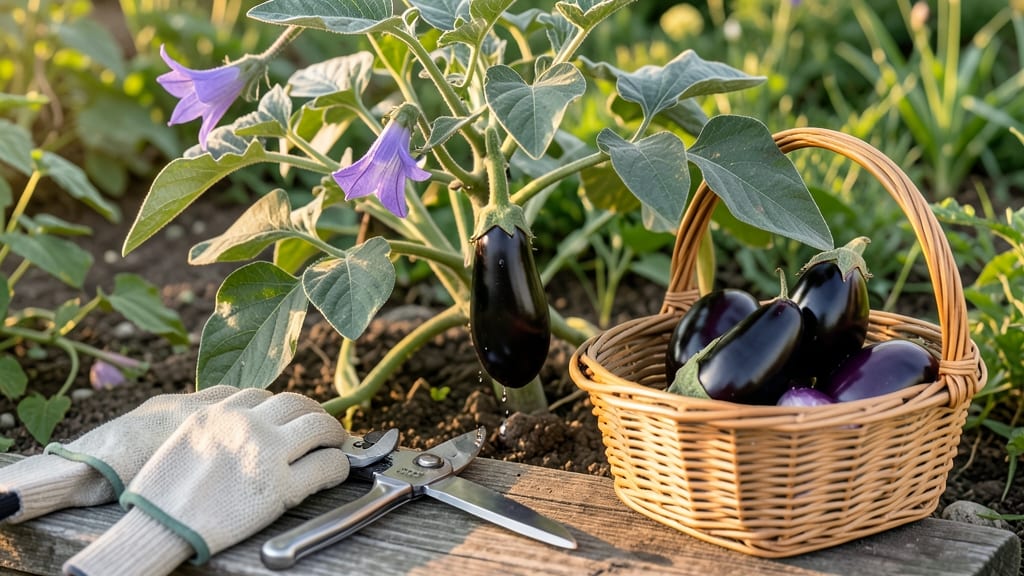
Picking eggplant from your garden at the right time means the difference between a sweet, tender fruit and a bitter, seedy disappointment.
If you’ve ever bitten into an eggplant that tasted more like a sponge than a vegetable, you know how frustrating it can be. But here’s the good news: with just a few simple checks—color, firmness, and size—you can harvest your 🍆 at peak flavor every time.
From the glossy sheen of ripe skin to the gentle give when you press it, these visual and tactile cues will help you avoid common mistakes, whether you’re in USDA Zone 6a or warmer climates. And once you master timing, you’ll never waste another eggplant again.
Below, I’ll walk you through the exact signs to look for, how to test ripeness without cutting into it, and what happens if you pick too early or too late. Ready to turn your garden harvests into restaurant-quality meals?
3 Visual signs your eggplant is perfectly ripe for picking
Picking eggplant at the right moment transforms your garden harvest from bland to bursting with flavor. The key lies in three simple visual cues: color depth, skin firmness, and size consistency.
Ignoring these signs often leads to tough, bitter fruit that’s barely edible—so let’s dive into what truly ready eggplant looks like in your garden. Green-tinted varieties like ‘Tigress’ or ‘Ichiban’ need extra attention since their ripeness signals differ from classic purple types.
First, examine the skin color. Mature eggplant should display a deep, uniform hue—whether purple, white, or striped—with no green undertones near the blossom end. For heirloom varieties like ‘Rosa Bianca’, this means a creamy white with no yellowing. Uneven coloring signals immaturity, while faded patches indicate overripeness.
Pro tip: Check the stem end—it should turn yellow or brown when fully ripe.
Next, assess the fruit size. Most varieties reach maturity between 4 to 8 inches long, depending on the cultivar.
‘Black Beauty’ typically stops growing at 6-8 inches, while smaller types like ‘Fairy Tale’ max out at 4 inches. Overgrown eggplant becomes woody and seedy, so don’t wait until they’re giant—harvest when they’ve reached their variety’s expected dimensions. Use your plant’s tag as a guide if you’re unsure.
Here’s where many gardeners go wrong: skin firmness is non-negotiable. Gently press the eggplant—ripe fruit should feel firm yet slightly yielding, like a ripe avocado. Soft spots or a spongy texture mean it’s past its prime.
For green varieties, this firmness test is even more critical since their color doesn’t darken like purple types. A good rule of thumb: If it dented noticeably under pressure, it’s overripe.
| Ripeness Sign | What to Look For | Action |
|---|---|---|
| Color Depth | Deep, even hue (no green) | Harvest purple/black types when glossy |
| Stem End | Yellow/brown (not green) | Pick when stem dries slightly |
| Firmness | Firm but yielding (no dents) | Test with gentle thumb pressure |
| Size | Variety-specific (4-8 inches) | Compare to plant tag dimensions |
| Green Varieties | Firm skin + glossy finish | Ignore color—focus on texture |
Did you know temperature affects ripeness timing? In hot climates (Zones 9-11), eggplant may mature faster—sometimes in just 60 days—while cooler zones (6-8) can take up to 90 days. Always adjust your harvesting window based on your local growing season.
For example, if your ‘Ichiban’ eggplant appears ready in July but your area’s first frost is October 15, prioritize harvesting before temperatures drop below 50°F.
One common mistake is waiting for eggplant to turn completely black or deep purple. While this happens with some varieties, many modern hybrids (like ‘Hansel’) stop ripening at a glossy, vibrant stage.
Overripe eggplant loses its tender texture, becoming mealy and seedy—a sure sign you’ve waited too long. When in doubt, harvest slightly early; eggplant continues ripening for 1-2 days off the vine at room temperature.
For green or white varieties, the challenge is different—color doesn’t darken like purple types. Instead, focus on the skin’s glossiness and the stem’s dryness. A mature ‘Rosa Bianca’ should have a satin finish and a stem that snaps cleanly when bent.
If the stem resists or the skin looks dull, hold off harvesting. This visual cue is your best friend for these unique cultivars.
Pro gardeners use a simple trick to verify ripeness: the weight test. A fully ripe eggplant feels heavy for its size due to concentrated flesh. Hold two candidates—one firm and one soft—and you’ll notice the ripe one has substantial heft.
This method works especially well for large varieties like ‘Rosa Bianca’, where size alone isn’t enough to judge maturity.
Finally, don’t overlook the blossom end (the stem attachment point). When ripe, this area should show no green and may even develop a slight dry, papery texture. If you see fresh green, the eggplant needs more time.
For striped varieties like ‘Cardinal’, check that the stripes are bold and unbroken—fading stripes signal overripeness. Paying attention to these details ensures you’re always harvesting at peak flavor.
How to test eggplant ripeness without cutting it open
Testing eggplant ripeness without damaging the fruit is a game-changer for gardeners who want to avoid waste. The key lies in three simple non-destructive tests—gentle pressure, stem separation, and weight assessment—that reveal doneness without slicing.
These methods save time and ensure you harvest at peak flavor, avoiding the bitter, seedy disappointment of premature picking.
Start with the gentle squeeze test: grasp the eggplant firmly with both hands and apply light pressure. A ripe eggplant should yield slightly but remain firm—like a ripe avocado. If it feels rock-hard or mushy, it’s not ready.
Overripe fruit will dent easily, signaling it’s past its prime. This test works best on varieties like Black Beauty or Ichiban, where firmness is a hallmark of quality.
Next, check the stem separation technique: twist the eggplant gently at the stem. If it separates cleanly with a slight crack or the stem pulls away easily, it’s ripe. A green stem end means the fruit is underripe, while a dry, brown stem signals overripeness.
This method is especially useful for long, slender varieties like Rosa Bianca, where size can be deceiving.
⚠️ Common Mistake Alert: Weight Misjudgment
Don’t rely solely on weight—a heavy eggplant isn’t always ripe! Some varieties (like Fairy Tale) stay heavy even when underripe due to water content. Instead, combine weight with the squeeze test and stem check for accuracy. Overripe eggplants may feel lighter as they lose moisture.
Weight does matter, but it’s a secondary cue. Lift the eggplant in your hand—ripe fruit should feel substantial for its size, not hollow. Compare it to a similar-sized fruit: if it feels significantly lighter, it’s likely underripe.
This trick works best when testing multiple eggplants from the same plant, as size and weight can vary slightly due to soil moisture or nutrient levels.
Timing your harvest also depends on your climate zone. In hotter regions (Zones 9-11), eggplants ripen faster—often in 60-70 days. In cooler zones (Zones 6-8), they may take 80-100 days.
If your plants are struggling with slow growth or pale leaves, they may need more time to mature. Always prioritize the squeeze and stem tests over calendar-based guesses.
Pro tip: Harvest in the morning when temperatures are cooler. This reduces stress on the plant and ensures the fruit’s natural sugars are at their peak. Use a sharp knife or pruners to cut the stem, leaving a 1-inch stub to prevent disease.
Avoid tugging, as this can damage the plant and leave unsightly tears on the fruit.
With these non-destructive tests, you’ll never second-guess your eggplant harvest again. Mastering the squeeze, stem check, and weight assessment ensures you pick fruit at its sweetest, most tender stage—every time. Happy harvesting! 🌱