Picking
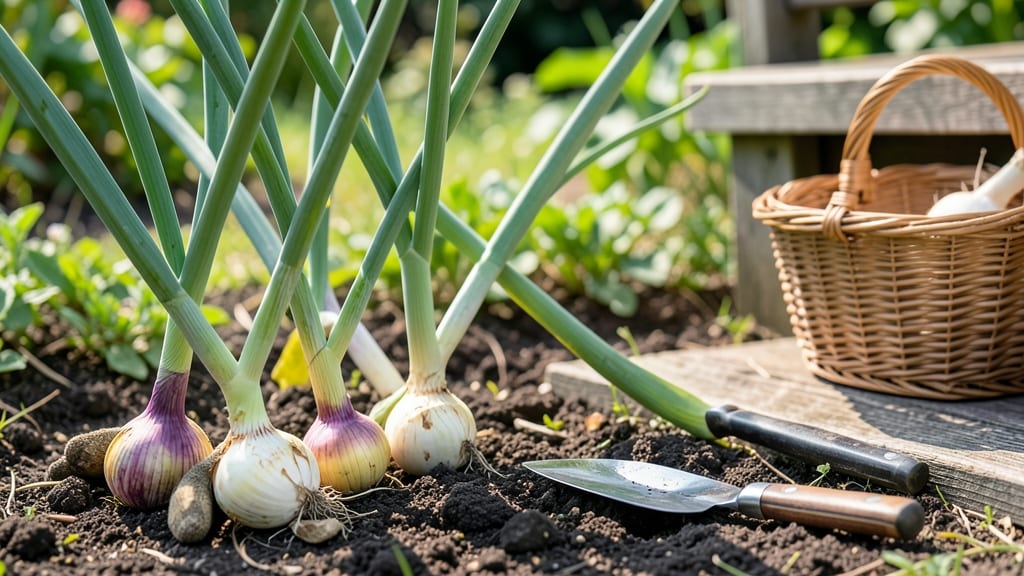
To pick onions from your garden at the perfect time means capturing their sweetest, most flavorful potential—before they turn bitter or split.
Picture this: you’ve nurtured your 🧅 for months, and now the moment of truth arrives. One wrong move, and you’re left with tough, pungent bulbs instead of the mild, tender onions you dreamed of. The secret? Three simple visual cues that tell you—without a doubt—when it’s time to harvest.
Whether you’re growing storage onions for the pantry or green onions for quick meals, these signs will save you from guesswork. We’ll walk you through exactly what to look for, how to test for doneness, and what to do if you miss the window.
By the end, you’ll know the exact moment to pull those onions—so you can enjoy a harvest that’s perfectly sweet and ready for the table.
3 Visual cues to know when onions are ready to harvest
Timing your onion harvest is crucial—pick too soon, and you’ll end up with tiny, underdeveloped bulbs. Wait too long, and you risk split bulbs or bitter flavors. The secret? Learning to read three key visual cues that tell you exactly when to harvest.
These signs apply to both storage onions and green onions, though storage varieties need extra attention to their neck drying. Let’s break down what to look for in your garden beds.
First, focus on the leaf color. Mature onions develop a straw-like yellow or tan hue at their base while the green tops remain vibrant. This color shift signals the bulb has reached its optimal size.
If you see completely brown or wilted leaves, that’s a red flag—your onions have overripe and are past their prime. Paying attention to this subtle change prevents you from missing the sweet spot between underripe and overripe.
Now, let’s talk bulb size and firmness. For most onion varieties, bulbs should measure 2–3 inches in diameter (or larger for storage types). When you gently squeeze a bulb, it should feel firm but not rock-hard.
A soft bulb means it’s still growing, while a bulb that’s too hard may have stopped maturing prematurely. This tactile check is your best friend when deciding whether to harvest a few test onions.
Here’s where storage onions get special attention: the neck drying cue. For onions meant for long-term storage, the top 1–2 inches of the neck should dry out and become papery. This indicates the bulb has stopped growing and is ready for harvest.
If you ignore this sign, your onions will split open when cured, ruining their storage potential. Green onions, on the other hand, don’t need this drying step—they’re harvested when the green tops reach your desired length.
- 1. Leaf Color Shift: Look for straw-yellow or tan bases while green tops stay upright. Overripe onions turn completely brown.
- 2. Bulb Size & Firmness: Aim for 2–3 inch-wide bulbs that feel firm but not hard when squeezed.
- 3. Neck Drying (Storage Onions): The top 1–2 inches should dry and become papery—this is your cue to harvest.
One common mistake gardeners make is harvesting based on days after planting rather than visual cues. While most onions take 80–120 days to mature, weather conditions like heat or drought can speed up or slow down growth.
That’s why relying on leaf color, bulb size, and neck drying gives you the most accurate picture. For example, onions grown in hot summers may mature faster, so check them weekly during peak growing season.
Let’s address a frequent question: what if your onions stop growing but don’t show all three cues? This often happens with green onions or shallots, which focus on leaf growth rather than bulb development.
In these cases, harvest when the green tops reach 6–8 inches tall—you can even snip the tops and let the bulb regrow for multiple harvests. For storage onions, though, all three cues must align before you pull them from the soil.
Another critical tip: avoid harvesting in wet weather. Damp conditions can lead to fungal diseases and rot during curing. If rain is forecast, wait a day or two to let the soil dry out slightly.
This small adjustment makes a huge difference in how well your onions store later. Always harvest on a dry, sunny morning for the best results.
For green onions, the process is simpler. Harvest when the green shoots reach 4–6 inches tall—just snip them 1–2 inches above the bulb. The bulb will keep producing new greens, giving you a continuous harvest throughout the growing season.
This method works well for spring and fall plantings, where you can enjoy fresh onions for months without needing to store them.
Finally, remember that storage onions require a special curing process after harvest. Once you’ve pulled them from the soil, lay them in a single layer in a shady, well-ventilated spot for 1–2 weeks.
This drying period strengthens their storage life and prevents spoilage. Without proper curing, even perfectly ripe onions won’t last long in your pantry.
By mastering these three visual cues, you’ll never again wonder, “Are my onions ready to pick?” Instead, you’ll confidently harvest sweet, flavorful bulbs every time—whether you’re aiming for long-term storage or fresh kitchen use. Happy harvesting! 🧅
How to test onion doneness before pulling them from the soil
Testing onion doneness before harvest is the final step to ensure you bring home flavorful, storage-ready bulbs instead of bitter disappointments. I’ve learned the hard way that visual cues alone sometimes miss the mark—so I developed these three foolproof tests to confirm ripeness.
Start with the simplest: the bulb lift check, which tells you whether the onion is ready to pull without damaging it.
Next, try the neck twist test, a quick way to assess if the onion’s growth has stalled. This method works especially well for storage onions, where a dry neck means peak sweetness.
Finally, the bulb inspection reveals the onion’s internal condition—something you can’t judge from the outside. Together, these tests give you confidence that you’re harvesting at the perfect moment.
⚠️ Warning: Overripe Onions Are a Waste
Split bulbs, soft spots, or a foul odor mean your onions have passed their prime. These won’t store well and may even attract pests to your garden. If you spot these signs, harvest immediately for cooking use only—don’t wait another day!
First, perform the bulb lift check by gently digging around the base of one onion with your fingers. If it slides out easily with minimal resistance, it’s ready. This test works best in loose, well-drained soil where onions can develop properly.
If the bulb feels tightly bound to the soil, give it another week or two—especially if you’re growing storage varieties like Yellow Granex or Sweet Spanish.
The neck twist test is my favorite because it’s so simple: grasp the top of the onion and twist gently. If the neck snaps cleanly (rather than pulling apart), the bulb has finished growing and is ready for harvest.
This is especially critical for storage onions, as a dry neck indicates the bulb’s sugars have concentrated, making it sweeter and longer-lasting. Save this test for the final week of your harvest window.
For absolute certainty, cut one onion in half lengthwise. If the center shows dry, papery layers, you’ve hit the sweet spot. But if you see a green or moist core, the onion needs more time in the ground.
This test is non-destructive if you leave the rest of the bulb intact—just slice one from each row to check progress. Pro tip: use a clean, sharp knife to avoid crushing the bulb.
If your onions fail these tests, don’t panic. Underripe onions can often be replanted (if roots are intact) to mature further, while overripe ones are perfect for immediate cooking.
The key is acting quickly—once onions split or soften, they won’t improve. With these tests, you’ll never guess again about harvest timing.