Planting
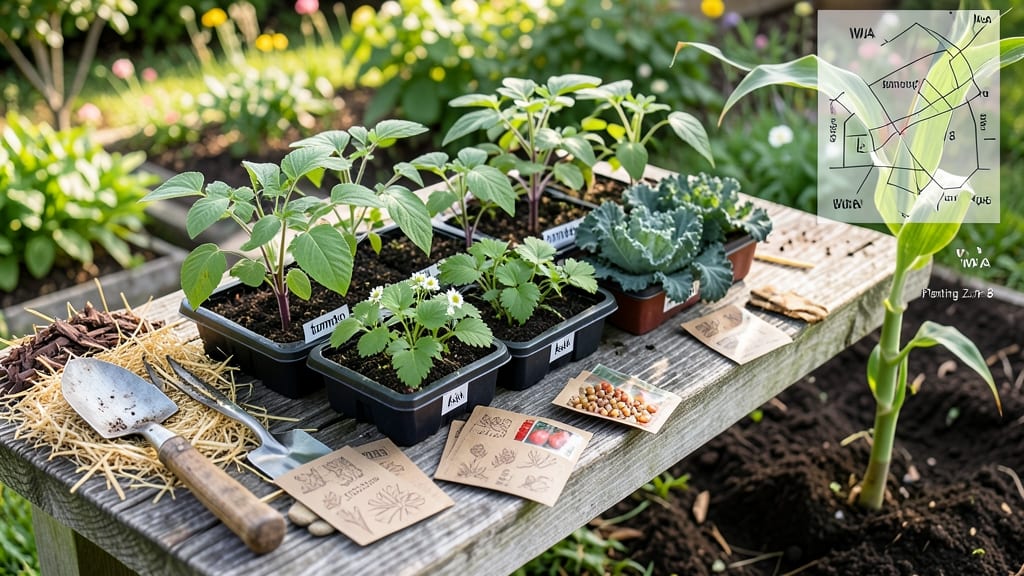
To plant a garden in Washington State, time your crops based on your exact location—whether you're in the rainy Puget Sound or the drier Columbia Basin—because frost dates vary wildly.
Washington State’s diverse climate—from the rain-soaked Pacific Northwest coast to the arid deserts of the Columbia Basin—means your planting schedule should depend on your exact location. Get the timing wrong, and your garden could fail before it even begins.
Cool-season crops like peas and spinach thrive when soil temperatures hit 40°F, often as early as February in Western WA, while tomatoes and peppers need to wait until after the last frost—usually mid-May in most zones.
In this guide, I’ll break down the best planting windows by region, crop type, and microclimate, so you can avoid common mistakes and grow a thriving garden all season long.
Washington State planting Zones: how microclimates affect your garden schedule
Washington State spans USDA Hardiness Zones 6 through 9, creating dramatic differences in planting schedules from the coastal rainforests to the arid Columbia Basin.
These zones determine your last spring frost and first fall frost, which are critical for knowing when to plant heat-loving tomatoes or cold-hardy kale. Without accounting for these variations, even experienced gardeners risk planting too early or too late.
Western Washington—including the Puget Sound region and Olympic Peninsula—typically falls in Zones 7b to 9a, with milder winters and longer growing seasons due to the marine influence.
Meanwhile, Eastern Washington, especially areas east of the Cascade Mountains, ranges from Zones 6a to 7b, with colder winters and shorter frost-free periods. These microclimates can shift planting windows by 4 to 6 weeks between neighboring towns.
Understanding your local frost dates is crucial because they dictate when to plant warm-season crops like tomatoes and peppers.
For example, in Zone 7b (common in Western WA), you can safely plant tomatoes after May 15, but in Zone 6a (Eastern WA), wait until June 1 to avoid frost damage.
Similarly, cool-season crops like lettuce and spinach can be sown as early as February in Western WA but not until March in Eastern WA.
Microclimates within a single zone can also create surprises. A south-facing slope in Eastern WA might warm up faster than a valley floor, allowing you to plant earlier. Conversely, low-lying areas in Western WA can trap cold air, delaying your planting window.
Always check local frost records from your nearest Cooperative Extension office or NOAA weather station for the most accurate data.
Another key factor is the first fall frost, which determines when to harvest warm-season crops before temperatures drop. In Zone 9a (Olympic Peninsula), you might still harvest tomatoes in early November, while in Zone 6a (Cascade Foothills), frost can arrive as early as mid-September.
This affects when to start fall planting of hardy greens like kale or Brussels sprouts.
For gardeners in high-elevation areas (above 2,000 feet), the growing season can be 30 to 45 days shorter than in nearby valleys. If you live near Mount Rainier or the Cascade Range, consider using row covers or cold frames to extend your season.
These tools can push your last spring frost date back by 2 to 4 weeks, giving you more time to grow warm-season crops.
Even within a single city, neighborhoods can vary. Urban areas like Seattle or Spokane might have pockets where concrete and pavement create "heat islands," warming soil faster in spring. Meanwhile, wood
Best planting calendar for Washington State: crop-specific timing by season
Washington’s diverse microclimates mean your planting schedule should shift dramatically between the Puget Sound region and eastern WA. Coastal areas like Seattle have milder winters, while high-desert zones like Moses Lake experience earlier last frosts.
Understanding these differences ensures your cool-season crops thrive in spring and your warm-season plants avoid frost damage.
For lowland areas (USDA Zones 7-8), like Western WA, start cool-season crops as early as February under row covers. In contrast, high-elevation zones (Zones 5-6) in the Cascades should wait until April or later.
Warm-season crops like tomatoes and peppers typically need to wait until after May 15 in most regions, but Eastern WA can plant 2-3 weeks earlier.
- 🌱 February-March: Plant cool-season crops (kale, peas, spinach) in Western WA under row covers.
- 🌱 April-May: Start warm-season crops (tomatoes, peppers) after last frost (typically May 15 in lowlands, June 1 in high elevations).
- ☀️ June-July: Plant summer squash and beans for late-season harvests.
- 🌿 August-September: Sow fall greens (lettuce, radishes) for harvest before first frost.
- ❄️ October-November: Plant garlic and overwintering onions for spring harvests.
In Western WA, where marine influence keeps winters damp and mild, cool-season crops like broccoli and carrots can often be planted as early as late February.
However, high-desert regions (like Yakima Valley) may see earlier last frosts, so delay planting until mid-April to avoid frost damage. Succession planting is key—sow lettuce every 2 weeks from March to August for continuous harvests.
For warm-season crops, timing is critical. Tomatoes and peppers should never be planted before after the last frost, which typically occurs mid-May in Puget Sound but can be as late as June 1 in the Cascades. Squash and cucumbers thrive in hot summers and should be planted after soil warms (usually late May). Succession plant beans every 3 weeks for extended harvests.
Don’t forget perennials! Asparagus crowns should be planted in early spring (March-April), while fruit trees and berries benefit from fall planting (September-October) to establish roots before winter. Herbs like rosemary and thyme are drought-tolerant and can be planted anytime soil isn’t frozen, but basil needs to wait until after last frost.
Adjust for high elevations—areas like Leavenworth (4,000 ft) have shorter growing seasons. Start cool crops 2-3 weeks later and prioritize fast-maturing varieties (e.g., bush beans over pole beans). Use black plastic mulch to warm soil faster in early spring for warm-season crops.
With these crop-specific timelines, you’ll maximize your Washington garden’s potential—whether you’re growing kale in Seattle or tomatoes in Walla Walla. Happy planting! 🌱