Planting
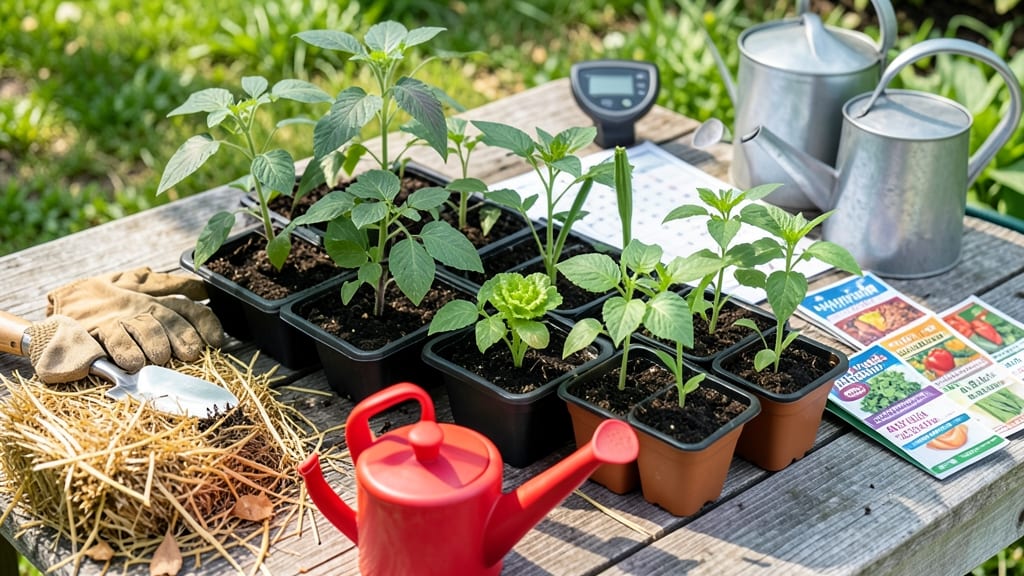
Planting a vegetable garden in Oklahoma means timing your crops to beat frost and heat—cool-season greens need to go in by early March, while tomatoes and peppers wait until after the last frost, usually mid-April.
Oklahoma’s unpredictable weather can make or break your vegetable garden 🌱—plant too early and risk frost damage, too late and miss peak harvests. Timing is everything for maximizing yields in the Sooner State.
Whether you’re in the cooler 6a-8a zones of northern Oklahoma or the warmer southern regions, knowing your last frost date and soil temperature is the key to a thriving garden. Some crops, like lettuce and spinach, thrive in cooler weather, while others, like squash and peppers, need the heat.
Below, I’ll break down the best planting windows by month, soil prep tips, and how to extend your growing season for earlier and later harvests—so you can enjoy fresh veggies from spring through fall.
Oklahoma’s frost-free dates & soil temperature zones for vegetable planting
Understanding Oklahoma’s frost-free dates and USDA hardiness zones is crucial for successful vegetable gardening. The Sooner State spans USDA Zones 6b through 8a, meaning northern regions like Enid (Zone 6b) face earlier frosts than southern areas like Tulsa (Zone 7b).
These differences dictate when to plant cool-season crops like lettuce versus warm-season crops like tomatoes.
Your planting timeline hinges on two key factors: soil temperature and average last frost dates. Cool-season vegetables thrive when soil temps reach 40–50°F, while warm-season crops need 60–70°F to germinate.
Oklahoma’s last spring frost typically occurs between March 15 (north) and April 15 (south), creating a 2–3 week window for regional adjustments.
Here’s how Oklahoma’s three main regions differ in planting windows:
For cool-season crops like lettuce, spinach, and peas, start seeds indoors 4–6 weeks before your region’s last frost date. Direct-sow hardy greens 2–4 weeks before the frost-free window. My northern Oklahoma garden thrives when I plant broccoli in early March—just as soil temps hit 45°F.
Warm-season vegetables—tomatoes, peppers, and squash—demand patience. Wait until soil temperatures consistently reach 60°F (use a soil thermometer to confirm). In Zone 6b, this typically means late April to early May, while Zone 8a gardeners can plant as early as March 30.
Always check Oklahoma State University’s frost maps for yearly updates.
Microclimates add complexity. Urban Tulsa may warm faster than rural Cushing, while elevated areas like Oklahoma City’s hills experience earlier frosts. To hedge your bets, use row covers for cool-season crops or black plastic mulch to warm soil faster for warm-season plants.
I’ve extended my tomato season by 2 weeks using black landscape fabric in early spring.
Soil temperature is just as critical as frost dates. Test your soil’s warmth with a soil thermometer—cool-season crops like carrots germinate best at 40–50°F, while warm-season crops like cucumbers need 70°F+.
My 2023 garden failed when I planted peppers in April—soil was only 55°F, delaying germination by 3 weeks.
Pro tip: Use Oklahoma’s 100-day rule for warm-season crops. If your last frost is April 1 and your tomato variety matures in 75 days, you’re safe planting by June 25.
For fall planting, count backward from your first frost date (usually November 15) to determine when to sow cool-season crops like kale or radishes.
Don’t overlook succession planting. In Oklahoma’s short growing season, plant lettuce every 2 weeks
Best vegetables to plant by month in Oklahoma (with frost risk alerts)
Oklahoma’s unpredictable spring frosts can turn a promising garden into a sad statistic if you’re not prepared. The key to success? Planting cool-season crops early and warm-season crops only after the last frost—typically mid-March in southern Oklahoma and late March to early April in northern regions.
Even then, late frosts in April can still catch gardeners off guard.
I’ve learned the hard way—my tomato seedlings once wilted overnight after a 28°F dip in early April. Since then, I’ve mastered a month-by-month planting schedule tailored to Oklahoma’s USDA Zones 6b–8a, balancing frost-sensitive melons and peppers with hardy spinach and kale. Here’s what works best each month:
- February: Start cool-season crops indoors—lettuce, spinach, and broccoli. Harden off seedlings by late month for early transplanting.
- March: Plant peas, onions, and potatoes outdoors. Wait until soil temps reach 50°F for carrots and beets.
- April: FROST ALERT! Wait until after April 15 for tomatoes, peppers, and eggplants. Succession plant radishes and bush beans every 2 weeks.
- May: Plant cucumbers, squash, and melons after soil warms to 60°F. Add trellises for vining crops to save space.
- June–August: Focus on heat-tolerant crops like okra, sweet potatoes, and Southern peas. Mulch heavily to retain moisture.
- September: Start fall greens (kale, collards) and turnips. Plant broccoli for late harvests.
- October: Extend season with cold frames for spinach and lettuce. Harvest warm-season crops before first frost (~Nov 15).
For succession planting, I swear by the "every 2-week rule" for bush beans, radishes, and lettuce. This ensures a steady harvest instead of one overwhelming bounty. In northern Oklahoma, add 2–3 weeks to these timelines—Zone 6b is far less forgiving than Zone 8a.
Don’t overlook microclimates—your backyard’s frost risk may differ from your neighbor’s. Low-lying areas freeze faster, while south-facing slopes warm up quicker. I’ve had tomatoes thrive in my raised beds weeks earlier than in-ground plantings due to better drainage and heat retention.
If you’re new to Oklahoma gardening, bookmark the Oklahoma State University Extension’s frost date maps. Their localized alerts saved my cucumber plants last year when a surprise frost hit in early May. With the right timing, you’ll go from frost casualties to bountiful harvests in no time.