Planting
Planting a vegetable garden in Seattle at the right time means the difference between a thriving harvest and a sad, wilted disappointment — and the window is narrow.
Seattle’s unpredictable weather can make or break your vegetable garden 🥬, but timing it right unlocks a bountiful garden year-round, from cool-season greens to summer tomatoes. The key? Knowing when to start seeds indoors, when to transplant, and how to work around those stubborn late frosts.
With USDA Zone 8a conditions, your planting calendar isn’t just about months—it’s about soil temperature, frost dates, and crop-specific needs. Skip the guesswork and learn the exact windows for spring, summer, and fall planting, plus how to stretch your growing season for extra harvests.
Inside, you’ll find a month-by-month breakdown of what to plant, when to avoid common mistakes, and how to keep your garden productive even when Seattle’s weather throws curveballs.
Seattle’s frost-free planting zones & key dates by season
Seattle’s USDA Zone 8a/8b offers a unique gardening challenge—mild winters and wet springs demand precise timing. The last frost date typically falls between April 15–May 15, while the first frost arrives October 15–November 15.
These dates define your frost-free growing season, which averages 165 days, perfect for both cool-season and warm-season crops.
Understanding these critical dates helps you avoid frost damage to tender plants like tomatoes and peppers. For example, planting warm-season crops too early risks cold snaps, while cool-season crops planted too late may bolt or flower prematurely.
Seattle’s maritime climate also means soil warms slowly, so always check soil temperatures before planting.
Here’s a quick breakdown of seasonal planting windows tailored to Seattle’s climate, including cool-season crops (like kale and carrots) and warm-season crops (like basil and zucchini). This table will help you plan your garden for maximum yield.
| Season | Planting Window | Key Crops | Avoid Planting | Notes |
|---|---|---|---|---|
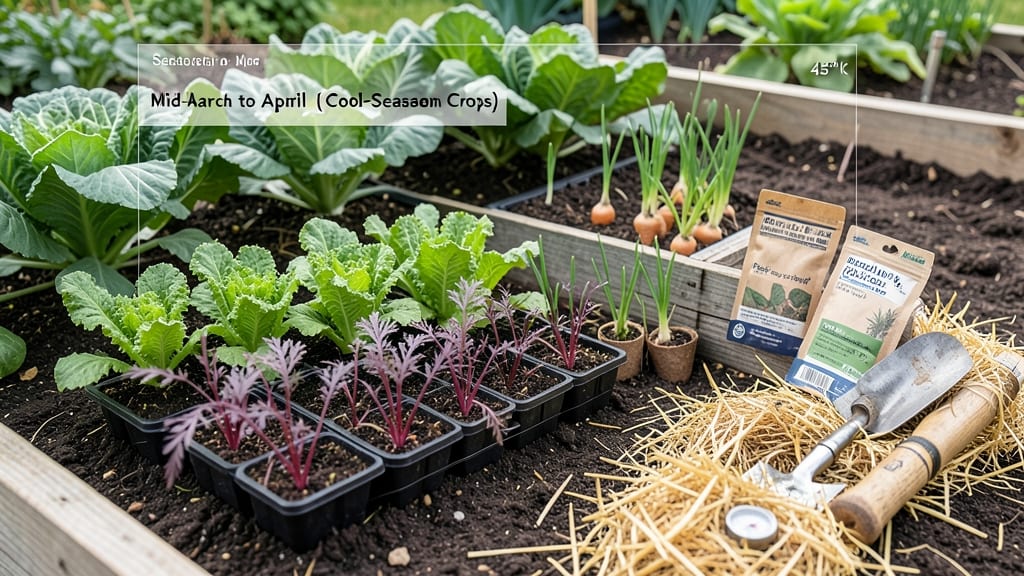
| Spring (Mar–May) | March 15–April 30 | Peas, Lettuce, Spinach, Carrots, Radishes | Tomatoes, Peppers, Basil | Start seeds indoors for warm-season crops in March. |
| Spring (May–Jun) | May 15–June 15 | Tomatoes, Peppers, Cucumbers, Zucchini, Beans | Lettuce, Spinach, Radishes | Wait until soil is 60°F+ and frost risk is gone. |
| Summer (Jul–Aug) | July 1–August 15 | Succession Plantings: Lettuce, Radishes, Bush Beans | None (harvest existing crops) | Use shade cloth for heat-sensitive crops. |
| Fall (Aug–Sep) | August 15–September 30 | Kale, Carrots, Broccoli, Brussels Sprouts, Peas | Tomatoes, Peppers, Basil | Plant 6–8 weeks before first frost for harvest. |
| Winter (Oct–Nov) | October 1–November 15 | Spinach, Kale, Garlic, Onions (overwintering) | Most annuals | Use row covers to extend harvest. |
For spring planting, I recommend starting with cool-season crops like lettuce and spinach in March, then transitioning to warm-season crops like tomatoes and peppers after the last frost date.
Seattle’s cool, damp springs can delay soil warming, so use a soil thermometer to confirm 50°F+ soil temps before planting warm-season crops.
In summer, focus on succession planting for fast-growing crops like radishes and bush beans every 2–3 weeks to maximize your harvest. Use drip irrigation to conserve water and prevent fungal diseases, which thrive in
Best vegetables to plant in Seattle by month (with growth timeline)
Seattle’s mild but unpredictable climate demands a strategic planting schedule to maximize your harvest. Unlike hotter climates, we can grow cool-season crops year-round with the right timing, while still enjoying summer favorites like tomatoes and peppers.
The key is understanding when to plant for spring harvests and fall succession—both critical for Seattle gardeners.
For spring planting, focus on fast-growing greens like lettuce and radishes in early March, while warm-season crops like tomatoes and peppers should wait until mid-May after the last frost.
Fall planting (August-September) lets you squeeze in another round of cool-hardy vegetables like kale and carrots before winter sets in.
🌱 Seattle Planting Timeline by Month
- March: Start cool-season crops like peas, spinach, and carrots. Soil temps should be 40-50°F for best germination.
- April: Plant lettuce, radishes, and kale. Harden off seedlings indoors for tomatoes and peppers (plant outdoors in May).
- May: Warm-season planting begins! Tomatoes, peppers, and beans go in after May 15 (last frost date). Succession-sow bush beans every 2 weeks.
- June-July: Harvest spring crops (lettuce, peas) and plant summer squash, cucumbers, and corn. Watch for powdery mildew in humid weather.
- August: Begin fall planting! Direct-sow broccoli, cabbage, and beets. Transplant kale and carrots for late-season harvests.
- September-October: Plant garlic and onions for next year. Extend season with row covers for spinach and arugula.
Seattle’s short growing season (about 165 frost-free days) means planning for succession planting is essential. For example, radishes mature in 25-30 days, so you can plant them every 2 weeks from March to September for continuous harvests.
Meanwhile, tomatoes and peppers need all summer to ripen, so start them indoors in March and transplant after the last frost.
Don’t overlook cold-hardy crops like kale, Swiss chard, and carrots, which thrive in Seattle’s cool, wet springs and falls. These can be planted as early as February (under protection) or as late as September for fall harvests.
Even in winter, garlic and onions can be planted in October for next year’s crop.
For warm-season lovers, focus on early-maturing varieties like ‘Stupice’ tomatoes (60 days) or ‘Early Girl’ peppers (55 days). Pair them with fast-growing companions like bush beans (50 days) to make the most of Seattle’s limited summer heat. Always mulch heavily to retain soil warmth and moisture.
Pro tip: Use row covers to extend the season by 2-4 weeks in both spring and fall. This simple trick can mean the difference between a bountiful harvest and a disappointing one in Seattle’s unpredictable climate. 🌿