
Planting
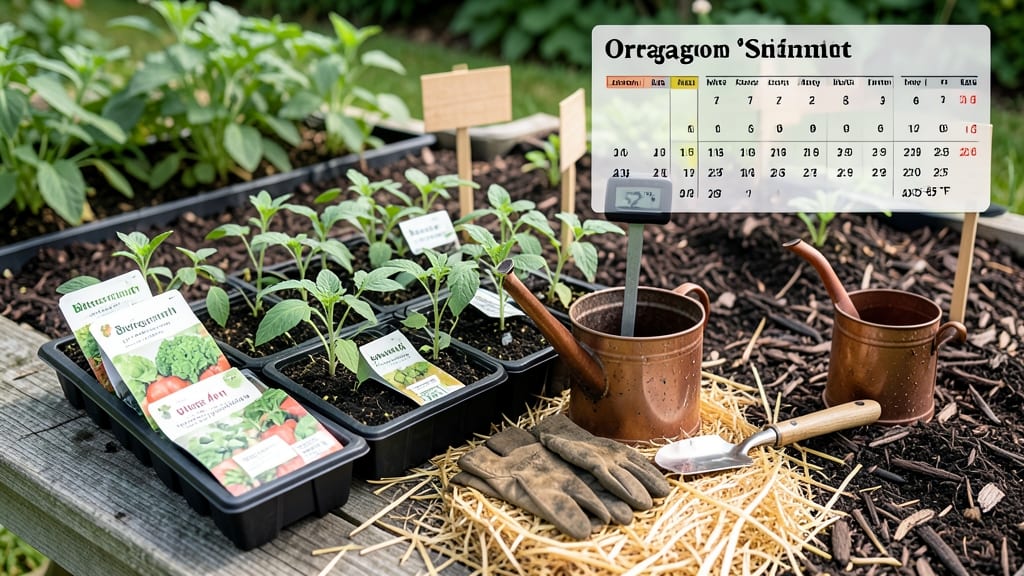
To plant a garden in Oregon, timing is everything—especially with three wildly different climates from coast to desert.
Picture this: coastal fog delays your peas until May, while high-desert onions go in by February. Get it wrong, and you’ll watch your tomatoes bolt before they ripen or your kale turn bitter in the heat.
Oregon’s USDA zones 7b-9a mean no one-size-fits-all rule, but the right schedule exists for your microclimate.
Below, I break down the exact months to plant everything from broccoli to basil, adjusted for Willamette Valley, coastal, and high-desert frost dates. Spoiler: your neighbors’ calendar won’t match yours—and that’s the key to a bountiful harvest.
You’ll learn how to stretch your growing season, protect late crops, and even cheat the system with soil-warming tricks. No more guessing: just data-driven planting that works for Oregon’s quirks.
Oregon planting calendar by elevation zone: coastal vs. Valley vs. high desert
Oregon’s three distinct climates—coastal, valley, and high desert—create planting windows that can differ by months. The Willamette Valley (Zone 8-9) enjoys mild winters, while the coastal zone (Zone 7-9) stays cooler longer, and the high desert (Zone 5-7) warms up faster in spring.
These differences mean your peas might go in March in the valley but not until May on the coast.
First, know your last frost dates: February 15 in the Willamette Valley, April 1 on the coast, and as late as May 1 in the high desert. These dates dictate when to plant cool-season crops like kale and when to hold off on warm-season crops like tomatoes.
I’ll break it down by zone so you can match your planting schedule to your microclimate.
Here’s the summary-table for Oregon’s three zones, showing ideal planting windows for key crops and frost-sensitive plants:
In the Willamette Valley, you can start cool-season crops like broccoli and carrots as early as February, while the coastal zone waits until April due to lingering fog. The high desert warms up fastest, so you can plant onions and garlic in February—months before coastal gardeners.
For warm-season crops, the high desert is your early bird: tomatoes and peppers can go in by March 15, while the coast waits until May 15. This is where row covers save the day—protecting coastal plants from late frosts so you can plant on schedule.
Fall planting follows the same logic: the high desert’s first frost hits by October 1, so you’ll finish spinach and lettuce by August 15. Meanwhile, coastal gardeners can squeeze in a late-season harvest until September 15.
Microclimates add another layer. A south-facing slope in the high desert might warm up 2 weeks earlier than a valley floor, while a shaded coastal garden could delay planting by 10 days.
Always scout your yard: if your spot gets morning sun but afternoon shade, adjust your schedule accordingly.
Pro tip: use soil thermometers to confirm readiness. Cool-season crops need soil temps below 60°F, while warm-season crops thrive above 65°F. In the high desert, soil warms faster—sometimes too fast—so mulch heavily to retain moisture for young plants.
Finally, don’t forget perennials. Lavender and rosemary love the high desert’s dry heat, while coastal rhododendrons thrive in the Willamette Valley’s humidity. Plant them in early spring (March-April) to give roots time to establish before summer stress hits.
With these zone-specific windows, you’ll avoid the heartbreak of frost-nipped tomatoes or bolting lettuce. Now grab your calendar—and your row covers—and let’s get planting!
Best crops to plant in Oregon by season (with exact months)
Oregon’s three distinct climates—coastal, valley, and high desert—mean your planting schedule can’t be one-size-fits-all. While Willamette Valley gardeners might start tomatoes in May, high-desert growers plant theirs by April 15 to avoid summer heat.
Even cool-season crops like kale and peas need staggered timing depending on your frost dates.
Below, I’ve mapped out the exact months to plant Oregon’s top crops, adjusted for elevation. These aren’t just guesses—they’re based on local frost data, soil temperatures, and what actually thrives in Oregon’s USDA zones 5-9. Pro tip: use row covers to extend seasons if your zone runs cooler.
🌱 Oregon Planting Timeline by Crop & Zone
- 🌱 Cool-Season Crops (Peas, Kale, Spinach, Carrots)
📍 Coastal: Start February 15 (indoors) or March 1 (outdoors).
📍 Valley: March 15 (outdoors) or February 1 (indoors).
📍 High Desert: February 1 (outdoors) or January 15 (indoors).
Harvest: April–October (stagger plantings). - ☀️ Warm-Season Crops (Tomatoes, Basil, Peppers, Cucumbers)
📍 Coastal: May 15 (after last frost).
📍 Valley: April 15 (soil at 55°F+).
📍 High Desert: March 15 (to avoid heat stress).
Harvest: July–September. - 🌿 Year-Round Options (Spinach, Lettuce, Carrots, Radishes)
📍 All Zones: Plant every 3 weeks from February to September for continuous harvests.
Tip: Use shade cloth in summer to prevent bolting. - 🌼 Flowers & Herbs (Basil, Marigolds, Nasturtiums)
📍 Coastal/Valley: April 1 (herbs) or May 1 (flowers).
📍 High Desert: March 1 (herbs) or April 15 (flowers).
Harvest: June–October (herbs); July–Frost (flowers). - 🍅 Extend Your Season with Succession Planting
Plant bush beans every 2 weeks from May–July for fall harvests.
Fall crops: Direct-seed kale and spinach by August 1 for winter harvests.
For high-desert gardeners, start warm-season crops earlier—by March 15—to avoid the 90°F+ summers that stress tomatoes and peppers. Meanwhile, coastal growers should wait until May 15 to plant heat-lovers, as fog delays soil warming.
Don’t overlook fall planting: Oregon’s mild winters let you grow garlic (plant October 1), onions (September 1), and winter lettuce (August 15). These crops thrive in cool weather and often outperform spring plantings.
Pro move: keep a planting journal to track your local microclimate. Note when your soil hits 55°F (warm-season trigger) or when frost hits (cool-season cue). Over time, you’ll refine these dates to perfect your Oregon harvest schedule. 🌱