Tools
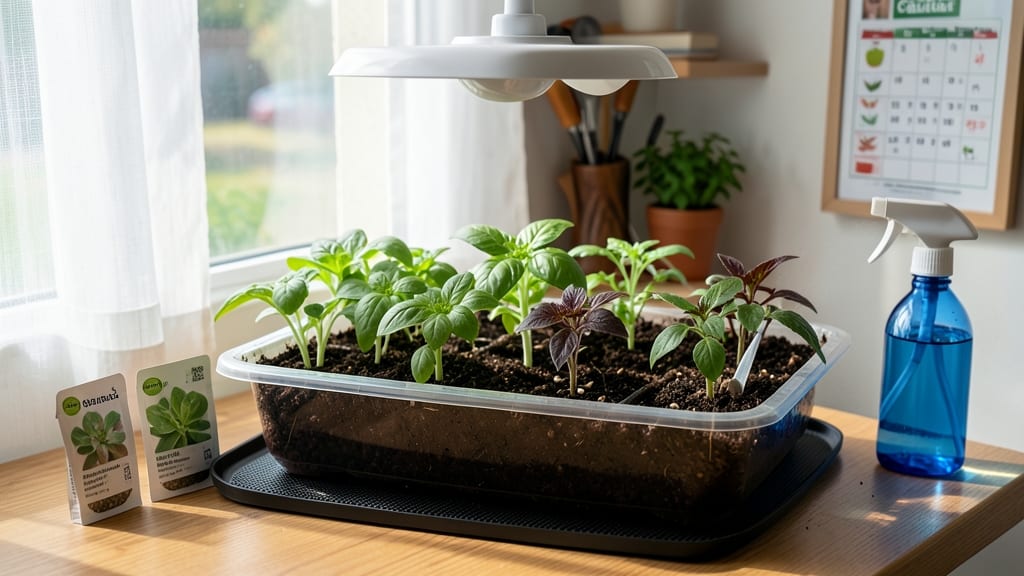
Starting garden seeds at the right time means the difference between a bountiful harvest and a wasted effort—especially in Zone 6a where frost lingers until mid-April.
Picture this: you’ve got trays of 🌱 General Garden Seeds sprouting under your grow lights, only to realize they’re too leggy by the time outdoor soil warms up. Or worse, you miss the window and end up with bolting greens or stunted tomatoes.
The key is matching your crop’s maturity days to your last frost date, then adjusting for whether you’re growing fast lettuce or slow-blooming broccoli. I’ll walk you through the exact 6-8 week rule for indoor starts, plus how to tweak it for early harvests or succession planting.
By the end, you’ll have a foolproof timeline for everything from herbs in January to tomatoes in March, with no more guesswork—and no more sad, half-grown seedlings staring at you from the windowsill.
How to calculate indoor seed starting dates by maturity days
Calculating when to start garden seeds indoors isn’t guesswork—it’s a precise science based on your last frost date, a plant’s days to maturity, and its seedling growth rate.
This formula ensures your seedlings are ready to transplant at the perfect time, avoiding both wasted space and missed harvests. Whether you’re growing tomatoes, basil, or marigolds, the same principles apply.
First, find your average last frost date for your USDA hardiness zone. For example, in Zone 6a, the last frost typically falls around April 15. Then, subtract the number of weeks until maturity for your chosen plant.
Most seed packets list days to maturity, so divide that number by 7 to convert to weeks. For a 60-day tomato, that’s roughly 8.5 weeks—so you’d start seeds around February 1 to transplant by April 15.
But here’s the catch: seedlings need time to grow strong before transplanting. A general rule is to start seeds 4-6 weeks before transplanting, depending on the plant’s growth speed.
Fast growers like radishes (30 days to maturity) only need 3-4 weeks indoors, while slower growers like broccoli (80 days) require 6-8 weeks of indoor nurturing. Adjust this window based on your growing conditions—cooler homes may need an earlier start.
Don’t forget to account for light exposure and temperature. Seedlings need 12-16 hours of light daily, so supplement with grow lights if your windows aren’t sunny enough.
A heat mat can speed up germination for cold-sensitive seeds like peppers, while slower growers like carrots thrive in cooler temps. Balance these factors to fine-tune your starting date.
Here’s a quick formula to calculate your ideal indoor start date: Last Frost Date – Days to Maturity ÷ 7 = Weeks Before Transplant Then subtract 4-6 weeks for seedling growth time.
For example: April 15 (last frost) – 70 days (lettuce) = 10 weeks → Start seeds by February 1.
| Plant Type | Days to Maturity | Weeks to Start Indoors | Example Start Date (Zone 6a) | Notes |
|---|---|---|---|---|
| Fast Growers (Leafy Greens) | 30-45 days | 3-4 weeks | Mid-February to early March | Radishes, lettuce, spinach |
| Medium Growers (Vegetables) | 50-70 days | 5-6 weeks | Early to mid-February | Tomatoes, peppers, basil |
| Long-Season Crops | 80-120 days | 7-9 weeks | Late January to early February | Broccoli, cabbage, onions |
| Flowers & Herbs | 45-90 days | 4-7 weeks | Late January to March | Marigolds, snapdragons, cilantro |
For succession planting, repeat your indoor starts every 2-3 weeks for crops like lettuce or bush beans. This ensures a continuous harvest instead of one big yield.
For example, if your first batch of lettuce is ready by May 1, start a second batch in early March and a third in late March to keep the harvest going through June.
Adjust your timing for early harvests or fall planting. To harvest tomatoes in June (before the usual July-August window), start seeds in January instead of February. For fall crops, use your first frost date (typically October 15 in Zone 6a) and work backward.
Fast growers like radishes can be started in August for a fall harvest.
Pro tip: Use a seed starting journal to track your successes and failures. Note which plants thrive with early starts, which need more light, and how your local climate affects germination.
Over time, you’ll refine your schedule to match your unique growing conditions—whether that means starting peppers a week earlier or delaying cucumbers until soil warms.
Remember, light, temperature, and space are your allies. A sunny windowsill or grow light can shave weeks off seedling time, while a heat mat speeds up germination.
Rotate trays daily for even growth, and thin seedlings to avoid overcrowding. With this formula, you’ll never again wonder, “Did I start these seeds too early?” 🌱
Best indoor seed starting times for common vegetables (grouped by days to maturity)
Knowing when to start garden seeds indoors depends on two key factors: your last frost date and the days to maturity for each plant. Fast growers like radishes need early starts, while tomatoes and peppers require more time.
Adjust these timelines if you're aiming for summer harvests or fall crops—just subtract 8-10 weeks from your first frost date instead.
For Zone 6a gardeners (like me!), I use April 15 as my last frost date. But if you're in a warmer zone, shift your starts 2-4 weeks earlier. Cold-hardy greens like spinach can handle cooler temps, while cucumbers and squash need warmth—so their starts come later.
Let's dive into the exact indoor seed starting windows for your garden staples.
- Fast Growers (30-45 days): Start 4-6 weeks before last frost (e.g., radishes, lettuce, bush beans). Example: March 1-15 for Zone 6a.
- Medium-Term Crops (45-60 days): Begin 6-8 weeks before last frost (e.g., kale, swiss chard, carrots). Example: February 25 - March 10.
- Long-Season Plants (60-90+ days): Start 8-12 weeks before last frost (e.g., tomatoes, peppers, broccoli). Example: February 1-15 for tomatoes.
- Heat Lovers (60-90 days): Delay starts until 4-6 weeks before last frost (e.g., cucumbers, eggplant, squash). Example: March 15-30.
- Succession Planting: Sow every 2 weeks for continuous harvests (e.g., baby lettuce, radishes, green onions).
For early harvests, I like to start tomatoes and peppers in February—even if they need 12 weeks indoors—because they’re worth the extra time. These heat-loving plants won’t tolerate frost, so I harden them off 2 weeks before transplanting to toughen their skins.
If you’re aiming for a fall harvest, shift your starts 2-3 weeks later to avoid bolting.
Cold-hardy greens like spinach and kale can handle cooler soil temps, so I often direct-sow them 2-3 weeks before last frost. But for broccoli and cabbage, I start seeds 8 weeks before last frost indoors—these long-season crops need time to bulk up before cooler weather sets in.
I’ve found that succession planting every 2 weeks keeps my garden productive all season.
Don’t forget to label your seed trays with start dates and plant names—trust me, you’ll thank yourself later when seedlings pop up in mysterious clusters! If you’re new to seed starting, begin with easy crops like basil, radishes, or lettuce to build confidence.
Once you’ve mastered the basics, experiment with longer-season plants like eggplant or peppers.
Adjust these timelines based on your local frost dates—check the USDA Plant Hardiness Zone Map if you’re unsure. And remember: light, temperature, and humidity all play a role in germination speed. Keep your seedlings warm (65-75°F) and well-lit for the best results. Happy growing! 🌱