
Fertilization
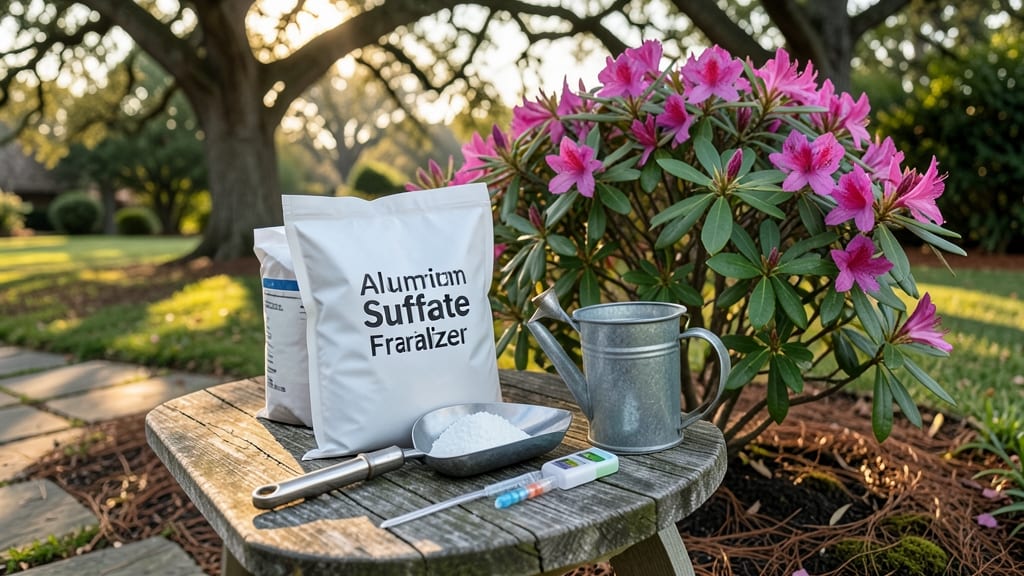
Using aluminum sulfate in gardening effectively lowers soil pH for acid-loving plants like azaleas and blueberries. Apply 5–10 pounds per 100 square feet for sandy soil or 10–20 pounds for clay, following soil test results. Reapply annually if needed, avoiding overuse near sensitive plants or water sources.
Aluminum sulfate works by dissolving in water and releasing hydrogen ions, which gradually acidify the soil over time.
This makes it one of the most reliable soil acidifiers for plants that thrive in pH levels below 6.0, like blueberries or gardenias. 🌿 Unlike sulfur, which takes months to work, aluminum sulfate provides faster results—often within a few weeks—while also supplying a small amount of aluminum, which some acid-loving plants need for optimal growth.
For best results, I recommend applying it in early spring or fall when soil is moist but not saturated. Always perform a soil test first to determine your exact pH needs—this prevents over-acidification, which can harm beneficial microbes and nearby plants.
Store the product in a dry place, and wear gloves when handling to avoid skin irritation.
💡 In This Article
- How Aluminum Sulfate Adjusts Soil pH for Acid-Loving Plants
- Step-by-Step Application Guide for Different Soil Types
How aluminum sulfate adjusts soil pH for acid-loving plants
Aluminum sulfate works through a chemical reaction called hydrolysis, where its molecules break down in water to release hydrogen ions (H+) and aluminum ions (Al3+).
These hydrogen ions combine with hydroxide ions (OH-) in the soil, forming water and reducing the soil's pH. This process is faster than organic acidifiers like peat moss because aluminum sulfate dissolves quickly, providing immediate hydrogen ions to lower pH within 4-6 weeks rather than months.
For example, a 1-pound application per 100 square feet can drop soil pH by about 0.5-1.0 units, depending on your soil type.
The aluminum ions also play a crucial role by displacing other cations like calcium and magnesium from soil particles, which further enhances acidification. This dual-action mechanism makes aluminum sulfate 2-3 times more effective per pound than elemental sulfur for rapid pH adjustment.
However, the aluminum can be toxic in high concentrations, which is why precise application rates are critical—especially for plants like blueberries that need pH 4.5-5.0 but can't tolerate excess aluminum in their root zone.
What sets aluminum sulfate apart from other acidifiers is its solubility and speed. Unlike sulfur, which requires microbial oxidation to form sulfuric acid (a slow process), aluminum sulfate's immediate dissolution means you see visible pH changes within weeks.
This makes it ideal for emergency corrections, like when hydrangeas fail to bloom due to high pH. Just be aware that the effect is temporary—soil naturally buffers against acidification, so you'll need to reapply annually or as needed based on your plants' requirements.
For comparison, peat moss lowers pH organically but at a glacial pace (months to years) and lacks the immediate hydrogen ion release. Elemental sulfur is slower than aluminum sulfate but safer for long-term use, as it doesn't introduce potentially harmful aluminum.
The choice depends on your urgency: aluminum sulfate for quick fixes, sulfur for gradual, low-maintenance acidification. Always test your soil first—most garden centers offer $10-$15 test kits that include pH strips and instructions.
One visual clue that aluminum sulfate is working is the soil's texture.
After application, you might notice a slight graininess as the sulfate crystals dissolve, followed by improved moisture retention—a sign the soil structure is adjusting to the new pH. Overwatering after application can wash away the product, so keep soil evenly moist but not soggy for the first 24-48 hours after spreading.
This ensures the hydrogen ions have time to react with the soil's buffering capacity before leaching occurs.
For plants like rhododendrons or azaleas, which require pH 4.5-5.5, aluminum sulfate is often the go-to because it delivers results without the lag time of organic methods. Just remember: the deeper the soil, the more you'll need to apply.
A 6-inch-deep root zone in clay soil may require 15-20 pounds per 100 square feet, while sandy soil's loose structure means 5-10 pounds will suffice. The key is patience—don't expect instant transformation, but you should see color changes in acid-loving plants within 6-8 weeks of proper application.