
Vegetables
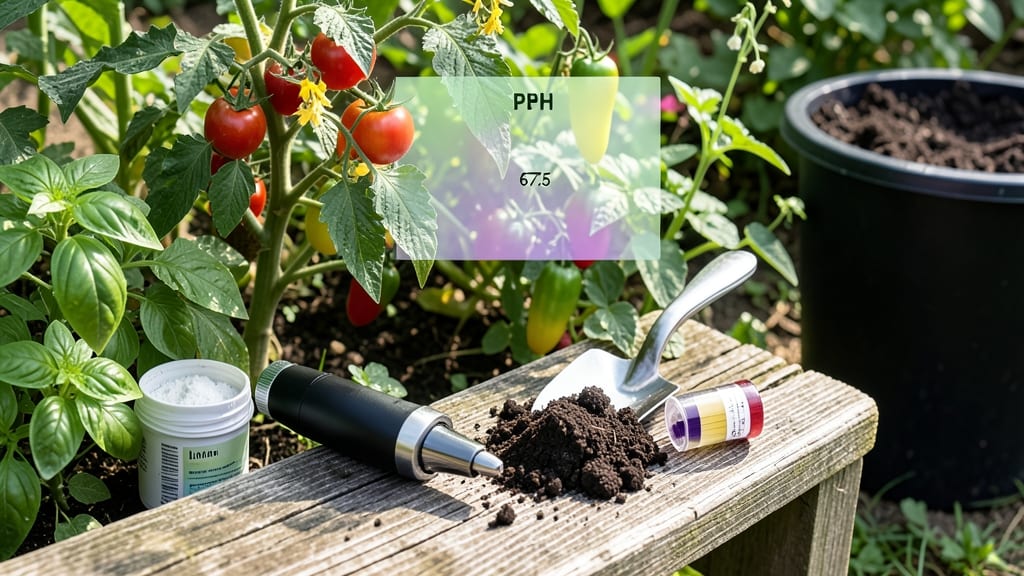
The best pH for a vegetable garden ranges between 6.0 and 7.0, with most plants thriving in slightly acidic to neutral soil. Leafy greens prefer 6.0-7.0, while tomatoes and blueberries need 6.0-6.8 and 4.5-5.5, respectively. Testing and adjusting soil pH ensures optimal nutrient uptake and plant health.
Soil pH directly impacts which nutrients your plants can access—too acidic or alkaline, and essential minerals like nitrogen or phosphorus become locked away. 🌱 For example, tomatoes struggle below 6.0 because manganese toxicity blocks iron uptake, while blueberries demand lower pH (4.5-5.5) to prevent aluminum buildup.
Most home gardeners find their soil naturally falls between 6.0-7.0, but testing with a simple kit reveals hidden imbalances that explain stunted growth or yellowing leaves.
Adjusting pH is easier than you think: add crushed limestone to raise pH or elemental sulfur to lower it, working amendments into the top 6 inches of soil.
I recommend testing every 2-3 years or when you notice plants wilting despite proper watering—this helps catch slow shifts before they affect harvests.
💡 In This Article
- How Soil pH Affects Nutrient Availability for Vegetables
- Step-by-Step Guide to Testing and Adjusting Garden Soil pH
How soil pH affects nutrient availability for vegetables
Soil pH isn't just a number—it's the chemical key that unlocks or locks away essential nutrients for your plants. When pH strays from a vegetable's ideal range, nutrient solubility shifts dramatically.
For instance, phosphorus becomes available to plants at pH 6.0-7.0, but drops to just 10% availability at pH 5.0 or 7.5.
This explains why tomatoes with pH 5.5 soil show stunted growth despite plenty of fertilizer—their roots can't access enough phosphorus for root development. 🌱 The same principle applies to nitrogen: at pH 8.0, only 1% of soil nitrogen is plant-accessible, while pH 6.5 makes 90% available.
Micronutrient availability follows even stricter pH rules. Iron, crucial for chlorophyll production, becomes locked up in alkaline soils (pH 7.5+) where it forms insoluble iron oxides. That's why leafy greens like spinach turn yellow between veins in high-pH soils—iron deficiency despite iron being present.
Conversely, manganese toxicity occurs in acidic soils (pH 5.5), causing brown spots on tomato leaves. The root zone chemistry becomes a balancing act where even 0.5 pH unit shifts can trigger deficiencies or toxicities.
This nutrient availability isn't just theoretical—it directly impacts plant health you can see. I've noticed that peppers grown in pH 6.5 soil develop vibrant green leaves and robust stems, while identical plants in pH 8.0 soil show pale leaves and weak stems despite identical watering and sunlight.
The difference? Calcium availability drops from 80% at pH 6.5 to just 10% at pH 8.0, weakening cell walls. The same calcium deficiency causes blossom-end rot in tomatoes—a classic sign of pH-induced nutrient imbalance.
What makes this particularly tricky is how different nutrients respond to pH changes. Potassium, for example, remains relatively stable across pH 5.0-7.0, while zinc becomes scarce in both acidic (pH 5.0) and alkaline (pH 8.0) conditions.
This is why soil test reports show multiple nutrient recommendations—each with its own pH sensitivity profile. The interplay between these factors means adjusting pH isn't just about raising or lowering numbers; it's about creating the precise chemical environment where all essential nutrients dissolve and become plant-available simultaneously.
Here's what happens when you get it wrong: In my own garden, I once had a patch of broccoli with pH 7.5 soil where plants developed purple stems—a classic boron deficiency symptom. The soil had plenty of boron, but at that pH, it became unavailable.
Adding sulfur to lower pH by 0.5 units transformed the plants within weeks, as boron finally became accessible. This real-world example shows how pH adjustments can turn struggling plants into thriving crops overnight.
Understanding these mechanisms helps explain why some plants thrive together while others don't. Blueberries, for example, demand pH 4.5-5.5 to prevent aluminum toxicity, while most vegetables prefer 6.0-7.0. This is why blueberry bushes make poor neighbors for tomatoes—their ideal growing conditions are chemically opposite.
The soil chemistry becomes a puzzle where each plant has specific pH requirements that determine whether nutrients will be available when and where they're needed.
The key takeaway is that soil pH isn't just about acidity or alkalinity—it's the master control for nutrient availability in your garden. When pH is optimal, plants access the perfect balance of macronutrients and micronutrients they need to grow strong and produce abundantly.
When it's off, even the most fertile soil becomes a nutrient desert. 💫