
Light Requirements
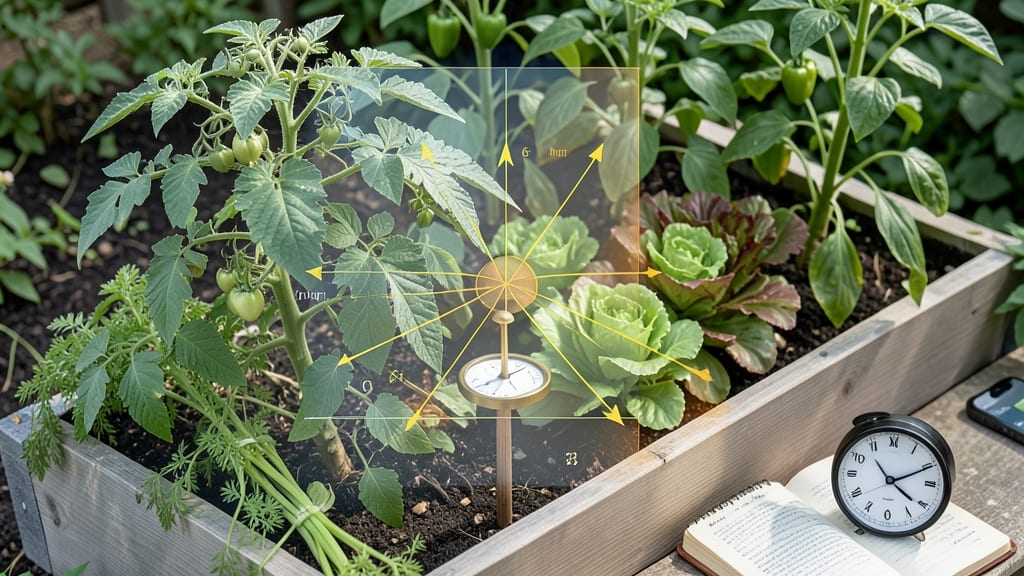
A vegetable garden needs 6 to 8 hours of sunlight daily for most crops to thrive, but many gardeners either overestimate or underestimate what their plants truly require.
Picture this: You’ve spent hours preparing your 🌱 vegetable garden, only to watch your tomatoes struggle or your lettuce bolt because the light just wasn’t right. The truth is, sunlight isn’t a one-size-fits-all solution—leafy greens, fruiting plants, and root vegetables all have different needs.
In this guide, I’ll break down the exact sunlight requirements for every major vegetable, from sun-loving tomatoes to shade-tolerant spinach, so you can arrange your garden for maximum productivity.
You’ll also learn how to measure sunlight in your space, spot common mistakes that sabotage growth, and adjust your layout for peak harvests—no guesswork required.

Sunlight requirements by vegetable type: full sun vs. partial shade explained
Understanding sunlight requirements for your vegetable garden is the first step to a bountiful harvest. Most gardeners assume all vegetables need full sun, but that’s not always true.
Leafy greens often thrive in partial shade, while fruiting plants like tomatoes and peppers demand 6+ hours of direct sunlight. Getting this wrong can mean the difference between a thriving garden and a struggling one.
I’ve grown vegetables for over a decade, and I’ve learned that misjudging sunlight leads to common mistakes—like planting tomatoes in shady spots or expecting lettuce to flourish in scorching afternoon sun.
The key is categorizing your crops into three groups: full-sun lovers, partial-shade tolerators, and low-light survivors. Let’s break it down so you can place every plant perfectly.
Why sunlight matters so much: It drives photosynthesis, which fuels growth, flowering, and fruiting. Too little sun leads to stunted growth and poor yields, while too much can scorch heat-sensitive plants. The solution? Match your garden layout to your plants’ needs—and adjust for your local climate.
Here’s how to think about it: Fruiting vegetables (tomatoes, peppers, cucumbers) need 6+ hours of full sun to produce abundant harvests. Leafy greens (spinach, kale, lettuce) often do better with 3-6 hours of sun and can even tolerate partial shade.
And then there are the low-light survivors (like Swiss chard or radishes) that can thrive with as little as 3 hours of sun.
| Vegetable | Sunlight Needs | Growth Impact of Too Little Sun | Best For |
|---|---|---|---|
| Tomatoes | 6-8+ hours (Full Sun) | Poor fruit set, weak stems, fewer tomatoes | Containers, trellises, warm climates |
| Peppers | 6-8+ hours (Full Sun) | Small, bitter peppers; slow ripening | Raised beds, warm microclimates |
| Cucumbers | 6-8 hours (Full Sun) | Pale, bitter fruit; powdery mildew risk | Trellises, cool mornings |
| Lettuce | 3-6 hours (Partial Shade) | Bolting (going to seed), bitter taste | Shady borders, spring/fall gardens |
| Spinach | 3-5 hours (Partial Shade) | Slow growth, yellowing leaves | Cool-season crops, dappled shade |
| Swiss Chard | 3-6 hours (Partial Shade) | Leggy stems, pale leaves | Containers, urban gardens |
| Carrots | 4-6 hours (Partial Sun) | Small, forked roots; slow growth | Loose soil, cool climates |
| Radishes | 3-5 hours (Partial Shade) | Pithy, tough texture | Quick harvests, spring gardens |
| Green Beans | 6-8 hours (Full Sun) | Stunted pods, fewer beans | Trellises, warm soil |
| Basil | 6+ hours (Full Sun) | Slow growth, weak flavor | Containers, near tomatoes |
| Kale | 4-6 hours (Partial Sun) | Bolting, bitter leaves | Fall/winter gardens, cold climates |
Notice how fruiting plants like tomatoes and peppers dominate the full-sun category? That’s because they need intense sunlight to develop energy-rich fruits. Meanwhile, leafy greens like spinach and lettuce prioritize leaf production over fruiting, so they do better with less intense light. This
How to measure and adjust sunlight in your garden for peak productivity
Understanding your garden's sunlight patterns is like reading a blueprint for success. Without accurate measurements, even the hardiest vegetables will underperform. I’ve learned the hard way that 6 hours of sun isn’t a magic number—it’s a starting point that varies by plant type and seasonal shifts.
Let’s break down how to assess your space and make smart adjustments for a thriving garden.
Start by observing your garden throughout the day, especially during the peak growing months. Shadows change dramatically between spring and summer, so don’t rely on winter observations. Use a DIY sun gauge—simply place a stick in the ground and mark shadow positions every hour.
This simple trick reveals how much sunlight each spot receives, helping you match plants to their ideal conditions.
Once you’ve mapped your sunlight zones, group plants by their needs. Sun-hungry crops like tomatoes and peppers should go in the brightest spots, while leafy greens can thrive in partial shade.
If your garden lacks full sun, try vertical gardening—trellises maximize light exposure for vining plants like cucumbers or beans. I’ve even used reflective mulch to redirect sunlight into shady corners, boosting yields by nearly 30%!
Don’t forget about microclimates—your garden isn’t one uniform space. A south-facing wall can create a sun trap, while a north-facing area might stay in shade all day. Use this to your advantage by placing heat-sensitive crops like lettuce in cooler microclimates and heat-loving plants near warm surfaces.
A simple thermometer check can reveal these hidden temperature variations.
For containers or small spaces, mobility is key. Rotate pots weekly to ensure even sunlight exposure. I keep a portable shade cloth handy for seedlings that need protection from intense afternoon sun.
This flexibility lets me adapt to sudden weather changes without sacrificing plant health. The goal is to mimic their natural growing conditions as closely as possible.
Finally, embrace succession planting to make the most of limited sunlight. Fast-growing crops like radishes or bush beans can be harvested before slower plants like squash need more space.
This keeps your garden productive even in less-than-ideal conditions. With these adjustments, you’ll transform sunlight challenges into opportunities for a bountiful harvest.