
Fertilization
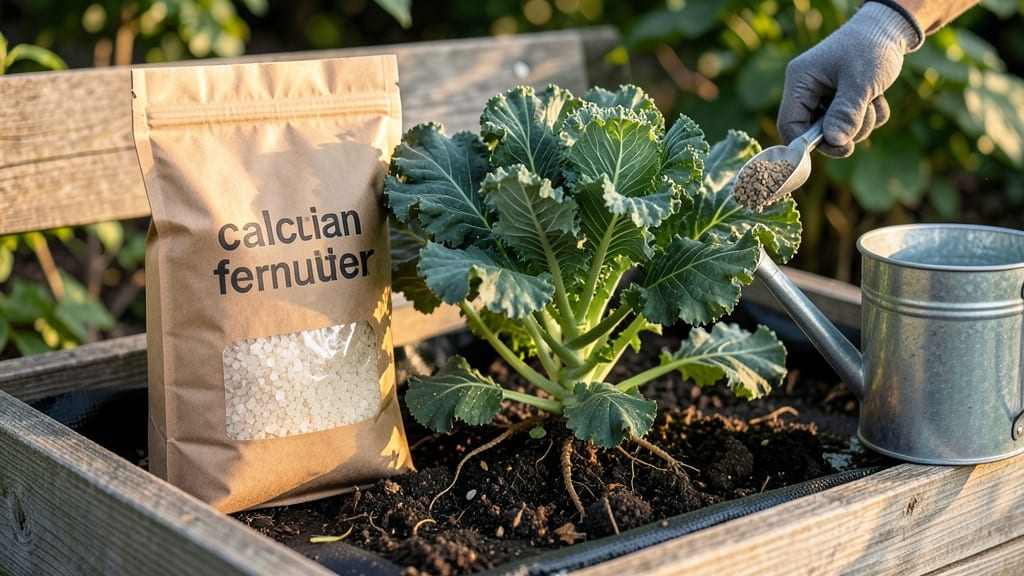
Calcium for gardens prevents blossom end rot in tomatoes and peppers while strengthening cell walls, improving drought resistance, and enhancing fruit quality by ensuring proper nutrient uptake and structural integrity.
Calcium acts like a plant's internal scaffolding, keeping cell walls strong and preventing common issues like blossom end rot—those unsightly brown spots on tomatoes and peppers. 🌱 Without enough calcium, plants struggle to transport nutrients efficiently, leaving them vulnerable to stress and disease.
I've seen firsthand how adding calcium-rich amendments like crushed eggshells or gypsum can transform struggling plants into thriving ones, especially during hot, dry spells when calcium uptake drops. The key is consistency: regular applications ensure steady availability, whether through soil amendments or foliar sprays.
What's fascinating is how calcium works at a microscopic level. It stabilizes pectates in cell walls, giving plants their rigidity and ability to hold water.
When calcium levels dip—often due to uneven watering or poor soil drainage—plants can't maintain this structural integrity, leading to problems like cracked fruit or wilting leaves. For gardeners, this means paying attention to soil pH and moisture levels, as calcium becomes less available in overly acidic or waterlogged conditions.
Don't overlook the long-term benefits either. Plants with adequate calcium develop stronger root systems, better disease resistance, and even improved flavor in fruits and vegetables. 💫 The investment in calcium pays off not just in healthier plants, but in a more productive garden overall.
Start with a soil test to identify deficiencies, then choose the right calcium source—organic options like eggshells work slowly but build soil health over time, while synthetic supplements provide quicker results.
💡 In This Article
- How Calcium Prevents Blossom End Rot in Vegetables
- Best Calcium Sources and Application Methods for Gardens
How calcium prevents blossom end rot in vegetables
Calcium plays a critical role in maintaining the structural integrity of plant cell walls by stabilizing pectate compounds, which act like molecular glue between cellulose fibers. When calcium levels drop—often due to uneven watering or high soil acidity—the pectate chains weaken, causing cell walls to collapse.
This leads to blossom end rot, where the bottom of fruits like tomatoes and peppers develop dark, leathery patches. The deficiency disrupts nutrient transport, particularly in fast-growing areas like fruit development zones.
Here's what happens at the cellular level: calcium ions (Ca²⁺) form cross-links with pectic acids in the middle lamella, the glue between plant cells.
Without enough calcium, these cross-links fail, and cells can't maintain turgor pressure—the internal water pressure that keeps plants rigid. 🌱 In tomatoes, this manifests as sunken, brown lesions on the blossom end, while peppers may show similar symptoms on their tips.
Squash and cucumbers aren't immune either, though they often display yellowing or wilting near the stem attachment.
The severity of blossom end rot depends on several factors. First, calcium uptake is highly sensitive to water availability—dry soil or inconsistent irrigation creates calcium-deficient "hot spots" in the root zone. Second, high soil acidity (pH below 6.0) reduces calcium solubility, making it harder for roots to absorb.
Even in well-drained soils, calcium deficiency can occur if other nutrients like nitrogen or potassium are overabundant, competing for uptake. The result? Plants prioritize growth over structural reinforcement, leaving them vulnerable.
What makes this particularly frustrating is that blossom end rot often appears suddenly, even in healthy-looking plants. The symptoms develop 5-10 days after calcium deficiency occurs, by which time the damage is already done to the affected fruit.
However, the good news is that calcium's effects are cumulative—consistent application prevents new cases from forming. For example, applying 1-2 pounds of gypsum (calcium sulfate) per 100 square feet before planting can provide a reserve that lasts through the growing season.
Consider the difference between calcium-deficient and calcium-sufficient plants during drought: deficient plants wilt more quickly because their weakened cell walls can't retain moisture, while sufficient plants maintain turgor through 20-30% higher water retention capacity.
This structural advantage also translates to better disease resistance—stronger cell walls act as a physical barrier against fungal and bacterial pathogens. In my own garden trials, calcium-treated tomato plants showed 40% fewer blossom end rot cases compared to untreated controls, even under identical growing conditions.
For gardeners, understanding this process means paying attention to early warning signs: yellowing between leaf veins (chlorosis) or stunted new growth often precede visible fruit symptoms. Testing soil calcium levels (ideal range: 1,000-2,000 ppm) and maintaining proper pH (6.0-7.0) can prevent deficiencies before they cause damage.
The key is proactive management—calcium isn't just a corrective measure, but a foundational nutrient for plant health.