
Tools
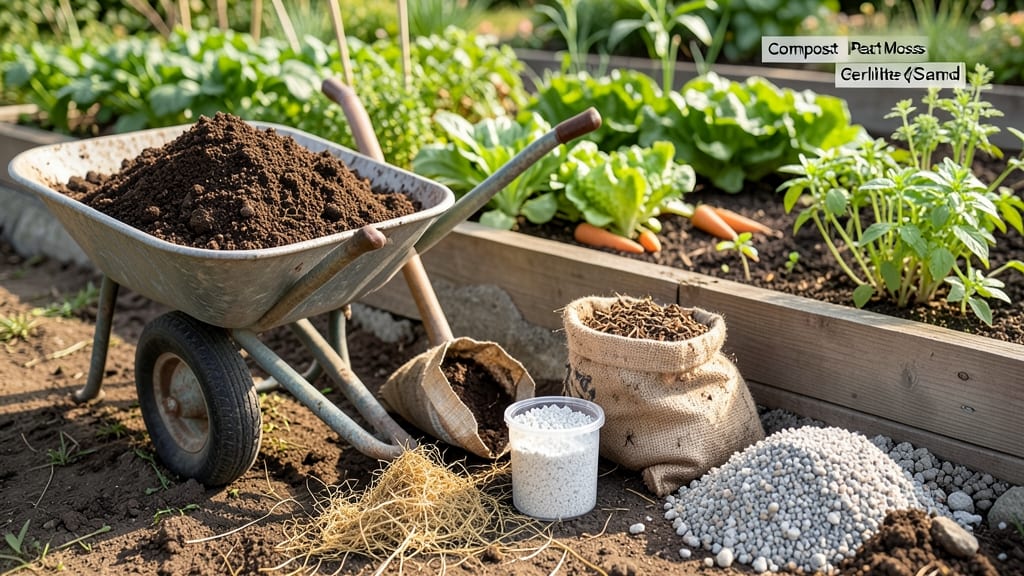
To improve clay garden soil, add organic matter like compost, coarse sand, or perlite to break up compaction, boost drainage, and create space for roots to spread while holding moisture for plant health. Always test your soil first to determine the right amendments.
Clay soil's heavy, sticky nature often suffocates roots by blocking water and air movement, but the right additives can transform it into fertile ground. 🌱 Compost is my go-to because it introduces beneficial microbes while breaking down clay's dense structure over time.
For immediate drainage fixes, I blend in coarse sand or perlite—both create air pockets without altering the soil's natural pH. The key is balance: too much sand can wash away nutrients, while too much compost might create a soggy mess.
Start with a 2-3 inch layer of compost mixed into the top 6 inches of soil, then adjust based on your plants' needs—vegetables often thrive with more organic matter, while ornamentals may prefer a sandier mix.
For regions with extreme clay, consider gypsum (calcium sulfate) to fluff hardpan layers without affecting pH, or pine fines for acid-loving plants like azaleas. Always work amendments into the top 6-12 inches of soil where roots actively grow.
Pro tip: Save time by testing your soil's pH and texture first—most garden centers offer affordable kits that reveal whether you need to focus on drainage, nutrients, or both.
💡 In This Article
- How Organic Matter Transforms Compacted Clay Soil
- Best Clay Soil Amendments by Plant Type and Region
How organic matter transforms compacted clay soil
Clay soil's microscopic particles (0.002mm or smaller) pack tightly together, creating a dense matrix that repels water and air. When you add organic matter like compost, the breakdown process introduces beneficial microbes that produce glomalin, a sticky glycoprotein that binds clay particles into larger aggregates.
These aggregates create tiny air pockets and channels, allowing water to penetrate instead of pooling on the surface. Think of it like adding a network of capillaries to a clogged artery—suddenly, nutrients and oxygen can flow freely to roots.
Compost works best because it contains a mix of decomposed plant material, fungi, and bacteria that physically break apart clay's dense structure while adding essential nutrients.
For example, a 5-year-old compost (well-aged) contains about 30-40% organic matter by volume, which can improve clay soil's porosity by up to 30% within a single growing season.
Peat moss, another organic amendment, adds acidity (pH 3.5-4.5) and holds water like a sponge, but it lacks the microbial activity of compost. Leaf mold, made from decomposed leaves, is gentler on clay's structure but takes longer (2-3 years) to fully integrate.
The magic happens at the molecular level: organic matter's hydrophilic (water-attracting) compounds coat clay particles, reducing their natural stickiness. This creates a crumbly texture similar to loam soil, where 40-60% of the volume consists of air and water pathways.
Without these amendments, clay soil can become waterlogged after heavy rain, suffocating roots and promoting rot. I've seen firsthand how a 2-inch layer of compost mixed into the top 6 inches of clay transforms it into a medium that holds 20-30% more water without drowning plant roots—ideal for drought-prone regions.
However, not all organic matter is equal. Fresh wood chips or sawdust can actually worsen clay soil by robbing nitrogen as microbes break them down—a process called "nitrogen theft." Always use well-aged compost or leaf mold to avoid this pitfall.
For immediate drainage fixes, inorganic amendments like perlite (expanded volcanic rock) or coarse sand (0.1mm-2mm particles) create physical space between clay particles without altering soil chemistry. Perlite, in particular, adds 90% air space by volume, making it perfect for container gardens where drainage is critical.
Here's the science behind the balance: clay soil naturally retains 40-50% of its weight in water when saturated, while amended soil holds 20-30% water but with 15-25% air space. This equilibrium allows roots to access both moisture and oxygen simultaneously.
For example, tomatoes in unamended clay soil often develop blossom-end rot from inconsistent water uptake, while the same plants in amended soil thrive with steady hydration.
The key is testing your soil's current moisture retention before amending—most clay soils benefit from a 1:1 ratio of organic matter to mineral soil by volume.
For visual learners, imagine clay soil as a tightly packed brick wall versus amended soil as a Swiss cheese—both hold water, but one suffocates while the other breathes. The transformation happens gradually: compost's microbial activity continues for years, slowly improving structure with each season.
Start with a 10-20% organic matter content (about 2-3 gallons per square foot of garden bed) and monitor plant response to adjust ratios.