
Diseases
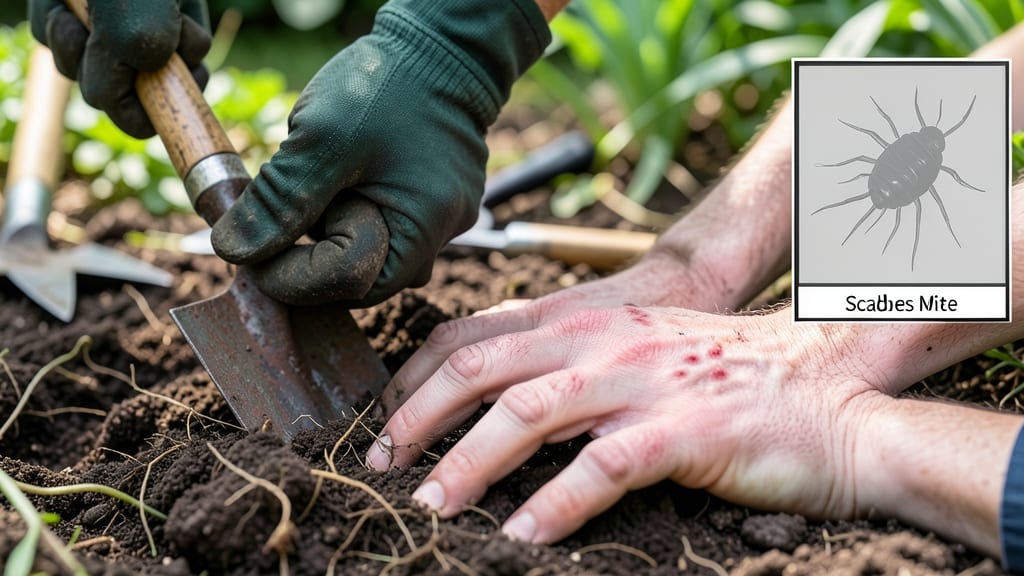
You can get scabies from gardening only if you directly touch infected human skin, since scabies mites cannot live long in soil or on plants. The real risk comes from shared gardening tools, contaminated clothing, or failing to wash hands after contact with infested skin.
Scabies mites require human skin to survive—they can't thrive in soil or on plants, so gardening itself isn't the main concern. 🔥 The danger lies in indirect transmission through shared equipment or touching contaminated surfaces before washing your hands.
I've seen cases where gardeners shared gloves or tools without proper cleaning, leading to outbreaks. Always wash hands thoroughly with soap and water after gardening, especially if you've handled shared items or worked near others.
Remember that scabies spreads through prolonged skin-to-skin contact, not through casual exposure. The mites can't jump or fly—they need direct contact to transfer. This means gardening alone won't put you at risk unless you're handling equipment or clothing that someone with scabies has touched.
💡 In This Article
- How Scabies Mites Spread in Gardening Environments
- Preventing Scabies While Gardening: Best Practices
How scabies mites spread in gardening environments
Scabies mites, scientifically known as Sarcoptes scabiei, are parasitic arachnids that require human skin to survive. These microscopic creatures burrow into the outer layer of skin, creating tunnels where they lay eggs and thrive.
The key factor is their inability to survive more than 24-36 hours outside the human body—soil, plants, or gardening tools alone won't transmit scabies. 🔥 The real risk occurs when mites are transferred from infected skin to shared surfaces or tools, then to another person's skin.
Gardening tools like pruners, trowels, or gloves become high-risk items when contaminated with skin flakes containing mites.
Studies show that mites can remain viable on inanimate objects for up to 72 hours under ideal conditions (warmth and humidity), which is why shared equipment in community gardens poses a greater threat than plants themselves.
Even seemingly clean tools can harbor mites if someone with scabies handled them previously and didn't disinfect properly.
The transmission process involves three critical steps: contact with contaminated objects, transfer to skin, and successful burrowing. For example, if you use a trowel that someone with scabies touched, then scratch your arm afterward without washing, you could unknowingly introduce mites.
The mites need 15-20 minutes of skin contact to establish an infestation—so brief exposure (like touching a plant) won't transmit scabies, but prolonged contact with shared tools might.
Interestingly, scabies mites can't survive in soil because the environment lacks the necessary moisture and temperature stability they require.
Soil temperatures fluctuate dramatically, and the lack of organic nutrients makes it an inhospitable environment. 🌱 This is why gardening activities like planting or weeding pose minimal risk unless you're handling equipment or clothing that's been contaminated through human contact.
What most people don't realize is that scabies spreads more efficiently in warm, humid conditions—ideal for gardening seasons. During spring and summer, mites can survive slightly longer on tools or fabrics, increasing transmission risks.
This is why community gardens with shared equipment often see scabies outbreaks during peak gardening months, even when individual hygiene practices are good.
Here's what actually happens when mites transfer: they first attach to the skin's surface, then use their front legs to burrow into the epidermis. The female mite creates a tunnel where she lays 2-3 eggs per day, which hatch in 3-4 days.
Without immediate removal, these tunnels cause intense itching and inflammation—explaining why scabies symptoms often appear 4-6 weeks after initial exposure (or sooner if you've had scabies before).