
Pests
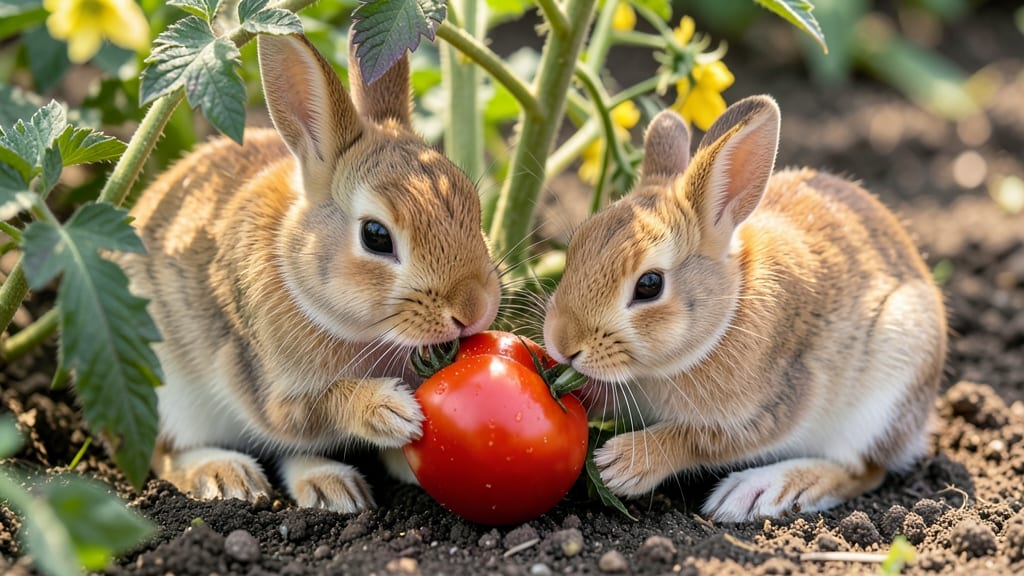
Rabbits will eat tomatoes in the garden, but only the fully ripe, red fruit is safe in small amounts. The stems, leaves, and green parts contain dangerous solanine levels, while ripe tomatoes make an occasional treat when served fresh and seedless.
Rabbits naturally forage in gardens, and while they'll nibble on ripe tomatoes, the real risk comes from the plant's toxic components. 🌱 The solanine in green parts can cause digestive upset or worse, so always remove any tomato plants from rabbit-reachable areas.
I've seen gardeners accidentally poison their rabbits by leaving vines within hopping distance—even a small bite of leaf can be dangerous. For safe feeding, stick to 1-2 small slices of ripe tomato as an occasional snack, never as a staple food.
When offering tomatoes, remove all stems and leaves first—even a tiny green piece can contaminate the whole serving. 💛 Wash the fruit thoroughly to remove any pesticide residue, then cut into bite-sized pieces for easy consumption.
Many rabbit owners also offer tomato-based treats like small amounts of tomato paste (no added salt) as an alternative, but always monitor your rabbit's reaction to new foods.
💡 In This Article
- Toxic Components in Tomatoes for Rabbits
- Safe Ways to Feed Tomatoes to Garden Rabbits
Toxic components in tomatoes for rabbits
The danger for rabbits lies in solanine, a glycoalkaloid naturally produced by tomato plants as a defense mechanism against herbivores. This compound concentrates most heavily in the green parts—stems, leaves, and unripe fruit—where it can reach levels of 30-50 mg per 100 grams of plant material.
For comparison, a single bite of tomato leaf containing just 0.5 mg of solanine per gram could cause mild digestive upset in a 4-pound rabbit, while higher doses may trigger neurological symptoms like tremors or lethargy.
What makes this particularly insidious is how solanine works in the rabbit's system.
Once ingested, it binds to acetylcholine receptors in the nervous system, disrupting muscle control and gastrointestinal motility. 🌿 The plant's green tissues contain 3-5 times more solanine than ripe red fruit, which typically contains negligible amounts (0.01 mg per 100 grams).
Even the tomato's skin has 10-20 times less solanine than the leaves, making it one of the safer parts when fully ripe. The ripening process actually breaks down solanine compounds through enzymatic activity, which is why gardeners often see rabbits cautiously approach only the red fruit.
Scientific studies on plant toxicity reveal another critical factor: the solanine concentration varies dramatically by tomato variety. Wild tomato species (like Solanum pennellii) contain up to 100 mg per 100 grams in their leaves, while commercial varieties average 10-30 mg.
This explains why heirloom tomatoes might pose slightly higher risks than hybrid varieties, even when fully ripe. The key takeaway is that while ripe tomatoes are generally safe, the plant's green components represent a genuine toxicity hazard that requires complete removal before offering any tomato-based treats.
Visual identification becomes crucial in garden settings. The calyx (the green stem attachment at the blossom end) often remains on homegrown tomatoes and contains concentrated solanine. 🔍 Always inspect each piece before serving—even a 1-inch stem fragment could contaminate an entire serving.
The contrast between safe red fruit and dangerous green parts is visually striking: ripe tomatoes develop 90% less solanine than their green counterparts, making color your primary safety indicator when feeding garden produce to rabbits.
Understanding this chemical process helps explain why rabbits exhibit such cautious behavior around tomato plants. In the wild, they've learned through instinct to avoid bitter-tasting green parts while being more inclined toward sweet, ripe fruits.
This natural wariness serves as a protective mechanism against solanine poisoning—a lesson gardeners can apply when deciding which parts of the tomato plant to offer as treats.