Picking
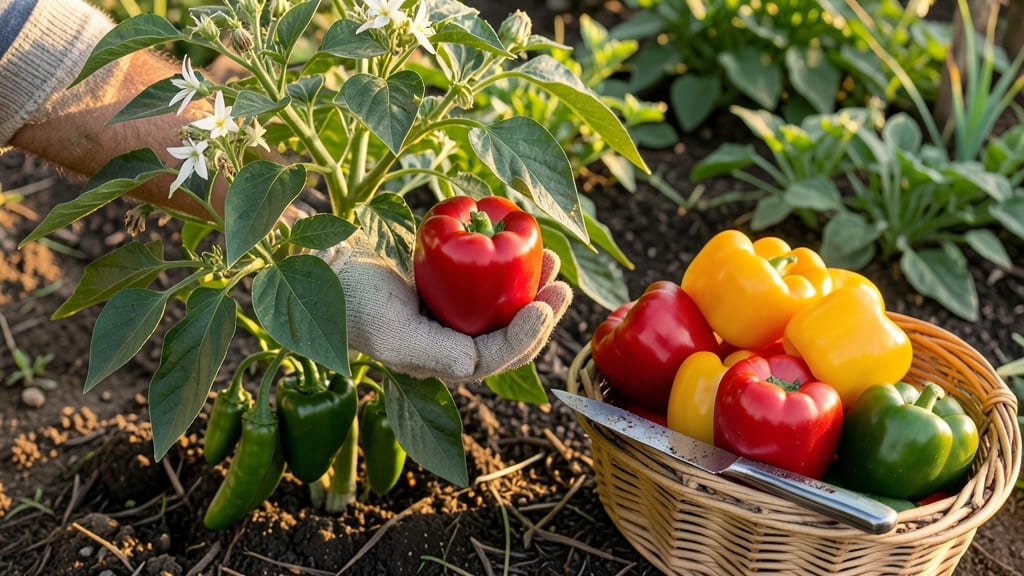
To pick bell peppers from your garden at the perfect moment means catching them when they’re sweetest, firmest, and most flavorful—but timing is everything, and one wrong move can turn a crisp, vibrant pepper into a mealy disappointment.
Picture this: you’ve nurtured your 🌶️ bell peppers all season, watching them swell from tiny buds to glossy, full-sized beauties. But how do you know exactly when to pluck them? The answer isn’t just about color—it’s about size, texture, and even the subtle shift in the stem’s grip.
Miss these cues, and you might end up with peppers that are tough, bitter, or worse, falling victim to pests before they ripen.
In this guide, I’ll break down the color-coded ripeness chart that tells you when each pepper—green, red, yellow, or orange—is truly ready. You’ll also learn how climate, variety, and even your growing zone can shift the ideal harvest window.
Plus, I’ll share pro tips to keep your plants producing long after the first frost, so you can stretch that harvest season like never before.
Ready to go from guessing to perfectly timed harvests? Let’s dive into the signs, tools, and tricks that’ll turn your garden into a pepper-picking powerhouse.
Bell pepper ripeness by color: the definitive guide to perfect harvest timing
Bell peppers change color as they ripen, and each stage offers unique flavors and textures. Green peppers are harvested early, while red, yellow, and orange varieties develop sweeter, richer flavors when fully mature. Understanding these color cues helps you pick peppers at their peak—whether for fresh eating or storage.
Climate plays a huge role in ripening speed. Warmer zones (8-11) often see peppers fully color up by late summer, while cooler zones (3-7) may struggle to ripen beyond green. Varieties like 'California Wonder' ripen faster than 'NuMex Sandia', so knowing your plant’s traits is key.
The science behind color changes involves carotenoid pigments (reds, oranges) and chlorophyll breakdown (greens). When peppers ripen, sugars increase, making them sweeter. But wait too long, and they’ll toughen or split—so timing is everything!
Here’s a quick reference for when to pick based on color, including ideal harvest windows and flavor profiles:
| Color | Days to Ripen | Best Harvest Time | Flavor Profile | Climate Notes |
|---|---|---|---|---|
| Green | 60-70 days | Firm, glossy, 3-5" long | Mild, crisp, less sweet | Harvest anytime; best in cool climates |
| Yellow | 75-85 days | Fully yellow, firm skin | Sweet, fruity, slightly tangy | Needs warm days (75°F+) |
| Orange | 80-90 days | Deep orange, glossy | Balanced sweetness, earthy | Thrives in heat (80°F+) |
| Red | 90+ days | Deep red, firm, glossy | Sweetest, richest flavor | Needs long, hot summers |
For green peppers, pick when they reach 3-5 inches long and feel firm to the touch. These are often harvested before full ripening for commercial use, but home gardeners can leave them longer for sweeter results.
Yellow and orange peppers take longer to ripen, so patience pays off. Wait until the color is even and deep—no green patches near the stem. These varieties often ripen in late summer when daytime temps stay above 75°F.
Red peppers are the sweetest but require the most time—sometimes 90+ days to fully ripen. If your climate cools before they color, consider greenhouse growing or harvesting early for storage. Overripe red peppers lose flavor and texture quickly.
Pro tip: Check stems daily in late summer. A pepper ready to pick will have a dry, brown stem that snaps easily when twisted. This signals peak ripeness—don’t wait for perfect color if your season is ending!
Climate affects ripening speed dramatically. In Zone 10, peppers may ripen by July, while Zone 5 gardeners might only see green peppers. If you’re in a cooler zone, opt for early-maturing varieties like 'Sweet Banana' or use row covers to extend the season.
Remember: Regular harvesting encourages more peppers to form. If you miss the window, overripe peppers can split or develop tough skin. Store unripe peppers in a cool, dark place to slow ripening and extend their shelf life.
🌶️
5 Key signs your bell peppers are ready to pick (even if they aren’t fully colored)
Don’t let color confusion fool you—bell peppers can be ready to harvest long before they reach their final hue. Many gardeners wait too long, sacrificing flavor and texture, while others pick too soon, leaving sweetness on the vine.
The truth? Firmness, size, and stem separation often reveal readiness better than color alone.
I’ve harvested hundreds of peppers over the years, and I’ve learned that green peppers (like ‘Green Bell’ varieties) can be just as delicious when picked at peak firmness as their red counterparts. The key is paying attention to physical cues rather than relying solely on pigment changes.
- 📏 Size Matters: Peppers should reach 3-5 inches long (varies by variety). Measure with your thumb—if it’s bigger than your palm, it’s likely ready.
- 🤏 Firm to the Touch: Gently squeeze the pepper—it should feel firm like a stress ball, not soft or spongy. Overripe peppers collapse under pressure.
- 🌱 Stem Separation: The stem should detach easily when you twist it slightly. If it resists, wait 1-2 days. If it pulls away with a clean snap, it’s harvest time.
- 🌶️ Flavor Test: Cut open a pepper—thick walls and juicy flesh mean it’s ready. Thin walls or watery centers signal overripeness.
- 🌡️ Temperature Cues: In cooler climates (Zones 3-5), peppers may never turn red but still ripen fully. Prioritize size and firmness over color in short seasons.
One common mistake I see is waiting for full color in varieties like ‘California Wonder’, which can take weeks longer to ripen. If your peppers are firm, glossy, and sized correctly, they’re ready—even if they’re still green. Green bell peppers are often sweeter when harvested at peak firmness.
On the flip side, overripe peppers develop wrinkled skin, dull color, and hollow centers. These peppers lose flavor and texture quickly, so don’t wait too long. If you’re unsure, pick a few early—you can always leave the rest on the plant for another day.
Pro tip: Harvest in the morning when peppers are cool and crisp. Use clean pruning shears or your hands to avoid damaging the plant. And remember—regular harvesting encourages more production, so don’t skip this step, even if your peppers aren’t fully colored yet!