
Watering
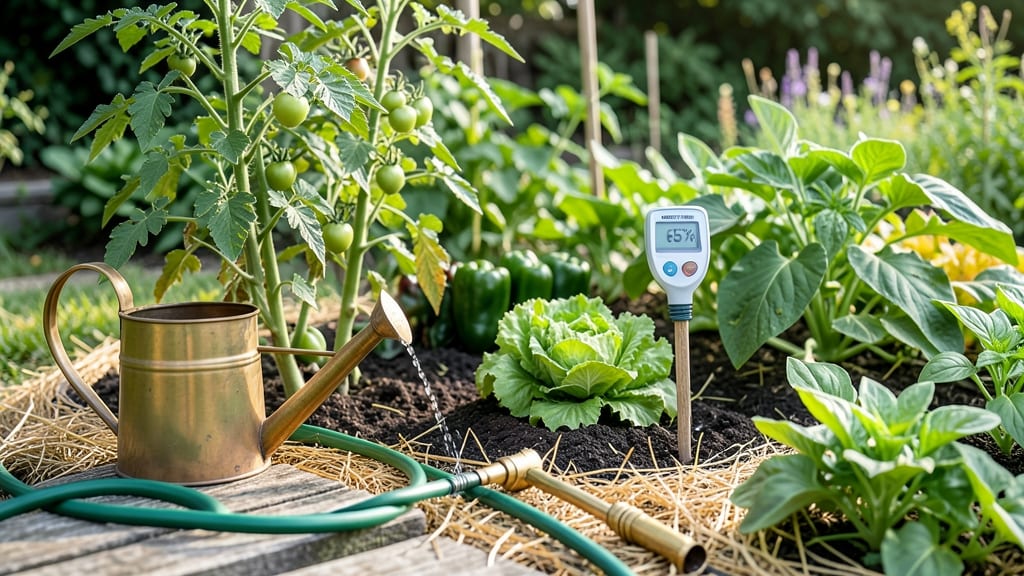
You should water your veggie garden 🥬 based on soil moisture—not a calendar—because guessing leads to wasted water or dead plants.
Overwatering kills plants just as fast as underwatering, yet most gardeners stick to rigid schedules instead of checking what’s really happening below the surface. The secret? A simple soil-moisture test that tells you exactly when your vegetables need water.
This isn’t about memorizing rules—it’s about reading your soil. In Zone 6a, where spring planting kicks off in April, the right balance means deeper roots, fewer weeds, and crops that thrive without your constant attention.
Below, I’ll show you three foolproof ways to test soil moisture, adjust for heat waves or drought, and water with confidence—no more soggy soil or wilting leaves.
How to test soil moisture for perfect veggie garden watering
Guessing when to water your vegetable garden leads to wasted water, stressed plants, and poor yields. Instead, I rely on soil-moisture science to determine the exact moment my veggies need hydration. The key? Testing root zone moisture—not just the surface—because that’s where your plants are really drinking.
Most gardeners make two critical mistakes: watering on a fixed schedule (like every Tuesday) or only checking the top inch of soil. Both approaches miss the mark because water needs vary by plant type, soil type, and weather.
For example, tomatoes need deep, infrequent watering, while lettuce prefers consistent shallow moisture. Let’s fix that.
The good news? You don’t need expensive tools to master this. I’ll show you three science-backed methods—the finger test, moisture meter, and weight analysis—plus how to adjust for soil depth and plant maturity. No more guesswork, just thriving veggies.
Let’s start with the finger test, my go-to method for quick checks. After watering, wait 24 hours, then push your finger 1-2 inches deep into the soil.
If it feels dry, it’s time to water. For deep-rooted plants like peppers or squash, test 3-4 inches down—their roots go much deeper than shallow greens.
For a more precise approach, invest in a moisture meter (they’re affordable and game-changers). These tools give you a digital readout of soil moisture levels, often with color-coded zones for "dry," "ideal," and "soggy."
I use mine every Monday and Thursday to track trends in my garden’s moisture needs. Pro tip: Calibrate it to your soil type—clay holds moisture longer than sandy soil.
If you’re growing in containers, the weight test is foolproof. Lift your pot—dry soil feels light, while moist soil feels heavier. This method works especially well for herbs like basil or tomatoes in pots, where overwatering is a common pitfall.
Aim to water when the pot feels 20-30% lighter than when it was last watered.
Here’s where most gardeners go wrong: they water based on time of day or calendar days instead of soil conditions. For example, drought conditions might mean watering every 2 days, while cool, rainy weather could stretch that to 5-7 days.
Always check the root zone—not the surface—before deciding.
Adjust your watering based on plant maturity. Seedlings need frequent, light watering to keep their delicate roots moist, while mature plants thrive with deep, infrequent watering.
For instance, my carrots get a slow drip irrigation for the first 3 weeks, then I switch to deep soakings every 5 days once they’re established.
Remember, overwatering is just as deadly as underwatering. Look for signs like yellowing leaves, mushy stems, or fungal growth—these mean you’re drowning your plants. If your soil feels clumpy and cold, it’s too wet. Let it dry out before watering again.
To save time, I mulch heavily around my veggies with straw or wood chips. This keeps moisture consistent at the root level and reduces evaporation. Pair mulch with drip irrigation for the most efficient watering system. Now you’ve got the science—and the tools—to water your garden like a pro.
Watering frequency guide by vegetable type and climate zone
Your veggie garden thrives on precision—not guesswork. Different plants need unique watering schedules, and your climate zone or soil type can double the frequency. For example, leafy greens like spinach need consistent moisture, while root crops like carrots prefer drier conditions.
Let’s break it down by plant type and adjust for your local conditions.
Start with your USDA climate zone. Zones 7-10 (hotter climates) may need daily watering in summer, while zones 3-6 (cooler) can stretch watering to every 3-5 days. Then factor in soil type: sandy soil drains fast (water more often), while clay holds moisture (water less frequently).
This guide simplifies the science so you can water with confidence.
📌 Pro Tip: Always water deeply—aim for 1-2 inches per week—to encourage deep root growth. Shallow watering stresses plants and attracts pests. Use a rain gauge or tuna can (marked with measurements) to track your watering amounts accurately.
Drought conditions? Reduce frequency by 30-50% and water only in early morning to prevent evaporation. For example, if your tomatoes normally need water every 2 days in zone 7, stretch it to every 3-4 days during a drought.
Always check the top 1-2 inches of soil—if it’s dry, it’s time to water.
Mulching is your secret weapon. A 2-3 inch layer of straw or wood chips retains moisture, reducing watering needs by 20-30%. Apply mulch after plants are established (about 2-3 weeks post-transplant) to avoid disturbing young roots.
Pair this with drip irrigation for precision, especially in sandy soils where water drains too quickly.
Watch for wilting leaves or yellowing—these are your plant’s SOS signals. Overwatering (soggy soil, mold) is just as deadly as underwatering. Adjust your schedule seasonally: spring and fall need less water than peak summer.
With these adjustments, your veggie garden will stay lush, productive, and pest-resistant all season. 🌱