Watering
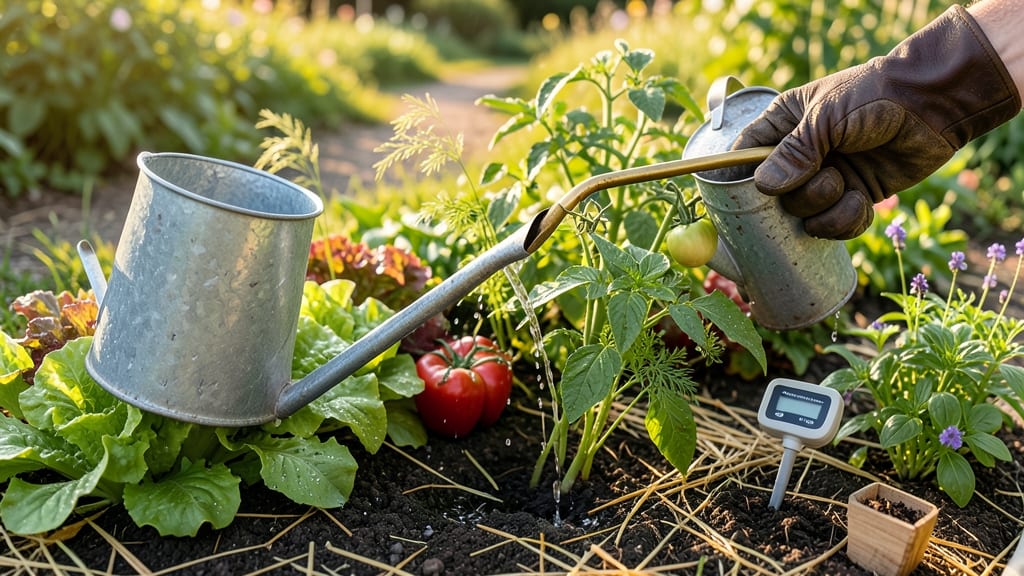
To water a vegetable garden properly, aim for deep soaks 1-2 times per week—but that’s just the starting point. Too little water stunts growth, while too much drowns roots and invites disease. The real secret lies in reading your soil and adjusting for heatwaves or rainy spells.
Picture this: your 🥬 garden thriving in Zone 6a’s spring warmth, only to wilt under a sudden 90°F heatwave. Without tweaking your schedule, you’re either drowning roots or watching leaves crisp at the edges.
The fix? Check soil moisture daily with your finger—if the top inch feels dry, it’s time to water.
Not all veggies drink the same. Leafy greens like spinach need frequent, shallow moisture, while root crops such as carrots prefer deep but infrequent watering. Below, I’ll break down the exact schedule for your top crops, plus how to spot when you’re over- or under-watering before it’s too late.
You’ll leave here with a customized watering plan that saves time, cuts waste, and keeps your harvest bountiful—no guesswork required. Let’s get started.
Watering frequency by vegetable type: a science-backed schedule
Every vegetable in your garden has unique hydration needs—tomatoes crave deep soaks, while leafy greens prefer consistent moisture, and root crops like carrots need even dampness to prevent splitting. Understanding these differences prevents both underwatered stress and overwatered rot.
The key is matching your watering routine to each plant’s growth stage and soil type, while watching for visual cues like wilting or yellowing leaves.
For most vegetables, the golden rule is 1-2 inches of water per week, delivered either through rainfall or irrigation. However, this changes dramatically during peak summer heat or when your garden soil is sandy vs. clay-heavy.
For example, peppers and eggplants thrive with daily watering in hot climates, while onions and garlic prefer shallow, frequent moisture to encourage bulb formation. Let’s break down the science-backed schedule for your most common crops.
Tomatoes are the poster children for deep watering—1-1.5 inches per week is ideal, especially during fruiting. Shallow watering leads to blossom end rot, a common (and preventable) issue caused by calcium uptake problems. I’ve found that drip irrigation placed at the base of the plant mimics natural rainfall, keeping roots consistently moist without wetting leaves—critical to avoid fungal diseases like early blight.
Peppers and eggplants, on the other hand, despise soggy soil but thrive with daily watering in summer. Their broad leaves transpire quickly, so morning watering is non-negotiable—it reduces evaporation and gives foliage time to dry before evening humidity sets in. A quick check: If the top inch of soil feels dry, it’s time to water. For leafy greens like lettuce and spinach, overwatering is just as damaging as underwatering. These plants prefer shallow, frequent moisture to stay crisp, but waterlogged soil causes them to bolt prematurely or develop slimy, diseased leaves.
Root vegetables like carrots and radishes need a different approach—consistent, even moisture prevents splitting and deformities. The soil should never dry out completely, but it also shouldn’t be muddy. A 1-inch watering every 2-3 days works well, but sandy soils may require daily checks in hot weather. Pro tip: Use a soil moisture meter to avoid guesswork, especially for radishes, which can become pithy and woody if stressed.
Cucumbers and zucchini are heavy drinkers, thanks to their vining growth habit and large leaves. They need at least 1-2 inches of water per week, delivered every 1-2 days during peak growth. Underwatering leads to bitter fruit and poor yields, while overwatering invites powdery mildew. To strike the balance, I mulch heavily around these plants—straw or shredded leaves retain moisture and suppress weeds, reducing the need for frequent watering.
One of the biggest mistakes I see in home gardens? Ignoring the soil’s thirst signals. Before reaching for the hose, stick your finger 1-2 inches into the soil. If it’s dry, water deeply. If it’s still damp, wait another day.
This simple habit saves time, water, and plant stress. For container-grown veggies, the rule changes—small pots dry out faster, so check daily in summer. A self-watering pot can be a game-changer for busy gardeners.
Seasonal adjustments are key too. In spring and fall, most vegetables need watering every 2-3 days, while summer heat may demand daily deep watering. Even winter crops like kale
Adjusting your watering plan for weather and soil conditions
Your vegetable garden’s watering needs aren’t set in stone—they shift with temperature, humidity, and rainfall. A scorching 90°F day demands twice the water of a 70°F morning, while clay soil holds moisture longer than sandy soil.
Ignoring these factors leads to wilting or root rot, both of which kill yields faster than you’d think.
Even drought-resistant plants like zucchini or kale need adjustments when summer heat peaks or after a heavy rainstorm. The key? Deep watering paired with soil checks—not guesswork.
I’ve learned the hard way that skipping this step means wasted effort and stressed plants. Let’s break down how to adapt your schedule like a pro.
- 1 Check soil moisture daily in sandy soil (dries fast) vs. clay soil (stays wet). Stick your finger 1-2 inches deep—if dry, water deeply.
- 2 Adjust for heat waves: Increase watering to every 1-2 days when temps hit 85°F+. Focus on root zones (not leaves) to prevent evaporation.
- 3 Reduce water after rain: Skip watering if 1 inch of rain falls in 24 hours. Use a rain gauge to track—most don’t realize they’re overwatering!
- 4 Mulch to retain moisture: Apply 2-3 inches of mulch (straw or wood chips) to reduce water loss by 30-50%. Replenish as it breaks down.
- 5 Water in early morning (before 10 AM) to minimize fungal diseases and evaporation. Avoid evening watering—wet leaves overnight invite blight.
Your soil type is the unsung hero of watering efficiency. Sandy soil drains like a sieve, while clay soil clings to moisture like glue.
Test yours by squeezing a handful: if it crumbles easily, it’s sandy; if it forms a tight ball, it’s clay. Loamy soil (the gold standard) balances both—aim for this texture if possible.
Drought-resistant techniques save water and stress. Try drip irrigation or soaker hoses to deliver water directly to roots, cutting waste by 30%+. Group plants with similar needs (e.g., tomatoes and peppers) to streamline watering.
And always prioritize deep watering—a 1-inch soak once a week beats shallow daily sprinkles.
Pro tip: Keep a gardening journal to track adjustments. Note dates, weather, and plant responses—next summer, you’ll nail your schedule without guessing. Your veggies will thank you with bigger yields and fewer wilting surprises.