
Tools
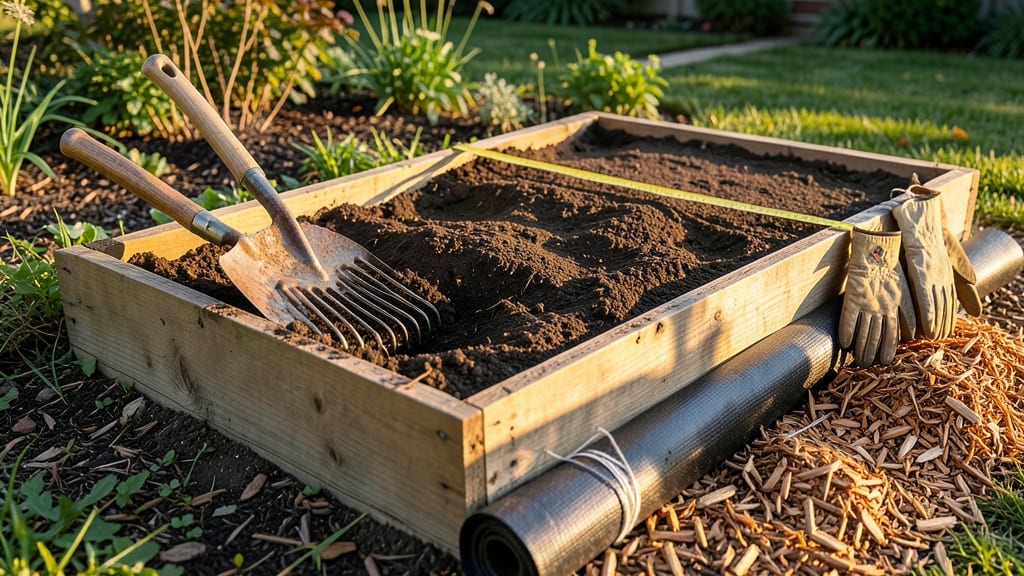
Creating a garden bed starts by marking your space, clearing grass or sod, and loosening the soil before adding layers of compost and topsoil. Top it with mulch to lock in moisture and block weeds, which creates ideal conditions for plant roots to thrive.
This layered approach isn't just about aesthetics—it's about giving your plants the perfect foundation.
The compost breaks down organic matter, enriching the soil with nutrients over time, while the topsoil layer provides the structure plants need to grow strong roots. 🌱 I've found that adding a 2-3 inch layer of mulch (like straw or wood chips) keeps the soil consistently moist and prevents weed seeds from sprouting.
For raised beds, using untreated wood or landscape fabric along the edges helps contain the layers and extends the bed's lifespan.
What many gardeners overlook is how the depth of each layer affects different types of plants. Vegetables like tomatoes and peppers need deeper beds (at least 12 inches) to support their root systems, while herbs and shallow-rooted flowers thrive in 6-8 inch layers.
The key is balancing drainage with nutrient retention—too much compost can make the soil too acidic, while too little topsoil may leave plants struggling to anchor.
💡 In This Article
- Garden Bed Layering Techniques for Optimal Soil Structure
- Step-by-Step Guide to Building a Weed-Free Raised Garden Bed
Garden bed layering techniques for optimal soil structure
The foundation of a thriving garden lies in its soil structure, which is why layering matters so much. When you add compost (typically 2-4 inches), you're introducing decomposed organic material that improves soil aeration and water retention.
This layer breaks down over time, releasing nutrients like nitrogen, phosphorus, and potassium—critical for plant growth. Think of it as a slow-release fertilizer that also enhances the soil's ability to hold moisture without becoming waterlogged. 🌱
Above the compost, a 4-6 inch layer of topsoil provides the structural framework plants need. Unlike compost, topsoil contains minerals and clay particles that create a stable base for root systems.
For vegetables like tomatoes or peppers, aim for at least 12 inches total depth—this ensures roots can penetrate deeply. In contrast, herbs like basil or thyme only need 6-8 inches since they have shallow root systems.
The ratio matters because too much compost can make the soil too acidic, while too little topsoil may leave plants struggling to anchor.
Mulch isn't just decorative—it's a protective barrier that regulates soil temperature and suppresses weeds. Organic mulches like straw or wood chips break down over time, adding more nutrients to the soil. Inorganic options like gravel or landscape fabric prevent weed growth without decomposing.
For best results, apply 2-3 inches of mulch, keeping it 2-3 inches away from plant stems to avoid rot. This layer also reduces water evaporation, meaning you'll need to water 30-50% less during dry spells. 💧
One common mistake is skipping the "soil loosening" step before layering. Use a garden fork or tiller to break up compacted soil, creating space for roots to expand. If your soil is particularly dense, consider adding sand or perlite to improve drainage.
For clay-heavy soils, mixing in peat moss or coconut coir helps loosen the texture. The goal is to mimic the natural soil profile found in forests, where fallen leaves and organic matter gradually decompose into nutrient-rich layers.
For container gardens or small spaces, you can adapt these principles with vertical layering. Fill pots with a mix of 50% compost, 30% topsoil, and 20% perlite for herbs, or 60% compost, 30% topsoil, and 10% sand for vegetables.
The key is maintaining the balance between organic matter (compost) and structural support (topsoil). Over time, you'll notice healthier plants with fewer pests, as strong roots deter many common garden problems. 🌿
Pro tip: Test your soil's pH before layering. Most vegetables prefer 6.0-7.0, while blueberries thrive in 4.5-5.5. Adjust with lime (to raise pH) or sulfur (to lower it) before adding layers.
This small step can mean the difference between a struggling garden and one that flourishes with minimal effort. 🔍