Watering
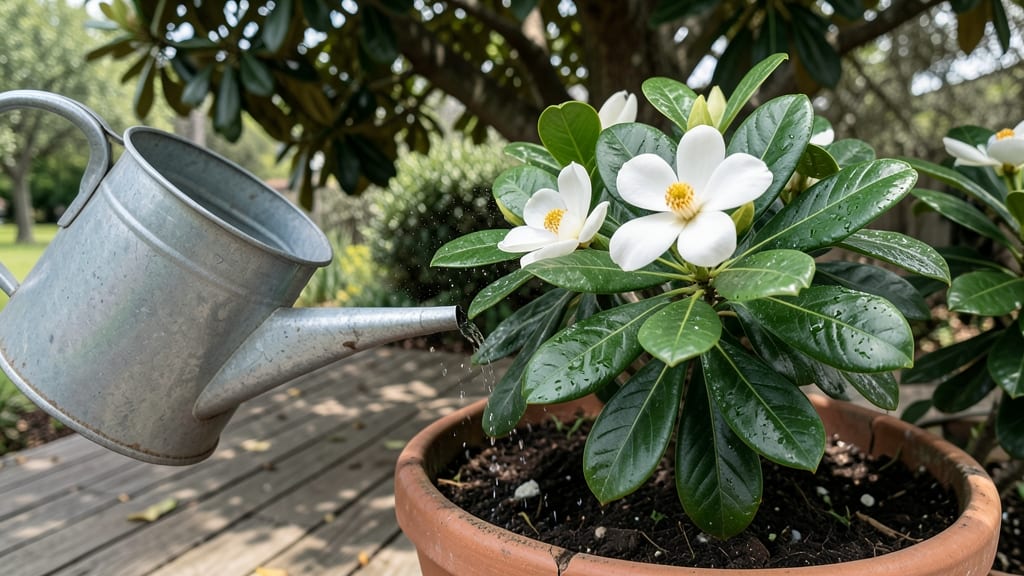
To water a gardenia plant properly means giving it just the right amount of moisture—enough to keep its roots happy but never so much that they drown.
If you’ve ever watched your 🌸 gardenia leaves turn yellow or its buds drop before blooming, chances are your watering routine is off. Gardenias are finicky about hydration, and getting it wrong can mean the difference between glossy, fragrant blooms and a struggling shrub.
Here’s the secret: deep, consistent watering in the morning keeps roots moist without inviting rot, while skipping the afternoon watering prevents fungal issues. I’ll walk you through the exact schedule, soil checks, and seasonal tweaks to keep your gardenia thriving all year.
By the end, you’ll know how often to water, when to back off in winter, and the subtle signs that tell you it’s time to adjust—no guesswork, just lush, blooming success.


The perfect watering schedule for gardenia plants to prevent wilting and drooping
Gardenia plants thrive on consistent moisture, but their tropical roots despise soggy soil. The key to preventing wilting and drooping lies in a science-backed watering schedule that mimics their natural humid environment.
Unlike drought-tolerant succulents, gardenias demand regular hydration without waterlogging—think of it as giving them a daily spa treatment for their roots.
As a gardener who’s nursed several gardenias back to health, I’ve learned that overwatering is just as deadly as underwatering. These beauties need their soil to stay evenly moist but well-draining. The secret?
Deep watering sessions twice weekly during growing seasons, with adjustments for heat waves and dormant periods. Let’s break down the perfect routine to keep your gardenia’s leaves glossy and blooms abundant.
| Season | Watering Frequency | Soil Moisture Goal | Signs of Stress |
|---|---|---|---|
| Spring | Every 2-3 days | Top 1-2 inches moist | Yellowing leaves (overwatering) or crisp edges (underwatering) |
| Summer | Daily (deep watering) | Consistently moist | Drooping leaves (heat stress) or brown tips (salt buildup) |
| Fall | Every 3-4 days | Top 2 inches slightly dry | Slow growth or bud drop |
| Winter | Bi-weekly | Top 3 inches dry | Wilting despite watering (root damage) |
| Potted Gardenias | Every 1-2 days | Top 1 inch moist | Root rot (black stems) or stunted growth |
In spring, when gardenias kickstart their growth, aim to water every 2-3 days. This is when they’ll reward you with new blooms and vibrant foliage. Stick your finger 1-2 inches into the soil—if it feels dry, it’s time to water.
For summer months, daily watering becomes crucial, especially in hot climates. I’ve seen gardenias wilt dramatically within hours if left thirsty during heatwaves, so always water deeply in the early morning to prevent evaporation.
Come fall, reduce watering to every 3-4 days as growth slows. The goal shifts from keeping soil moist to letting it dry slightly between waterings. This prepares the plant for winter dormancy.
During winter, cut back to bi-weekly watering unless you’re in a mild climate. Overwatering in cold months can lead to root rot, a silent killer of gardenias.
Potted gardenias dry out faster than in-ground plants, so check their soil daily in summer. A simple trick I use is the "finger test": Insert your finger into the soil up to your first knuckle. If it’s dry, water until it drains from the bottom of the pot.
Always empty the saucer afterward to prevent root suffocation. For in-ground gardenias, mulch around the base with 2-3 inches of organic mulch to retain moisture and regulate soil temperature.
Watch for early warning signs of watering gone wrong. Yellow leaves often signal overwatering, while crispy brown edges mean underwatering. Drooping that doesn’t bounce back after watering could indicate root rot or heat stress.
If you notice buds dropping before opening, your gardenia might be thirsty or stressed from inconsistent watering. Adjust your schedule immediately—gardenias are forgiving but need consistency to thrive.
Pro tip: Use rainwater or filtered water if your tap water is hard. Gardenias are sensitive to chlorine and mineral buildup, which can cause leaf burn. If you must use tap water, let it sit out 24 hours before watering to allow chlorine to dissipate.
I’ve also had success using a DIY moisture meter—simply bury a wooden chopstick near the roots and check its dampness daily. It’s a budget-friendly way to monitor soil moisture without guesswork.
Remember, gardenias are tropical plants at heart. They crave humidity and consistency, so don’t be afraid to mist their leaves lightly in dry conditions. Pair your watering schedule with proper drainage—ensure pots have drainage holes and in-ground plants are planted on a slight slope to prevent water pooling.
With this routine, your gardenia will reward you with glossy leaves and fragrant blooms all season long.
🌸
5 Pro tips to water gardenias like a seasoned grower
Mastering the art of watering gardenia plants transforms them from struggling shrubs to fragrant, blooming superstars. These tropical beauties demand consistent moisture without drowning their roots—balancing act that even experienced gardeners sometimes miss. Let’s dive into my top techniques to keep your gardenias thriving with minimal guesswork.
The key to success lies in understanding your gardenia’s root environment. Unlike drought-tolerant succulents, gardenias despise dry spells but hate soggy soil even more. By testing moisture levels and adjusting your routine, you’ll prevent common issues like yellowing leaves or drooping buds that ruin their show-stopping blooms.
- Test soil moisture before watering: Stick your finger 2 inches deep—if it feels dry, it’s time. Use a moisture meter for precision.
- Water deeply in mornings (before 10 AM) to reduce evaporation and fungal risks. Avoid evening watering—wet foliage invites powdery mildew.
- Mulch heavily (3-4 inches) with organic mulch like pine bark to retain moisture and regulate soil temperature. Replenish annually.
- Adjust for seasons: Water daily in summer, every 3-4 days in spring/fall, and bi-weekly in winter. Potted gardenias dry faster—check daily.
- DIY moisture meter: Insert a wooden skewer into the soil. If it slides out clean, water immediately. If it resists, wait 1-2 days.
One of my favorite tricks is creating a DIY moisture meter using a wooden skewer or chopstick. Simply insert it into the soil near your gardenia’s roots—if it comes out clean, your plant is thirsty.
If it sticks slightly, hold off for another day. This method eliminates guesswork and helps you fine-tune your watering schedule based on your garden’s unique conditions.
Don’t underestimate the power of mulching. A thick layer of organic mulch (like pine bark or shredded leaves) acts as a moisture blanket, reducing evaporation and keeping roots cool.
I recommend applying 3-4 inches of mulch around your gardenia’s base, but avoid piling it against the trunk to prevent rot. Replenish it every spring to maintain its effectiveness.
Seasonal adjustments are critical—your gardenia’s water needs fluctuate dramatically. During summer’s peak heat, I water mine daily in the morning to replenish lost moisture. In winter’s dormancy, I cut back to bi-weekly watering, letting the soil dry slightly between sessions.
Potted gardenias, especially, dry out faster than in-ground plants, so monitor them closely.
With these pro tips, your gardenia will reward you with glossy leaves and abundant blooms all season long. The secret? Paying attention to your plant’s signals and adjusting your routine like a seasoned grower. Happy gardening! 🌸