Watering
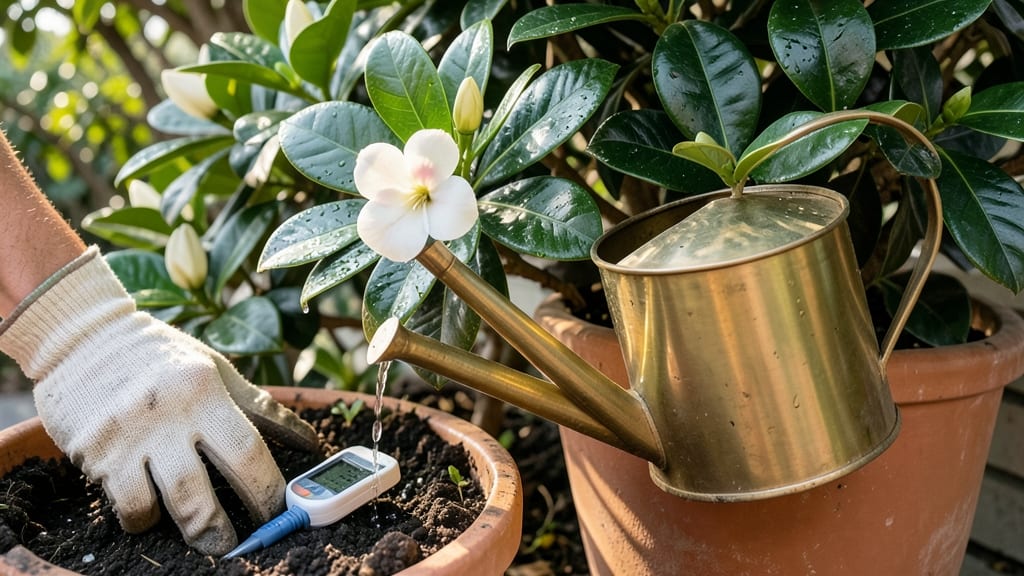
To water gardenia 🌸 properly means giving it just enough moisture to thrive without drowning its roots — the key to those glossy leaves and intoxicating blooms.
Struggling to keep your gardenia blooming? The secret isn’t just in the sunlight or fertilizer—it’s in mastering the delicate art of watering. Overwater or underwater, and you’ll sacrifice those fragrant flowers for good.
Gardenias in Zone 6a demand consistent moisture, but their roots hate soggy soil. A deep soak every 3-5 days in spring and summer keeps them happy, while winter slows their thirst to just bi-weekly watering.
Below, I’ll show you exactly how to check soil moisture, adjust for containers vs. in-ground plants, and spot the early signs of thirst or rot before it’s too late.


The perfect watering schedule for gardenias: when and how much
Mastering the watering schedule for gardenias is the key to those glossy, fragrant blooms you dream of. These tropical beauties thrive on consistent moisture but despise soggy soil—finding that sweet spot is everything.
Unlike drought-tolerant succulents, gardenias demand attention, especially during their peak growing months of spring and summer. The right approach prevents root rot while keeping your shrub lush and blooming.
Gardenias prefer moist, acidic soil that drains well, mimicking their native humid environments. Think of their roots like a sponge—deep watering encourages strong roots, while shallow puddles invite disease. My secret?
Watering in the early morning between 6-9 AM. This timing reduces evaporation and fungal risks, giving your plant a perfect start to the day. Avoid evening watering, as damp foliage overnight can lead to powdery mildew or bacterial spots.
| Season | Watering Frequency | Best Time | Soil Check |
|---|---|---|---|
| Spring | Every 3-4 days | Morning (6-9 AM) | Top 1-2 inches dry |
| Summer | Daily (deep water) | Early morning | Top 2-3 inches dry |
| Fall | Every 5-7 days | Morning | Top 2 inches dry |
| Winter | Bi-weekly | Mid-morning | Top 3 inches dry |
| Pro Tip: Use a moisture meter for accuracy—gardenias hate guesswork! | |||
For container-grown gardenias, the rules change slightly. Potted plants dry out 30-50% faster than in-ground shrubs, so check soil moisture daily in summer. A good rule of thumb: if the top 1-2 inches feel dry, it’s time to water.
Pro tip: Use a pot with drainage holes and elevate it slightly to prevent waterlogging. I’ve seen gardenias in pots thrive with a self-watering cache pot—just add water to the outer reservoir and let it wick to the roots.
Seasonal shifts demand adjustments to your routine. In summer heat, gardenias may need daily watering, especially if you’re in USDA Zone 8 or higher. Watch for drooping leaves—a classic sign of thirst.
Conversely, in winter dormancy (Zones 7-9), reduce watering to every 10-14 days unless your gardenia is evergreen. Overwatering in cold months can suffocate roots, leading to yellowing foliage or bud drop.
Don’t rely solely on a calendar—soil moisture checks are non-negotiable. Stick your finger 2 inches deep into the soil. If it feels dry, water thoroughly until it runs out the drainage holes. If it’s still damp, wait another day.
I’ve made the mistake of overwatering after a rainy spell, and my gardenia’s leaves turned yellow within days. Consistency is key: gardenias hate moisture fluctuations, so aim for even hydration year-round.
Morning watering isn’t just about timing—it’s about fungal prevention. Wet leaves in the evening create a cozy environment for powdery mildew and botrytis blight. When watering, focus on the base of the plant and avoid wetting foliage.
If you must water in the evening (say, during a heatwave), use a soaker hose or drip irrigation to deliver water directly to the roots. This method also reduces water waste by 30-40% compared to overhead sprinklers.
Mulching plays a huge role in moisture retention. Apply a 2-3 inch layer of organic mulch (like pine bark or shredded leaves) around your gardenia’s base. This mimics their natural habitat and helps retain 60% more moisture in the soil.
Just keep mulch 6 inches away from the trunk to prevent rot. I’ve seen gardenias in mulched beds stay hydrated 2-3 days longer between waterings—game-changer for busy gardeners!
Signs of overwatering include mushy stems, yellow leaves, and a foul smell from the soil. Conversely, underwatering causes crispy leaf edges and buds that drop before opening. Both extremes stress your plant, so stay vigilant.
My gardenia once suffered from root rot after a week of heavy rains—I had to repot it in fresh, well-draining mix and adjust my schedule. Now, I monitor weather forecasts and skip watering if rain is in the forecast.
For
Signs your gardenia is thirsty (or drowning) and how to fix it
Your gardenia sends clear signals when its water needs aren't met—whether it's begging for hydration or drowning in overzealous care. Wilting leaves, yellowing foliage, or even mushy stems can all point to watering woes.
The key is learning to read these cues before they turn your fragrant shrub into a sad, droopy mess.
First, check the soil moisture with your finger. Stick it about 1-2 inches deep—if it feels dry, your gardenia is thirsty. But if it's soggy or smells musty, you've crossed into overwatering territory.
Gardenias hate wet feet, so this balance is everything. Let's decode the signs and fix them fast.
🚨 Gardenia Watering Warning
Gardenias need consistent moisture but hate soggy roots. The fix? Water deeply morning only, then let the top 1-2 inches dry out before repeating. For potted gardenias, check soil moisture daily in summer—containers dry faster!
If your gardenia's leaves are curling or dropping prematurely, it's likely underwatered. Revive it by giving it a deep watering—aim for 1 gallon per plant—and repeat every 2-3 days until foliage recovers. Mulch around the base to retain moisture and reduce stress on the roots.
On the flip side, yellow leaves with mushy stems scream overwatering. Stop watering immediately and let the soil dry out completely. If the roots smell rotten or look black, your gardenia may need root pruning.
Trim away any mushy roots with sterilized shears, then repot in well-draining soil to save it.
For container gardenias, the stakes are higher—pots dry out 3x faster than in-ground plants. Use a moisture meter to track soil levels and opt for terracotta pots, which wick away excess moisture. Elevate containers to improve drainage and prevent root rot during rainy seasons.
Pro tip: Mist the leaves daily during hot weather to mimic their tropical habitat. But avoid soaking the foliage—this invites fungal diseases like powdery mildew. Instead, focus on deep root watering and let the plant's natural thirst guide you.
With these fixes, your gardenia will bounce back in 2-4 weeks. Keep an eye on its foliage color and stem firmness—these are your best indicators of success. Soon, you'll be rewarded with lush blooms and that signature gardenia fragrance. 🌸